

South Caucasus Navigating Economic and Security Effects of Iran Conflict
Irakli Laitadze
Executive Summary:
The Iran conflict is transforming the South Caucasus by disrupting trade routes, shifting regional power balances, and increasing the strategic importance of transport corridors linking Europe, Central Asia, and the People’s Republic of China that bypass Iran.
Armenia faces growing economic and political pressure because a significant portion of its trade and energy infrastructure depends on Iran. Disruptions threaten domestic stability ahead of upcoming parliamentary elections, increasing Armenia’s vulnerability to renewed Russian influence and leverage.
Azerbaijan faces major security and transit risks due to its long border with Iran and reliance on Iranian routes to reach its Nakhchivan exclave. Rising oil prices temporarily boost state revenues, but prolonged instability could damage Azerbaijan’s trade and security.
Georgia and Azerbaijan are benefiting from increased transit and aviation traffic as routes bypass Iran and Russia, strengthening pipelines and cargo corridors. Georgia, however, also faces higher energy costs, declining regional tourism, and geopolitical uncertainty.
The outcome of the Iran conflict will directly influence the balance of power in the South Caucasus for years to come. The conflict has already threatened transit routes, rearranged mechanisms of regional security, and weakened Russia’s regional presence, which has been declining since its full-scale invasion of Ukraine in 2022. The February 28 U.S.–Israeli airstrikes on Iran accelerated power-shifting processes in the South Caucasus that began in 2020 with the Second Nagorno-Karabakh war. The Second Nagorno-Karabakh war, Russia’s full-scale invasion of Ukraine, Azerbaijan’s 2023 offensive in Nagorno-Karabakh, and the 12-day U.S.–Israeli bombing of Iranian military facilities in June 2025 have also gradually changed the security and economic architecture of the region.
The Iran conflict has become a major factor in Armenia’s approaching June 7 parliamentary elections. Armenian Prime Minister Nikol Pashinyan said on March 5 that his government has been preparing for potential fallout from a conflict in Iran for over a year in response to criticism of his campaign appearances amid ongoing security threats (Armenpress, March 5). The opposition in Armenia criticizes Pashinyan for not taking adequate measures to mitigate the security and economic risks brought on by the conflict. Moscow wants the pro-Russian opposition to win the elections in Armenia, and Russian President Vladimir Putin has pressed Pashinyan over Armenian restrictions affecting Russian passport holders (Vedomosti, April 1; OC Media, April 2). Electoral defeat of Pashinyan’s Civil Contract party by Robert Kocharyan’s pro-Russian Armenia Alliance party could partially resuscitate Russia’s diminished influence in the South Caucasus.
Russian gas exports to Armenia and the rerouting of land cargo previously bound for Iran give Moscow powerful leverage. Around 25 percent of Armenia’s international freight goes through Iran (CCBS, March 21). This route is critical since direct Armenia–Türkiye and Armenia–Azerbaijan trade remains limited, though increasing. Conflict in Iran endangers cargo movement, damaging Armenia’s economy. The delivery time between the People’s Republic of China (PRC) and Armenia has increased from 45–60 days to 90 days since February (Sputnik Georgia, May 4; RitmEurasia, May 6).
Since 2009, Yerevan and Tehran have exchanged gas for electricity (see EDM, November 20, 2024). Armenia processes imported Iranian gas, makes electricity, and transfers it back to Iran, keeping any surplus. In August 2023, Yerevan and Tehran extended the agreement until 2030 (RITM Eurasia, August 16, 2023). Any major disruption of the energy system will cause serious consequences for Armenia, which may increase its consumption of Russian gas if Iranian supplies are further disrupted. Armenia has only fully operational land borders with Georgia and Iran, and trade with Türkiye and Azerbaijan has only recently begun to open. Armenia’s border with Iran runs through the Syunik province. It is about 44 kilometers (27 miles) long and is the only active land link between Armenia and Iran. The disruption of this channel is economically detrimental to Armenia. The Trump Route for Peace and Prosperity (TRIPP), which Azerbaijan referred to as the Zangezur corridor, will link Azerbaijan to its Nakhichivan exclave via Armenia’s Syunik province, and is not operational yet. TRIPP will eventually link to the broader Trans-Caspian International Transport Route (TITR, or the Middle Corridor) (Prime Minister of Armenia, December 9, 2025). Moscow and Tehran oppose the TRIPP and aspects of the TITR because the projects would mean decreased cargo turnover overland through Russia and Iran, and thus less political leverage over their neighbors.
Azerbaijan’s 996-kilometer (619-mile) land border with Iran is a security risk. The deterioration of Azerbaijan’s security could be caused by deliberate or unintended spillover of armed conflict, accidental military strikes, intentional provocations, violation of airspace, illegal trafficking, or a massive influx of refugees (see EDM, April 14). Azerbaijan is the only state in the South Caucasus that has come under direct military attack during the Iran conflict (Ministry of Foreign Affairs of Azerbaijan, March 5; see EDM, March 11). On March 5, drones launched from Iranian territory struck Nakhchivan. Since then, tensions between Baku and Tehran have de-escalated. The conflict is also a potential issue for Baku because of the estimated 14–15 million ethnic Azeris who live in Iran, around 16 percent of Iran’s total population (Minority Rights Group, accessed May 19). Most of these ethnic Azeris live in parts of Iran directly bordering Azerbaijan. Ethnic Azeris are not a separatist force in Iran, but a protracted conflict has some potential, though currently small, to increase their political activity.
Nakhchivan depends on cargo transit via Iran. Baku and Yerevan are still developing direct transit between Armenia and Nakhchivan via TRIPP, and the alternative route through the Turkish province of Igdir has limited transit capacity. It does not provide direct access to the rest of Azerbaijan. Nakhchivan’s border with Türkiye is only 17 kilometers (10.6 miles) long, compared to its border with Iran, which spans 179 kilometers (111 miles). If instability persists in Iran, the need for TRIPP will increase. Until TRIPP is built, the primary route from Azerbaijan to Nakhchivan is via Iran, which is currently closed. Other infrastructure connecting Azerbaijan to the Persian Gulf and South Asia runs through Iran. Disorder within Iran may fully or partially collapse these routes.
The conflict in Iran is boosting Azerbaijan’s oil profits. The state budget for 2026 is based on the $65 per barrel of Brent oil, but conflict in the region and the Strait of Hormuz has increased the going rate to $101.29 as of May 11 (Report Informasiya Agentliyi, September 16, 2025; Bloomberg, May 11). According to the Dutch ING Group, each $ 10-per-barrel increase provides Azerbaijan with about $3 billion in annual export revenues, which is approximately $1.5 billion in profit (Report Informasiya Agentliyi, March 25). The unexpected rise in oil prices is beneficial for Baku, but Azerbaijan would face economic decline in the event of a prolonged conflict or widespread disorder in Iran. Negative developments would include the collapse of existing transport routes and a surge in the prices of imported goods.
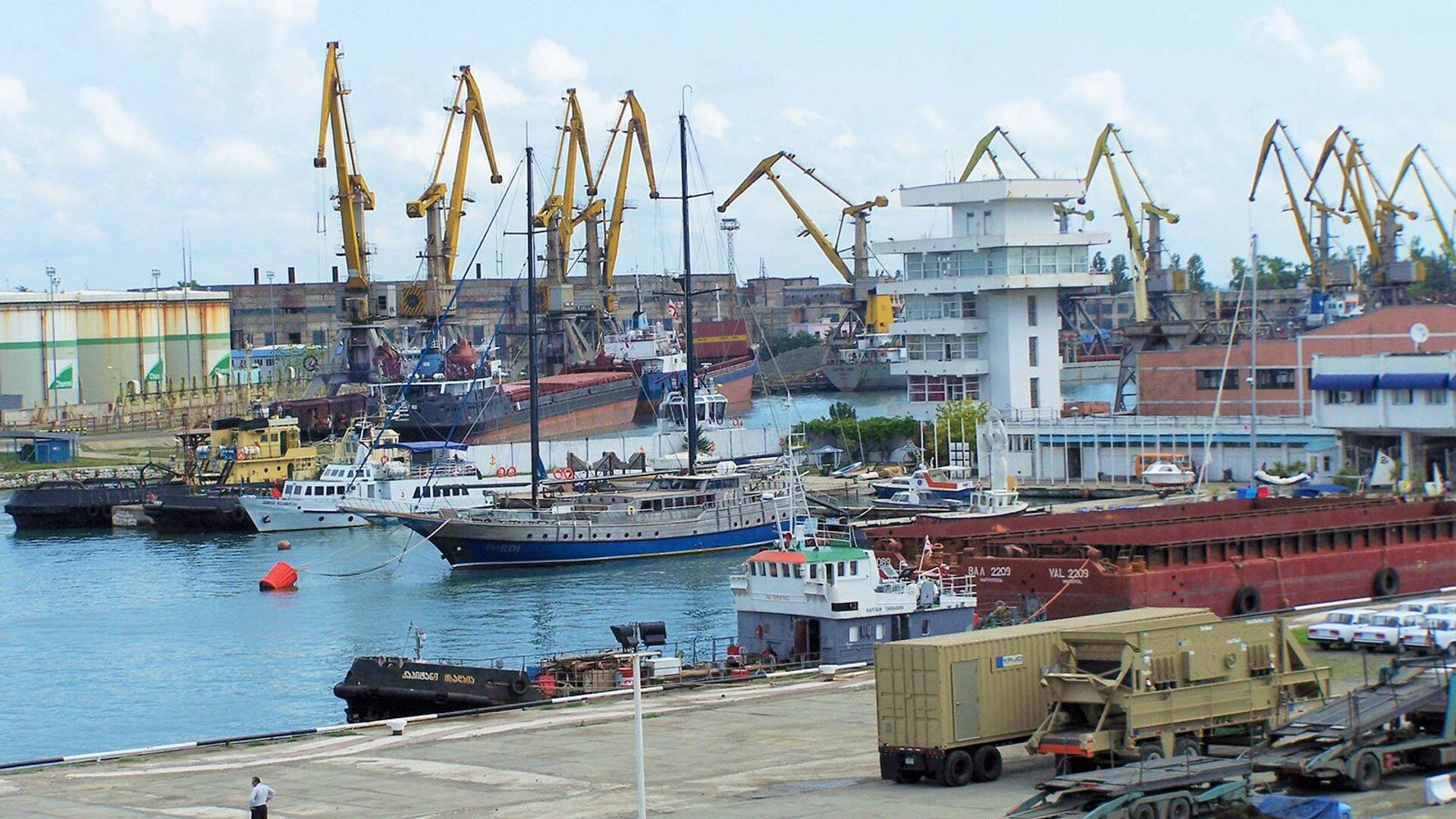
The Iran conflict has suddenly made Georgia and Azerbaijan a narrow and important air corridor for TransEurasian flights between the People’s Republic of China (PRC), Central Asia, the South Caucasus, and Europe. Russian airspace has been closed to Western carriers since the Kremlin’s full-scale invasion of Ukraine in 2022 (European Commission, January 9, 2025). Iranian airspace was partially reopened in April, but the European Union Aviation Safety Agency (EASA) still prohibits carriers under its purview from operating there (EASA, accessed May 19). From January to March, Georgian airports served 1,605,508 passengers, a 4.28 percent increase in comparison to the first quarter (Q1) of 2025. In Q1 2026, cargo turnover in Georgia was 10,177.5 metric tons, a 32.3 percent increase compared to Q1 2025 (Georgian Civil Aviation Agency, April 27). Azerbaijan saw similar increases in flights and transit in Q1 of this year compared to the same period in 2025. In most of January and February, barring the first day of Israeli–U.S. airstrikes on Iran on February 28, passenger and cargo mobility were not defined by armed conflict. This means either that the year-over-year increase is due to factors other than conflict re-routing flights through Georgia and Azerbaijan, or that the re-rerouting was so significant in March that it produced a marked increase for the entire quarter. Transit of cargo through the Batumi and Poti sea ports in Q1 2026 increased by 4 percent compared to Q1 2025 (Georgia Today, April 7). The Baku–Tbilisi–Ceyhan (BTC) oil pipeline and the Trans Anatolian Natural Gas Pipeline (TANAP) are also increasing their strategic importance as routes that bypass both Iran and Russia.
Regional tourism to Georgia, on the other hand, has suffered because of the conflict. The inflow of tourists from Israel and Iran has declined sharply year over year in Q1. Iranian tourism decreased by 48.8 percent, Israeli tourism by 17.5 percent, Armenian tourism by 11.2 percent, and Azerbaijani tourism by 8.1 percent (Gruziia Online, April 21). Airplane ticket prices have risen since the outbreak of conflict in Iran, which may be the driving factor behind this decline.
Georgia is completely dependent on oil and petroleum product imports for energy. These imported products account for around 99 percent of domestic consumption (Worldometer, accessed May 19). The surge in oil prices due to the conflict in Iran has directly increased the costs of nearly all goods and services in Georgia. The Iran conflict is generally having a mixed effect on the Georgian economy, and the future is quite uncertain (IMF, April 7). Since the very start of the conflict, Tbilisi has maintained a cautious stance, avoiding loud declarations about the war (Netgazeti, March 2; see EDM, March 9).
Iran is logistically important to Russia within the International North–South Transport Corridor (INSTC). This complex multi-modal network carries diverse materials, including oil, oil-based products, grain, fertilizers, and dry cargo through India, Iran, Azerbaijan, Russia, Central Asia, and Europe. It is a three-pronged transport network, and all three branches pass through Iran. According to Russian Deputy Prime Minister Vitaly Savelyev, in 2025, 21.5 million metric tons took the route, of which 63 percent went through Azerbaijan (RSPP, March 20). Cargo turnover on the INSTC increased by 39 percent in the last five years (PortNews, April 1).
Moscow considers the INSTC one of its key instruments for avoiding Western sanctions. In the event of drastic political changes in Iran or prolonged instability, this transport system may cease to function. This shift would reduce Russia’s political leverage in the South Caucasus and diminish a cash flow that the Kremlin desperately needs to sustain its war against Ukraine.
Baku, Tbilisi, and Yerevan have expressed relatively cautious and reserved positions toward the conflict in Iran. All three governments have expressed their concerns about military conflict and urged for diplomatic engagement and a peaceful resolution of the war (Sputnik Armenia, March 1; Government of Georgia, March 2; Ministry of Foreign Affairs of Azerbaijan, April 8). The countries of the South Caucasus are navigating a complex political and security environment shaped by conflict in Iran, Russia’s strong interests and waning capacity amid its war against Ukraine, and shifting east–west connectivity drives through the region.
This article was originally published in Eurasia Daily Monitor.