

Executive summary
The People’s Republic of China (PRC) has become Russia’s main foreign supplier of drones, providing engines, navigation components, and technical support, and a Chinese state-owned company now also ships the precursor used to make the drones’ carbon fiber.
Russia’s state corporation, Rosatom, opened a plant in 2021 to end Russia’s reliance on Chinese precursors. Imports kept surging, however, and a new line approved in 2026 again pursues import substitution.
Russia pays the PRC a rising premium for goods it cannot produce at scale. At the same time, Ukraine’s expanding long-range strikes threaten critical industrial sites, whose loss would deepen Russia’s dependence on Chinese components.
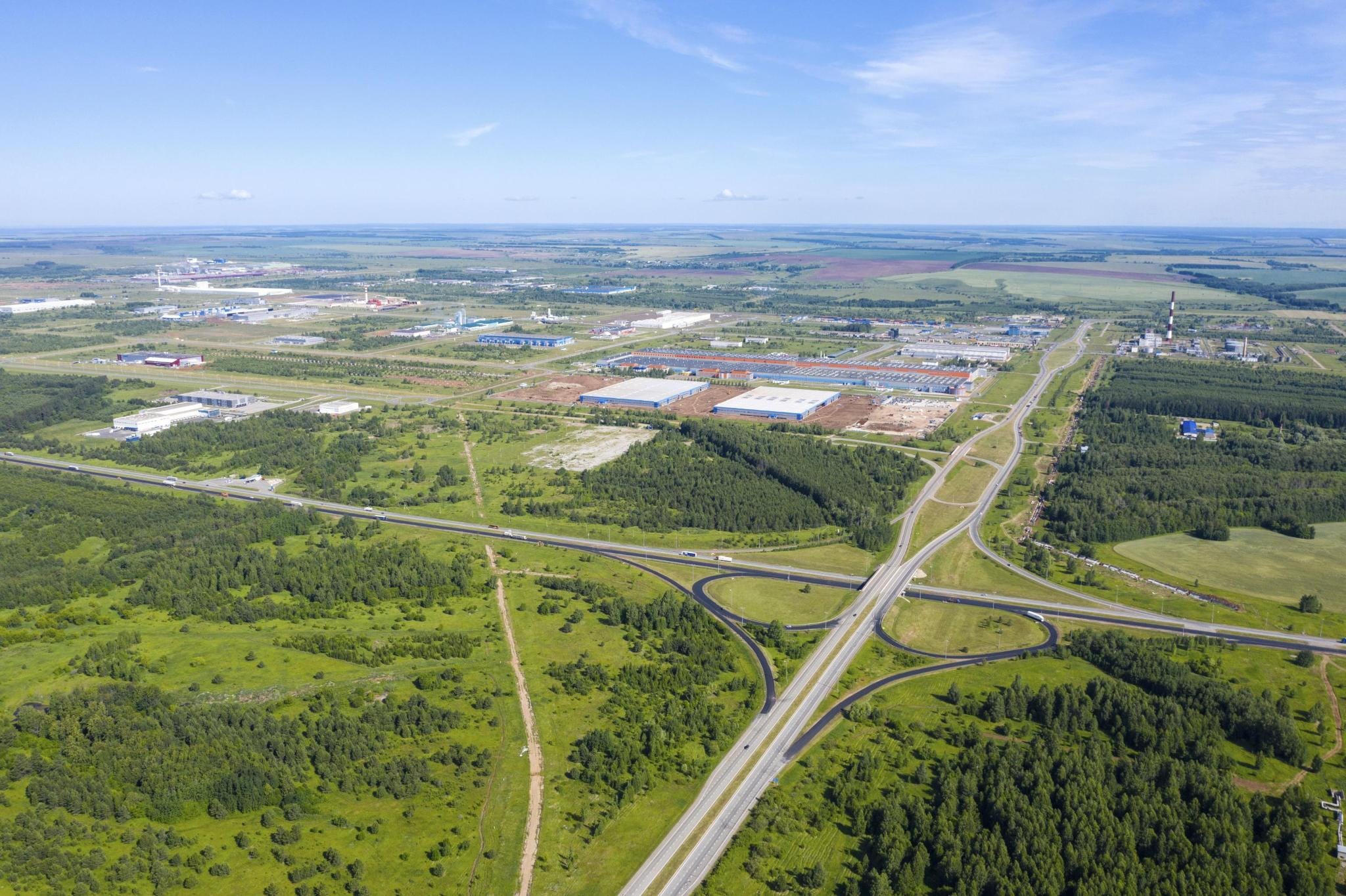
Documents obtained by Ukraine’s Security and Cooperation Center (USCC) and shared with Politico in September revealed that Jilin Chemical Fiber Group, a Chinese state-owned company, had shipped 46 metric tons of polyacrylonitrile (PAN) precursor to Alabuga-Volokno, a subsidiary of Russia’s state corporation Rosatom (Politico, September 4). PAN precursor is the acrylic fiber used to make carbon fiber, and Alabuga-Volokno operates in Tatarstan’s Alabuga Special Economic Zone, which also hosts Russia’s largest factory for Geran drones. The cargo was declared as civilian textile, and the documents point to at least eight similar tenders since 2022.
The shipment is the latest evidence that the People’s Republic of China (PRC) has become the main foreign supplier of Russia’s drone warfare, and that its assistance now reaches the basic materials from which the drones are built. It also exposes the failure of a pledge that Rosatom made in 2021, when it opened a plant meant to free Russia from Chinese precursors (Rosatom, November 22, 2021). This dynamic reveals both the limits of Russia’s drive for self-sufficiency under sanctions and how the PRC sustains the Russian drone industry.
Long-range attack drones have become Russia’s main instrument for striking Ukrainian cities and infrastructure. According to Ukraine’s Main Directorate of Intelligence (HUR), the Russian state order for Shahed-type drones grew from about 12,000 units in 2024 to more than 100,000 in 2026, and output of the newer jet-powered Geran-4 and Geran-5 has reached about 3,000 units a month (Ukrinform, June 1). The Russian government has framed the growth of its drone industry as a matter of technological independence, aiming to raise the industry’s self-sufficiency from 37.8 percent in 2024 to 81.1 percent by 2030 (TASS, January 9, 2025). In practice, however, the expansion has relied on Chinese suppliers at almost every stage, ranging from single components to complete engines and technical support.
Russian Gerans use Chinese copies of the German engine from the original Iranian design, along with Chinese navigation modules and modems (Kyiv Post, December 10, 2023; The Insider, March 24). A second Russian attack drone, the Garpiya, uses engines from Xiamen Limbach, a Chinese firm the United States sanctioned in October 2024 as part of its first designation of Chinese companies for jointly developing a complete weapons system with Russia (U.S. Treasury Department, October 17, 2024). Nevertheless, the engines kept arriving afterward, declared as industrial refrigeration units, and Chinese specialists visited Kupol repeatedly to test drones and train staff (Reuters, July 23, 2025; RBC-Ukraine, September 25, 2025).
Across the wider range of battlefield goods that Western governments have placed under export controls, the PRC accounts for about 75 percent of Russia’s imports (Kyiv School of Economics, July 3). The precursor trade extends this pattern to the material from which the drones themselves are built. Carbon fiber keeps Russia’s drones light enough to carry fuel and explosives over more than 1,000 kilometers (621 miles) and increases stealthiness. The Geran-2 fuselage and wings are built on a carbon fiber structural frame, and the newer jet-powered Geran-5 has a carbon fiber skin, wings, and tail mounted on the internal airframe (Ukrainska Pravda, November 25, 2023; New Voice of Ukraine, January 19). Without this material, drones would be heavier, sacrificing either range or payload.
Carbon fiber is only as good as its precursor. Research on carbon fiber production shows that the fiber’s mechanical properties depend heavily on precursor quality (Progress in Materials Science, 2020). The precursor accounts for about half the cost of standard carbon fiber and more than three-quarters of the cost of fine grades used in aerospace (Heliyon, October 2019). Producing it requires specialized expertise in polymer chemistry and fiber spinning, which Russia has long lacked. Until 2021, the PRC supplied about 80 percent of Russia’s precursor supply (Economic Security Council of Ukraine, 2025).
The war has further narrowed Russia’s options. Sanctions and export controls imposed since 2022 have cut Russia off from Western and Japanese high-grade fiber producers. In the first nine months of 2024, Chinese companies supplied 72 percent of Russia’s carbon fiber imports by weight (Economic Security Council of Ukraine, 2025). The PRC has since become the world’s leading producer, holding more than half of global carbon fiber capacity in 2025, with Jilin Chemical Fiber as the world’s largest producer (ATA Carbon Fiber Technology, 2025).
Rosatom’s precursor plant was meant to end this dependence. Opened at Alabuga in November 2021, it was designed to produce 5,000 tons of precursor a year and to replace the material previously imported from the PRC (Rosatom, November 22, 2021). Trade data, however, show that Chinese precursors continued to arrive after the plant opened. Between March 2022 and January 2025, Alabuga-Volokno imported about 3,000 tons of Chinese synthetic yarn worth $21.4 million from two companies of the Jilin group (Frontelligence Insight, August 21, 2025). Because each ton of carbon fiber requires 2 to 2.5 tons of precursor, these imports, at roughly 1,000 tons a year, would have produced about 400–500 tons of fiber, close to the 407 tons Alabuga-Volokno produced in 2022 (Economic Security Council of Ukraine, 2025). Chinese precursors alone could have supplied almost the entire output of Rosatom’s fiber line, suggesting the domestic plant has not replaced Chinese supply.
Since 2022, demand has risen sharply. By early 2024, Umatex, the Rosatom division that owns Alabuga-Volokno, reported that its carbon fiber plant was fully loaded and that customers were waiting in line for its output, a change it attributed to the growth of Russia’s civilian composites market (Atomvestnik, April 1, 2024). The timing coincides with the expansion of drone production at Alabuga, however, where the plant has become an important source of carbon fiber for Shahed-type drones.
In May, Russian officials approved a new Alabuga-Volokno line with its own precursor unit, due in 2027, and justified it as import substitution (Politico, September 20; Ukrainska Pravda, September 21). Five years after the first plant opened, Rosatom is building a second to solve the same problem, implicitly admitting the 2021 plant did not end Russia’s reliance on Chinese precursors.
Chinese assistance comes at a growing price for Russia. Moscow paid roughly 300 percent more for Chinese battlefield goods in 2025 than Beijing’s other customers did, and this premium has risen in step with Russia’s reliance on Chinese supply (Kyiv School of Economics, July 3). The relationship is asymmetric. Russia depends on the PRC for materials it cannot produce at the required scale, while the PRC can set the price and terms.
The optical fiber case shows what this dependence looks like when domestic production disappears altogether. Russia’s only optical fiber plant, located in Saransk, stopped working after Ukrainian drone strikes in the spring of 2025, which left Moscow completely dependent on Chinese optical fiber (Militarnyi, February 26).
For Ukraine, the case points to targets that are harder for Russia to replace than other defense-industrial infrastructures. A carbon fiber plant takes years to build and relies on highly specialized equipment; losing it would affect every drone that depends on its output, inflicting significant damage on the entire industry. It would raise the cost of war for Russia, as it would be forced to deepen its dependence on Chinese components to keep delivering drones to the frontline. Russia treats Alabuga-Volokno as a site worth protecting, as satellite imagery shows lattice towers built around the plant to carry nets against Kyiv’s long-range drones (Institute for Science and International Security, August 27; New Voice of Ukraine, August 29).
For Russia, the drone program is absorbing capacity once meant for civilian industry. Carbon fiber from the Alabuga plant was intended for civilian aviation and Rosatom’s nuclear fuel centrifuges, yet by 2030 up to 89 percent of the plant’s output is expected to go to defense enterprises (Militarnyi, September 7).
For Europe, sanctioning the Chinese side of this chain could be politically coherent and costly at the same time. When the European Union listed Chinese entities in its sanctions package in July, Beijing responded the following day by placing 14 European companies and institutions under its own export controls (European Commission, July 22; South China Morning Post, July 24). Consequently, sanctioning Chinese suppliers such as Jilin would come at a cost, including for European defense companies that depend on Chinese components.
The Jilin shipment is small in isolation. It confirms, however, that the PRC’s assistance to Russia’s drone industry now extends from engines and electronics to the materials used to build the drones. Rosatom promised in 2021 to end Russia’s reliance on Chinese precursors, and five years later it is building a second plant to reach the same goal, most plausibly because the first cannot produce the fine grades required by the drone program at scale. The rapid scaling of Ukraine’s long-range drone attacks poses a new threat to Russia’s carbon fiber supply chain, since plants such as Alabuga-Volokno now lie within reach of Ukrainian strikes.
This article was originally published in Eurasia Daily Monitor.