

Executive summary:
Russia’s Federal Service for Surveillance on Consumer Rights Protection and Human Wellbeing (Rospotrebnadzor) imposed bans on seven Georgian companies on October 9 without citing violations, copying measures used against Armenia since April and pointing to political rather than sanitary motives.
The ban tests Georgian Dream’s claim that staying out of Western sanctions against Russia protects Georgia’s economy, even though direct losses are limited because wine makes up only about 3 percent of exports.
Coinciding with renewed Russian demands at the Geneva peace talks and an approaching European Union ban on the Kulevi refinery, the measure squeezes Tbilisi’s balancing policy between both Moscow and Brussels.
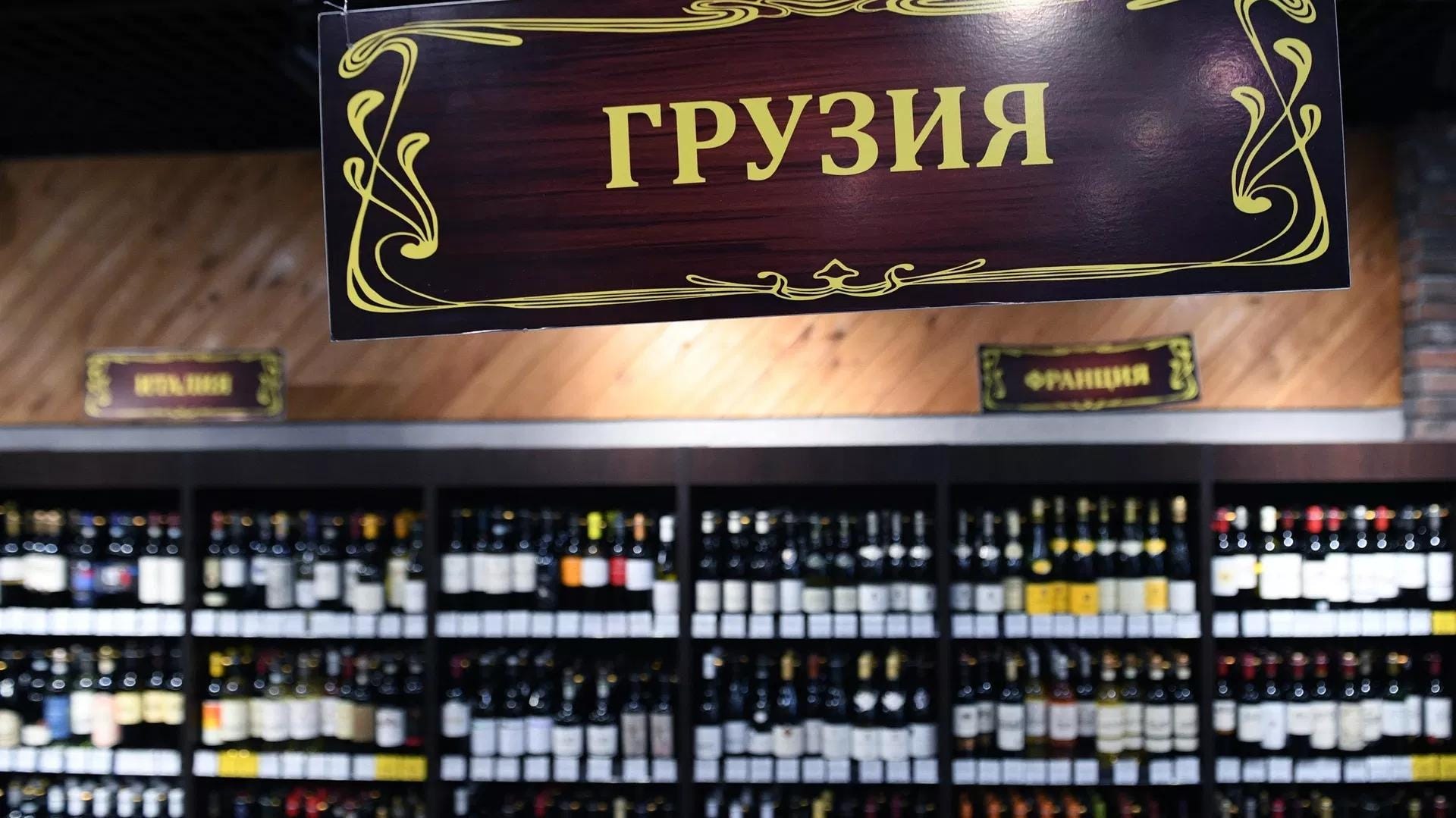
On October 9, Russia’s Federal Service for Surveillance on Consumer Rights Protection and Human Wellbeing (Rospotrebnadzor) ordered a ban on imports and sales of goods from seven Georgian companies. The restrictions cover wine from Teliani Valley, Tbilvino, Wineman, as well as wine and brandy from the Askaneli Brothers, beer from the Georgian Beer Company, Georgian-bottled Coca-Cola, and Nabeghlavi mineral water. Rospotrebnadzor specified no concrete violations and did not explain why these producers were chosen. It cited a “temporary sanitary measure” over sensory, physico-chemical, and safety failures, a formal justification that does not reveal the real motive behind the decision. Russia’s retail association said member chains began pulling the goods from shelves (RBC; Rossiyskaya Gazeta, October 10; JAMnews, October 13).
Georgian Prime Minister Irakli Kobakhidze said on October 12 that the government hoped the decision would be reversed and was “working on it” (Democracy & Freedom Watch, October 12). Georgian Parliament Speaker Shalva Papuashvili said Georgian authorities had received no formal explanation and that the Ministry of Agriculture would investigate the issue (Georgia Today, October 13). The decision is a real test of the central argument of Georgian Dream’s foreign policy, namely, that refusing to join sanctions against Russia and accommodating Moscow protects Georgian economic interests, an approach that Kobakhidze has labeled pragmatic (JAMnews, October 13).
Rospotrebnadzor restricted imports of Armenian Jermuk mineral water in April–May and suspended sales from three companies of alcohol producers—Vedi-Alco, the Abovyan Cognac Factory, and the Shahnazaryan wine and cognac house (Interfax, May 25; see EDM, June 5; RBC, October 10). The measures came amid deteriorating Russian–Armenian relations over Armenia’s turn toward the European Union. Following the European Political Community summit in Yerevan in May, senior Russian officials, including Russian State Duma Speaker Vyacheslav Volodin and Russian Security Council Secretary Sergei Shoigu, framed Armenia’s policy as unfriendly (Profile, May 20; Sputnik India, May 22). The restrictions later expanded to fruit, vegetables, fish products, and other goods (JAMnews, October 12).
A preferential trade regime between the European Union and Armenia took effect on October 10, mainly benefiting Armenian exports. Armenian exports to the European Union exceeded $516 million in January–June, up more than 80 percent from the year before (JAMnews, October 12). The Georgian ban follows the same formula—a temporary sanitary measure, no specified violations, no explanations, and alcohol and mineral water as primary targets. The paradox is that the pattern is not repeated entirely, as in this case the Kremlin is targeting a government that has declined to join Western sanctions against Russia.
Russia remains the largest market for Georgian wine, accounting for about $102 million of the $164 million in total wine exports in January–August, or about 62 percent (JAMnews, October 13). Wine accounts for only about 3 percent of total Georgian exports, and the risk varies by company (Georgia Today, March 20). Tbilvino, which exports to about 30 countries, states that its Russian sales are small and that Russian officials gave no official grounds for the restriction or violation (Business Media Georgia, October 12). With direct damage partially mitigated, the ban’s signaling value appears more important than its economic cost.
Russia is Georgia’s second-largest trading partner, with $2.04 billion in trade turnover in January–August, behind Türkiye’s $2.25 billion (National Statistics Office of Georgia, September 21). Georgia’s dependence on Russian gas has also grown. Russia’s share of the Georgian gas market rose from 7.32 percent in 2021 to an estimated 25–30 percent in 2025 (see EDM, February 4).
The Georgian government also faces pressure from a different direction. The European Union’s 21st sanctions package, adopted on July 23, imposed a transaction ban on the Kulevi Oil Refinery in Georgia, effective January 2027 (Civil Georgia, July 23). The refinery was sanctioned for processing Russian crude, but the European Commission said the six-month transition period was meant to let it diversify away from Russian oil (OC Media, August 3). Papuashvili cited EU sanctions, tariffs, and the Kulevi terminal, owned by Azerbaijan’s state oil company (SOCAR), as risks in the context of this measure (JAMnews, October 13).
The ban came the same day that Russia applied diplomatic pressure on issues Georgia has resisted in the Geneva International Discussions. The talks were launched in October 2008 to address the consequences of the Russo–Georgian War. Co-chaired by the European Union, the Organization for Security and Co-operation in Europe (OSCE), and the United Nations, they bring together Georgia, Russia, the United States, and representatives of the Abkhaz and South Ossetian de facto authorities four times a year to discuss security and the return of displaced persons (Office of the State Minister of Georgia for Reconciliation and Civic Equality, accessed November 3). Russian Deputy Foreign Minister Mikhail Galuzin met the format’s co-chairs and repeated demands the Russian Foreign Ministry has advanced for years. Moscow wants Georgia to guarantee the non-use of force against the occupied regions of Abkhazia and Tskhinvali (South Ossetia) and to begin delimiting the so-called borders with them (Russian Foreign Ministry, October 9; JAMnews, October 13). The next round of talks is scheduled for November in Geneva (OSCE, July 1).
These demands have been raised at almost every round of the Geneva talks, but their timing alongside the trade restrictions raises questions about why the Kremlin decided to demonstrate strength toward a country that refuses to join sanctions against it. Georgian analyst Giorgi Rukhadze, founder of the Georgian Centre for Strategic Analysis, called the ban “Russian blackmail” and a demonstration that Moscow can destabilize Georgia’s economy. He suggested Moscow may be using trade as leverage on two long-standing Russian demands (Interpressnews, October 12). The first is a legally binding non-use of force agreement between Georgia and what Moscow calls the “sovereign republics” of Abkhazia and South Ossetia (JAMnews, July 2). Tbilisi rejects such an agreement, arguing that a state cannot sign a treaty with its own regions and that any such document could only be concluded with Russia, which exercises effective control over them (see EDM, January 21). The second is restoring the Soviet-era railway linking Russia and Armenia through Abkhazia, which Russian Deputy Prime Minister Alexei Overchuk raised in February. Georgian critics warn that the route would require customs checks at the Abkhaz administrative boundary line, effectively treating it as a state border (see EDM, March 18).
Georgian politician Mamuka Pipia, a leader of the pro-Russian Solidarity for Peace party and one of four Georgians sanctioned by the United Kingdom on October 1, called the ban the “first wave” of restrictions on more than 40 companies and said that a separate ban on agricultural goods could follow (JAMnews, October 1, 12). In an interview with Izvestia on October 11, he said that the restrictions could expand even further if Georgian companies “keep financing activities that are against Russia,” while framing this as his personal opinion (Izvestia, October 11). In June, in an interview with Solovyov LIVE, Pipia said that Russia was considering restrictions on more than 40 companies, comparing the approach to that taken against Armenia (JAMnews, June 15).
The ban is not comprehensive, at least not yet. It covers only seven companies with no stated duration and should not be treated as a general restriction on Georgian wine (Georgia Today, October 10; JAMnews, October 13). Three developments will show whether the measure is a warning or the beginning of a wider campaign. These are whether the restrictions extend to agricultural products, what issues are raised at the November Geneva talks, and, most importantly, the European Union’s review of its Georgia policy in January. EU High Representative for Foreign Affairs and Security Policy Kaja Kallas, who described the current approach as inadequate, announced that the policy would be revisited in January 2027 (JAMnews, October 13). The Georgian government’s policy of hedging and balancing will face pressure from all sides as Russian restrictions could widen and the Kulevi ban approaches.
This article was originally published in Eurasia Daily Monitor.