

Russian Aviation Industry Facing Problems
Yuri Lapaiev
Executive Summary:
The number of combat-ready strategic bombers in the Russian Aerospace Forces is steadily declining due to Western sanctions, inadequate maintenance, and successful Ukrainian strikes.
Russia is forced to cannibalize existing aircraft to keep them operational or smuggle spare parts. As the number of operational aircraft decreases, the workload on the remaining aircraft increases, which raises the likelihood of malfunctions and accidents.
A strict sanctions regime targeting Russia’s defense industry enterprises, along with constant monitoring of compliance with those sanctions, could hinder the development of Russia’s strategic bomber fleet.
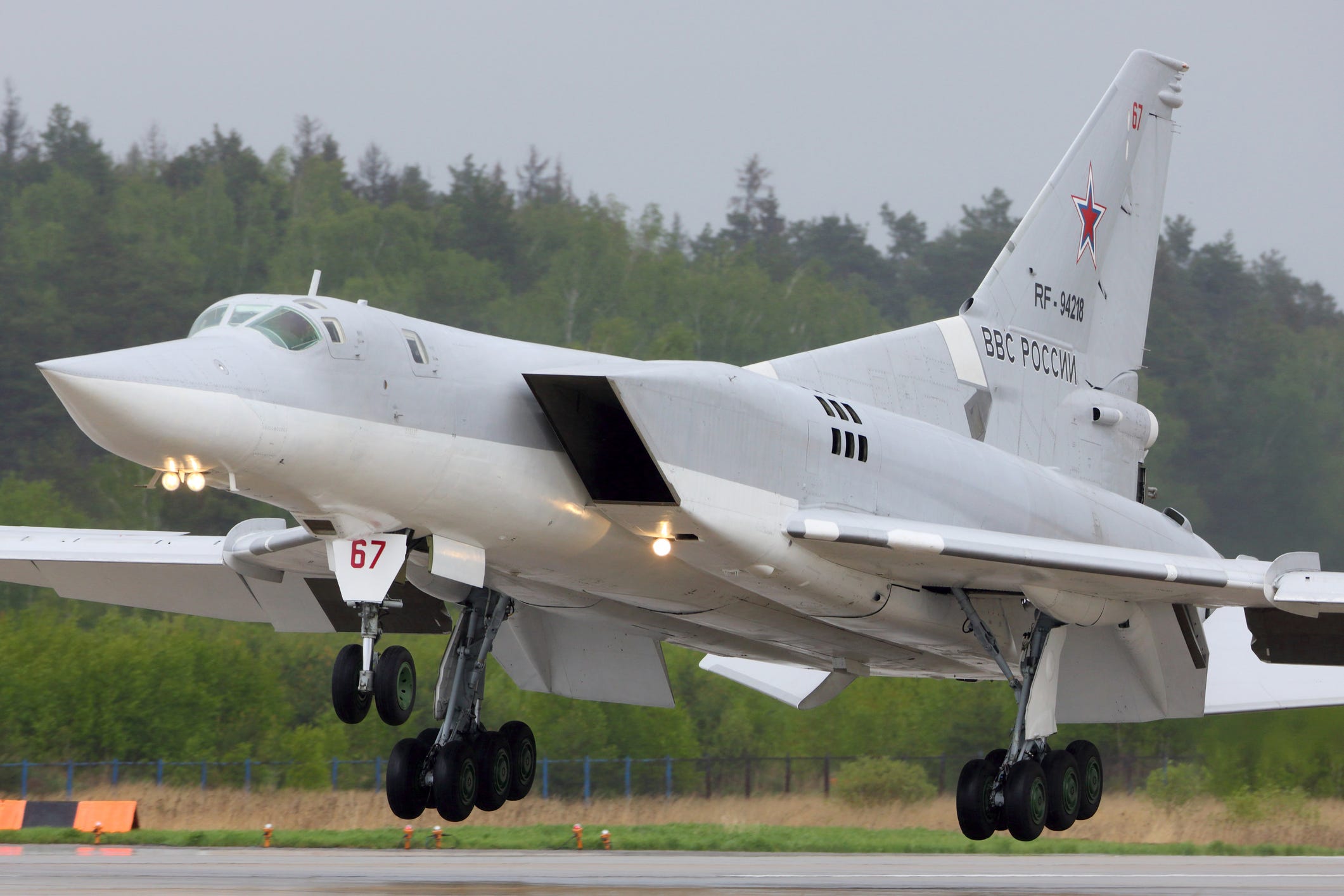
On June 15, a Russian Armed Forces Tu-22M3 (Backfire) strategic bomber crashed during a training flight in Russia’s Irkutsk oblast. The official investigation into the causes of the crash is still ongoing. The preliminary cause is a technical malfunction of the aircraft (Ukrainska Pravda, June 15). This was the third Tu-22M3 loss due to malfunctions in three years. On June 17, a Russian Smartavia Airlines civilian aircraft Boeing-737-800 nearly crashed over the Black Sea due to engine failure while conducting a flight from Sochi to Arkhangelsk, carrying 189 passengers on board. At the last moment, the plane was able to return to its departure airport (RBC-Ukraine, June 17).
These incidents highlight the problems facing Russian aviation, both military and civilian. These problems are becoming increasingly serious over time, with different incidents occurring more and more frequently. The main reason is the lack of access to Western spare parts and components due to Western sanctions (Black Sea News, September 2, 2025). This significantly worsens the level of aircraft maintenance and, in some cases, makes repairs impossible. As a result, Russia is forced to cannibalize existing aircraft to keep them operational or smuggle spare parts. As the number of operational aircraft decreases, however, the workload on the remaining aircraft increases, which in turn raises the likelihood of malfunctions and accidents (Mezha, February 26).
The first signs of the crisis appeared with the start of Russia’s full-scale aggression, when the intensity of operations involving all types of aircraft increased significantly, and with it, the number of problems. As a result of systematic Ukrainian attacks on airfields closest to the border with Ukraine, such as a series of strikes on the Engels Airbase in Saratov oblast and the Marinovka Airbase in Volgograd oblast, the Russian command was forced to relocate its strategic bombers farther away to safer locations (Radio Free Europe/Radio Liberty, March 21, 2025). This decision means that to carry out a missile strike on Ukraine, a bomber must take off from Ukrainka Airbase in Amur oblast and fly approximately 6,000 kilometers (around 3,700 miles) to reach the launch zone near the border with Ukraine (Espreso.TV, September 7, 2025). This increases the cost per attack and reduces the service life of the aircraft’s key components and assemblies—some of which cannot be replaced because they are no longer manufactured in Russia.
The major blow to Russian strategic aviation came with Ukraine’s operation “Spiderweb,” carried out on June 1, 2025. As a result of that attack, 41 planes (approximately 30 percent of the entire strategic bomber fleet) were destroyed or damaged, which further increased the workload on the aircraft that remained undamaged (NV, September 5, 2025). As for the Tu-22M3, Ukrainian experts estimate that the Russian Air Force currently has approximately 10 combat-ready bombers of this type remaining (Defense Express, June 15). The last of them was produced in 1993, and the most likely cause of accidents involving these aircraft is the failure of the aging NK-25 turbojet engines, which have effectively reached the end of their service life and are no longer manufactured in Russia (see EDM, November 17, 2022). The Russian Air Force also has more modern bombers, such as the Tu-160M, but they face similar problems, with an extremely slow rate and speed of modernization. The last modernization of a single Tu-160M bomber lasted five years (TSN, May 25). This means that accidents will likely continue to occur (Defense Express, June 21).
The crisis in Russian aviation was confirmed by a Flight Safety Information report covering the period from December 29, 2025, to January 18, 2026, which researchers from the Ukrainian intelligence community, OsintFlow, obtained. The document states that 24 incidents occurred during this period. Among the main causes were issues related to the technical condition of aircraft equipment, primarily engines, hydraulic and navigation systems, and wing mechanisms (OsintFlow, March 20).
Western sanctions are also affecting the production of new planes in Russia. The Russian defense industry periodically reports the delivery of newly built aircraft to the armed forces—primarily fighters and fighter-bombers from the Su family, such as Su-30, Su-34, Su-35, and potentially the Su-57. At the same time, the production rate, which hovers around 30 new aircraft per year, does not meet the demands of modern warfare, the scale of the conflict, or the Kremlin’s geopolitical ambitions. The newest Su-57 fighter is being produced at an extremely slow rate. As of now, only about 10 of these aircraft have been built (UNIAN, December 13, 2025).
As for strategic aviation, despite the announcement of a project for a next-generation long-range strategic bomber (PAK DA “Poslannik”), the prospects for its implementation appear extremely doubtful. According to documents obtained by the international volunteer OSINT community, InformNapalm, one of the manufacturers involved in the project is the Russian company OKBM (Опытное конструкторское бюро машиностроения, Opytnoye konstruktorskoye byuro mashinostroyeniya; Experimental Design Bureau of Engine Building), which specializes in producing components for next-generation aircraft and spacecraft. Due to sanctions and the unavailability of computer numerical control (CNC) machines, the company is unable to manufacture certain assemblies, and deadlines are constantly being missed (InformNapalm, November 4, 2025).
Similar problems exist with the development of new Russian passenger aircraft for civil aviation. The Russian government’s officially announced policy of import substitution was intended to create aircraft with entirely domestic components. This has so far stalled the implementation of these projects, however, and their deadlines are constantly being pushed back (InformNapalm, September 24, 2025). Meanwhile, the existing Sukhoi Superjet SJ-100, in which Western spare parts have been only partially phased out, has turned out to be one of the most unreliable and accident-prone aircraft, with three deadly crashes and more than 95 incidents in 13 years (TechInsider, November 25, 2025; Eurofest, April 4).
Ukrainian combat aviation faces a similar problem. The Ukrainian Air Force still consists mainly of old Soviet-made aircraft. On June 16, a Ukrainian Su-24M bomber crashed in Khmelnytskyi oblast due to mechanical failure, and the pilots were killed (ArmyInform, June 16). As a result, modernizing the air fleet with new Gripen fighter jets is especially important (Deutsche Welle, May 28). On June 30th, Ukrainian President Volodymyr Zelenskyy officially announced the signing of an agreement with Sweden to purchase 16 Gripen E fighter jets. The first 16 Gripen C/D aircraft will be delivered to the Ukrainian Air Force as early as the beginning of 2027 (President of Ukraine, June 30).
A rapid modernization of Ukraine’s air fleet will help effectively deter Russian combat aircraft. At the same time, a strict sanctions regime targeting Russia’s defense industry enterprises along with constant monitoring of compliance with those sanctions could help halt the development of Russia’s strategic bomber fleet.
This article was originally published in Eurasia Daily Monitor.