

Russian Authorities Seizing Ukrainian Property to Consolidate Occupation
Tatiana Vorozhko and Viktoriia Novikova
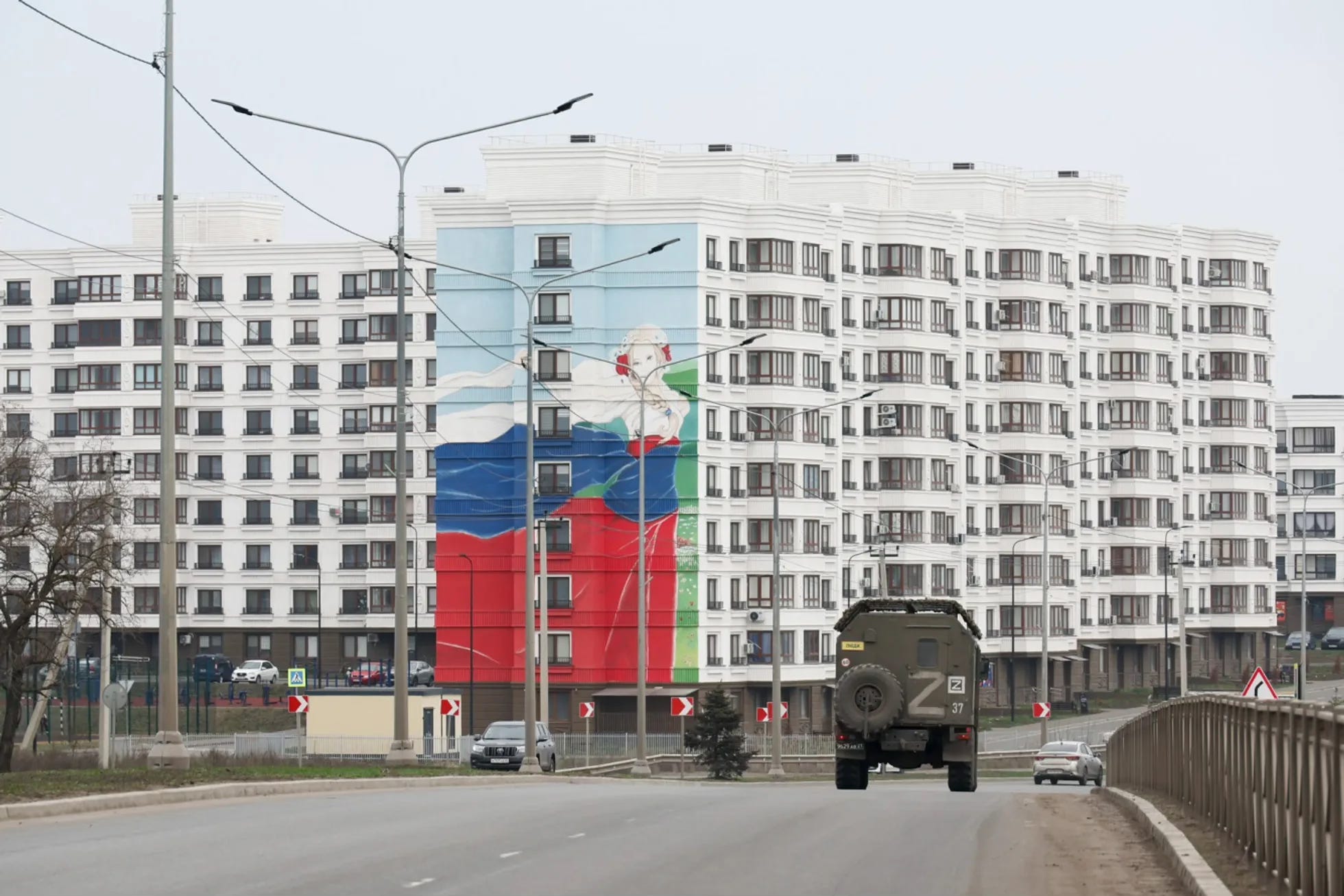
Executive Summary:
Many Ukrainian families have fled the occupied territories of Ukraine since Russia’s full-scale invasion, fearing child deportations, forced conscription, and the hardships of life under Russian rule, often leaving homes, farms, and businesses behind that the occupation authorities then seize.
For some Ukrainians, fleeing with nothing was the only way to save their children; for others, leaving a family member behind seemed the only way to protect what they owned. In December 2025, Putin signed a law allowing occupation authorities to confiscate so-called “ownerless” Ukrainian homes and transfer them without court approval.
Russian authorities are attempting to legalize the appropriation of Ukrainian property and use property rights as a tool to reshape the demographic composition of the occupied territories. Ukrainian authorities call these actions an attempt “to legitimize outright looting,” and are working with international partners to create a compensation mechanism for victims.
On May 9, Russian President Vladimir Putin said that his war against Ukraine is “coming to an end” and suggested that he might meet Ukrainian President Volodymyr Zelenskyy in a third country after a long-term agreement had been negotiated (President of Russia, May 9). On May 26, Zelenskyy told a meeting of the Servant of the People parliamentary faction that the “hot phase” of the war could be over by the end of 2026. He said Ukraine expects its European partners to appoint a mediator for the talks, and that the United States would send a delegation to Kyiv in preparation (TSN, May 26).
The Kremlin’s full-scale invasion of Ukraine in 2022 forced over nine million Ukrainian citizens to flee their homes, leaving their property behind (UNHCR, accessed May 11). Over 1.8 million Ukrainians had already been displaced by Russia’s annexation of Crimea and support for the separatist republics in the Donetsk and Lugansk oblasts in 2014 (Harvard Ukrainian Research Institute, accessed May 11). Any durable peace agreement will require a workable mechanism to compensate these civilian victims of Russia’s aggression.
For most Ukrainians, their home is their most valuable asset. When deciding whether to flee or remain under Russian occupation, many consider what would happen to their properties. Some even decide to stay, or leave one family member behind, to guard their houses. The Reckoning Project, an organization documenting human rights violations, has collected over 800 testimonies illustrating this trend.
The stories of two families from the southern region of Ukraine, occupied in the first days of Russia’s full-scale invasion, vividly demonstrate these choices and their consequences. One family left in mid-April of 2022, leaving everything behind but staying together. Valentyna and Ivan (names changed for safety), both in their early 60s, had two biological children and had adopted 12 more. In February 2022, they had nine young children in their care. On the day when Russians invaded their village, the family awoke to explosions. Several Russian tanks and BMPs (Boyevaya Mashina Pyekhoty, Боевая Машина Пехоты, Infantry Fighting Vehicles (IFVs)) were parked directly outside their house. Valentyna remembers her shock when she stepped outside, and a tank turned its turret toward her (Author’s Interview, June 20, 2025).
The family decided to leave less than two months later, after the village head warned them that the Russians were removing adopted children from Ukrainian families and transferring them to Russia. Valentyna also feared for her two sons in their early 20s, who could be mobilized into the Russian military. Thirteen family members, including a newborn, squeezed into a seven-seat Mazda and drove west through heavy fighting between Mykolaiv and Kherson. Valentyna recalls that a car behind them was shot at by Russian troops. She believes they escaped because they carried nothing except documents and water and told Russian soldiers at checkpoints that they were simply “visiting nearby relatives” (Author’s Interview, June 20, 2025).
Valentyna and her husband, children, and grandchildren now live in a much smaller house bought by one of their oldest sons, who now serves in the Ukrainian armed forces. Before the invasion, the parents had purchased land to build him a home in their village. Their oldest daughter’s house, which her family abandoned when they fled, is now occupied by a Russian family. Valentyna says that their own house—with five bedrooms and a swimming pool—stands empty but now bears a sign: “Property of the Russian Federation” (Author’s Interview, June 20, 2025).
Another family made a different choice. The mother and six children fled, while the father stayed behind to protect their family farm—a large house, 50 hectares of land, farm equipment, and livestock (Author’s Interview, January 21). When Russian forces occupied their village, Olga and Andriy (names changed for safety), both in their late 50s, had four young children in their care and adult children in Ukraine-controlled territory in early 2022. After Russian occupation, the director of a nearby orphanage begged them to adopt two young sisters before their deportation to Russia. Olga and Andriy agreed and brought the girls home, trying to complete the adoption process across the front lines (Author’s Interview, January 21).
Olga and the six children left in early 2023, after occupation authorities began demanding that they register their children in the Russian social system or risk removal. Olga remembers living in constant fear, especially for her two teenage boys, who could eventually be drafted into the Russian army. She fled alone with six children by bus, taking only food, water, and documents. Like Valentyna, she told Russian soldiers at checkpoints that they were visiting relatives and would soon return.
At one checkpoint, Russian soldiers separated Olga from her children, who were placed in what she described as a cage outside, while she endured five hours of interrogation inside a trailer. At one point, an interrogator, a man about her age, insisted that Russia had come to liberate Ukrainians (Author’s Interview, January 21).
“From what?” Olga asked. Apparently, from the poverty he imagined Ukrainians lived in.
“You are old enough to remember the Soviet Union,” he told her. “The USSR meant wealth and abundance. We want everyone to live like that again. It is all about the economy.”
Olga looked at her hands with dirt under her nails and replied, “I have six children. I have four cows. I have 50 geese, 18 sows, and dozens of piglets. What economy?”
In the end, they were allowed to leave. Olga believes her descriptions of the farm and the fact that her husband stayed behind convinced the Russians that the family intended to return.
Olga and her children are rebuilding their lives from scratch in a rented apartment, dependent on social assistance and support from their adult children. Her husband remains behind, working the land and caring for the animals. To keep ownership of the farm and house, he was forced to take a Russian passport. When recounting her story, Olga repeatedly shows photographs: their large house, a newly built traditional stove with decorative tile, wooden beds her husband just finished for their youngest children—reminders of the comfortable life they built for their family and lost to the war (Author’s Interview, January 21).
In December 2025, Putin signed a law allowing occupation authorities to confiscate so-called “ownerless” houses. Properties can then be reassigned or rented out, with compensation available only to Russian citizens (Russian Federation’s Official Publication of Legal Acts, December 15, 2025). This law is the latest development in efforts to legalize the seizure of property belonging to Ukrainians who fled occupation or resisted Russian rule. Between March and May of 2024, Russian-installed authorities in the occupied territories adopted regulations on so-called “ownerless” or “abandoned property,” allowing homes to be transferred to municipal ownership if owners failed to re-register them under Russian law within 30 days (Ifl.Blog, November 28, 2024).
The Office of the United Nations High Commissioner for Human Rights (OHCHR) documented that between February 2022 and December 2025, occupation authorities designated 38,000 apartments and houses as “potentially abandoned,” with 13,700 in Mariupol alone. Over 6,000 properties have already been registered as abandoned, over 80 percent of them in Mariupol (OHCHR, December 9, 2025).
The OHCHR report describes a case where the occupation authorities designated an apartment as “potentially abandoned” in Mariupol, even though the owner’s sister was living there. The owner attempted to return to the occupied territory but was denied entry at Moscow’s Sheremetyevo airport and banned from entering Russia for 20 years. A Russian court subsequently designated her property as abandoned and transferred it to municipal ownership.
Occupation authorities can now transfer properties to municipal ownership without a court decision because of the December 2025 law on “ownerless” homes. The OHCHR notes that “only Russian passport holders can register property in occupied territory, significantly limiting Ukrainians from protecting their ownership rights” (OHCHR, December 9, 2025).
The Kharkiv Human Rights Protection Group (KHRPG), one of Ukraine’s oldest human rights organizations, concludes that Russian property law effectively eliminates any legal avenues for Ukrainian citizens to assert ownership rights while their property remains under occupation (KHRPG, December 8, 2025). The group also cautions against traveling to occupied territories, noting that ownership of valuable real estate there can itself become grounds for denial of entry (KHRPG, May 9, 2025). It further warns that Ukrainians who accept Russian citizenship to protect their ownership rights still face risks of abduction and prosecution, while becoming far harder to secure in prisoner exchanges (KHRPG, December 19, 2025).
These property laws and related practices are one of the ways that Russia is reshaping the demographics of the occupied Ukrainian territories (Meduza, May 19, 2025). Russians also have economic incentives to move there, including higher salaries and preferential access to land (Meduza, September 2, 2022). There is legal pressure on Ukrainians to accept Russian citizenship or to leave. Occupation authorities have deported Ukrainian civilians to Russia, including tens of thousands of Ukrainian children, and terrorize residents in frontline areas such as Kherson to drive residents away (GlobSec, June 16, 2025). Russian officials now offer preferential mortgages to Russian citizens purchasing real estate in occupied territories. As a result, Russians reportedly account for 70 percent of all housing purchases there (Interfax, March 16). The Kremlin’s campaign to fill the occupied territories of Ukraine with Russian citizens, deliberately reshaping demographic reality, is meant to make those territories appear inherently Russian and to complicate any future reintegration into Ukraine (ISW, May 5).
Russia’s “annexation” is not internationally recognized, and the territories legally remain part of Ukraine. Under international humanitarian law, Russia is an occupying power obligated to respect the property rights of lawful owners in occupied territories. Article 46 of the Hague Convention IV, which Russia is a signatory to, states that “private property … must be respected. Private property cannot be confiscated” (The Hague Convention (IV), accessed May 21). The prohibition extends beyond outright seizure or eviction to include threats, coercion, or other measures that deprive residents of their ability to exercise their ownership rights.
Ukraine’s Ministry of Foreign Affairs called the December 2025 Russian property legislation an attempt “to legitimize outright looting.” The ministry argues that these laws are part of the Kremlin’s deliberate push to change the demographic composition of the occupied territories, violating international humanitarian law to make them more “Russian.” Ukraine has called on international partners to hold the Russian Federation accountable. The Ukrainian government is documenting illegal property seizures so that it is possible to restore ownership rights after de-occupation (Ministry of Foreign Affairs of Ukraine, December 10, 2025).
Ukraine and its partners are working on a compensation mechanism for victims. On November 14, 2022, the UN General Assembly supported the creation of an international compensation mechanism for citizens’ losses because of Russia’s war against Ukraine. The mechanism consists of three elements: the Register of Damage Caused by the Aggression of the Russian Federation against Ukraine, the International Compensation Commission for Ukraine, and the compensation fund (Ministry of Foreign Affairs of Ukraine’s response to author’s information request, April 8).
The Register of Damage Caused by the Aggression of the Russian Federation against Ukraine has accepted 150,000 claims through Ukraine’s Diia web-portal as of early May (Evropeys’ka Pravda, May 5). The register currently accepts 16 categories of claims from private individuals, including displacement, death or disappearance of family members, torture, sexual violence, and loss of housing. The register is gradually adding other categories for individuals, businesses, and state institutions. The Compensation Commission will review registered claims and determine compensation amounts. Thirty-five countries and the European Union have signed the convention to establish the commission, and five countries, including Ukraine, have ratified it. Kyiv expects that once at least 25 parliaments ratify the convention—likely by next year—the commission will begin reviewing its first claims. The Ukrainian government is working on the third element, the compensation fund, which will provide the money for victim compensation. Kyiv hopes frozen Russian assets abroad will become one of its main funding sources (Ministry of Foreign Affairs of Ukraine’s response to author’s information request, April 8).
Russia has inflicted approximately $195.1 billion in damage on Ukraine—including $61.1 billion in destroyed or damaged housing—between the start of the full-scale invasion in February 2022 and December 2025 (Fifth Rapid Damage and Needs Assessment, April 24).While the issue of Russia compensating Ukrainians for property loss, including housing, might not be at the top of the negotiation agenda, ignoring it would shift the burden onto the Ukrainian government, which has already suffered enormous financial losses due to Russian aggression. If Russia does not face financial responsibility for its crimes against Ukrainian citizens, further aggression could be encouraged.
This article was originally published in Eurasia Daily Monitor.