

Russian Authorities Launch More Repression Against Dissidents
Kassie Corelli
Executive Summary:
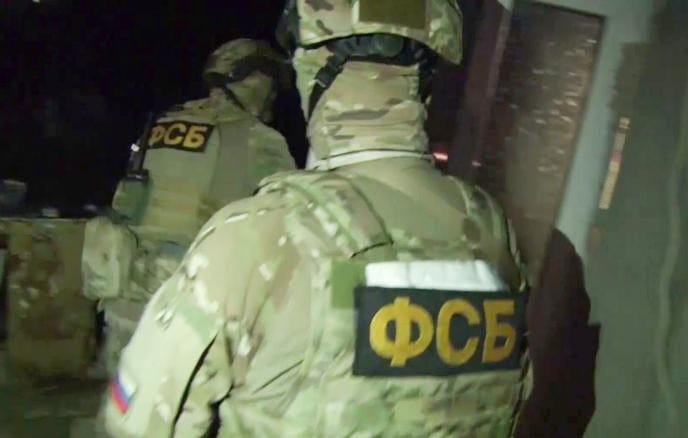
In 2025, the Kremlin’s security services initiated a record number of treason and espionage cases against opponents of Moscow’s war against Ukraine, including citizens living outside of Russia.
From 1997 to February 2022, there were only 196 total sentences under these charges; in 2025 alone, at least 468 people were convicted on such charges. The Kremlin is widening repression beyond activists, targeting ordinary citizens for minor acts such as donations to Ukraine.
In April 2025, the Russian State Duma authorized trials in absentia against individuals living abroad, allowing the security services to exert pressure even on those located outside the country.
When refused protection from foreign countries, anti-war Russians are at the mercy of the Russian authorities, even if the person resides abroad. The Russian intelligence services happily exploit this vulnerability, recruiting ordinary citizens.
According to the legal defense project “First Department,” 2025 broke the record for the number of treason and espionage cases in Russia. These crimes, under articles 275, 276, 275.1, and 276.1 of the Criminal Code of the Russian Federation, include treason, espionage, secret collaboration with foreigners, and providing aid to the enemy. The Kremlin has massively increased repression against the Russian people since its full-scale invasion of Ukraine (see EDM, October 21, 2025). Between 1997 and February 24, 2022, there were only 196 sentences under these charges. Between January 1, 2025 and December 10, 2025, 468 people were convicted on such charges, and at least 420 more were under investigation (First Department; Radio Svoboda, December 20, 2025). The total number of individuals involved in cases under these articles was at least 1,627 in 2025. The largest group of defendants are Russian citizens with no connection to political activities, including students, information technology (IT) specialists, teachers, factory workers, and entrepreneurs. These are not public figures or political activists and had no access to government secrets. To be charged with treason requires no more than a small monetary transfer to charitable organizations helping Ukrainian refugees (First Department, December 20, 2025).
Russia has also been initiating criminal cases in absentia against Russians living abroad. This is made possible by a fundamental change in Russian law. In April 2025, the Russian State Duma authorized trials in absentia against individuals located abroad “for crimes against the security of Russia.” This made proceedings in absentia possible and sentencing without the presence of the accused for such crimes as “calls for terrorism and extremism,” dissemination of “fake news” discrediting the Russian Army, and, of course, treason (Forbes.ru, April 8, 2025).
Previously, the Russian security services would initiate criminal cases in absentia on political charges, most often against well-known media figures. They avoided doing so on a mass scale because they were unable to close cases in the absence of the accused. Now, however, in absentia cases are indistinguishable from others and serve as a way for the security services to meet quotas and demonstrate an active fight against enemies. Anastasia Burakova, the head of the “Ark” Project (Kovcheg), which assists anti-war Russians, notes that in January, the Federal Security Service (FSB) launched three criminal cases against volunteers who worked in Georgia from projects providing assistance to Ukraine, two of them in absentia (Telegram/@aburakova, January 28). None of the three women had a significant public profile, suggesting that the FSB has begun to closely examine the activities of diaspora groups.
Last year, Russia adopted the practice of so-called “carousel” arrests. This is when a person is held on fabricated administrative charges and held for several days. By the time the first administrative arrest ends, the person is detained again for another 10–15 days. During this time, law enforcement officials coordinate with the central FSB apparatus to initiate a criminal case against the victim. Administrative arrests continue until the person is finally detained on serious criminal charges (Meduza, December 12, 2025).
Data analyst Kirill Parubets conducted a special analysis for “First Department” on several examples of similar “carousel” detention. Often, the reason for the first detention was a charge of “disobeying the lawful order of a police officer” or “petty hooliganism.” When investigations gather sufficient evidence or obtain the “necessary” confession, the suspect is advised of the charges under one of the more serious statutes, such as treason, espionage, or terrorism (First Department, April 4, 2025). Parubets himself barely escaped being the victim of such a “carousel.” In April 2024, he and his wife were held for 15 days, charged with “hooliganism.” In jail, he was approached by FSB operatives who charged him with state treason for sending money to Ukraine. They threatened him with life imprisonment, which he could avoid only by agreeing to cooperate. Parubets managed to trick the security service and leave Russia. Now, he has received political asylum in France (First Department, December 4, 2024).
Hardly any of the victims of the Russian authorities are as fortunate as Parubets. Russians abroad face difficulties obtaining refugee status in the European Union and the United States and risk deportation back to Russia (Verstka, January 12). The situation in visa-free countries is even worse. On February 2, “Ark” reported that Kazakhstan extradited three politically persecuted citizens to Russia—an IT specialist accused of treason for a money transfer to Ukraine, a Chechen activist, and a deserter who escaped from a Russian military base—in less than a week (Telegram/@ArkHelps, February 2).
The risk of extradition is not the only problem arising from an in absentia criminal case. Even if the country of residence does not turn the emigrant over to the Russian authorities, such persecution can seriously complicate their life. A criminal case in Russia makes it impossible for those involved to receive consular assistance, including a power of attorney or passport renewal.
At the end of 2025, a new bill emerged in Russia that introduced an even broader list of restrictions for criminal offenses and administrative offenses. These restrictions are used against individuals involved in cases concerning “foreign agents,” “discrediting the army,” participation in “undesirable organizations,” and so on. These individuals will have their funds and property blocked, as well as their ability to access online government services and perform any actions by power of attorney (Verstka, December 11, 2025). Dissidents whom Russia places on its list of terrorists and extremists—most often for supporting Ukraine—have their accounts in European banks blocked and closed based on this list (BBC–Russian Service, November 20, 2025).
Lawyers from “First Department” note a rise in cases of Russian intelligence recruiting Russians. They say that since the start of the full-scale war, security officials have increasingly forced people to sign cooperation agreements by threats and coercion, as in Parubets’s case. Such individuals are often forced to engage in provocations, something that was rarely seen before 2022 (7x7 – Gorizontal’naya Rossiya, November 7, 2025). When refused protection from foreign countries, anti-war Russians are at the mercy of the Russian authorities, even if the person resides abroad. The Kremlin happily exploits this vulnerability.
This article was originally published in Eurasia Daily Monitor.
Kassie Corelli is an analyst with The Jamestown Foundation.