

New Free Trade Zone Solidifies Eurasian Ties
Dennis Yang
Executive Summary:
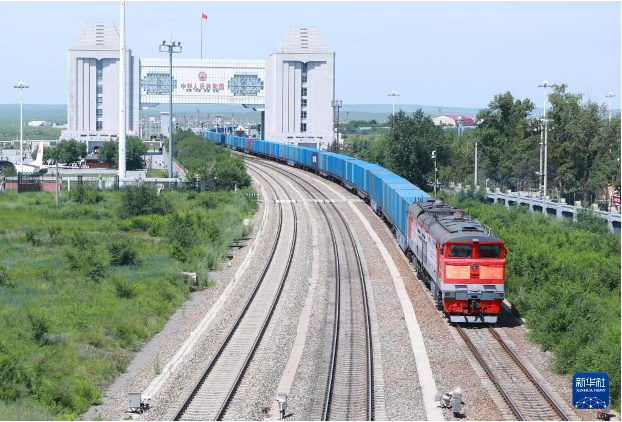
Beijing is seeking to promote land-based trade with Mongolia, Russia, and Europe through a new Free Trade Zone (FTZ) in Inner Mongolia. Citing geopolitical considerations and the “rise of protectionism,” the FTZ is intended to diversify trade away from Western-facing maritime supply chains.
The new FTZ is designed to support deeper economic integration with the People’s Republic of China’s (PRC) northern neighbors, advance industrial transformation, and strengthen ethnic governance in the Inner Mongolia Autonomous Region.
The FTZ plan invests heavily on transport infrastructure to facilitate cross-border trade with Mongolia and Russia through the PRC–Mongolia–Russia Economic Corridor, which is part of the One Belt One Road initiative.
On April 9, the State Council announced the creation of a new pilot free trade zone in the Inner Mongolia Autonomous Region. The plan, titled China (Inner Mongolia) Pilot Free Trade Zones Comprehensive Plan (中国(内蒙古)自由贸易试验区总体方案), brings the total number of FTZs in the People’s Republic of China (PRC) to 23. The announcement follows calls in the 15th Five-Year Plan for “optimizing the scope of pilot free trade zones” (优化自由贸易试验区布局范围) (Xinhua, March 13). The document describes the Inner Mongolia FTZ as an “important bridgehead for opening up to the north” (向北开放重要桥头堡), in reference to northward cross-border commerce with neighboring Russia and Mongolia (Xinhua; State Council, April 9).
The new FTZ is the first to be announced since the approval of one in Xinjiang in 2023. The two zones’ locations, both in inland border regions, suggest dual economic and strategic motives behind their establishment. Both are under-developed regions, but a focus on enhancing trade with Russia and aligned Central Asian countries can also alleviate the danger of potential maritime chokepoints impacting seaborne trade by diversifying away from Western supply chains and trade routes.
Advancing Eurasian Economic Security Imperatives
Beijing historically has used FTZs to redistribute growth in regions it considers strategic. This has led to a concentration of such zones in coastal provinces, in part because they were focused primarily on attracting foreign capital and talent. FTZs proliferated rapidly until the end of the 13th five-year plan period, but have slowed this decade, with only two new zones announced since 2021. These two, in Xinjiang and now in Inner Mongolia, indicate a desire to mitigate the effects of a geographically unbalanced economy, while linking economic development with Beijing’s long-standing objective of strengthening governance and national integration in ethnic minority border regions. The move away from coastal regions is also an indication of the diminishing returns of oversaturation in coastal areas, as Chinese experts have observed (China Development Institute [CDI], April 15).
The designation of a new FTZ in Inner Mongolia follows a visit by General Secretary Xi Jinping in June 2023, when Inner Mongolia was assigned five main strategic areas of responsibility, including energy security, ecological security, food production, border stability, and to act as a bridgehead for northward opening up. These roles were collectively described as “two barriers, two bases, and one bridgehead” (‘两个屏障’‘两个基地’‘一个桥头堡’) (Xinhua, June 8, 2023; Dangjian Magazine, March 2). These priorities indicate the strategic calculus behind the selection of Inner Mongolia. As local Party media observe, it “internally links eight inland provinces near Beijing, and externally connects to Russia and Mongolia across Eurasia” (内联八省近京畿、外接俄蒙通欧亚) (Inner Mongolia Daily, April 13).
Geopolitical realignment and the rise of protectionism are hastening efforts to deepen trade ties with Russia and Mongolia (The Paper, April 11). As such, the government frames the new FTZ as advancing the “northward opening up strategy to enter a new stage” (向北开放战略进入全新阶段), explicitly tying it to “high-level opening up” (高水平对外开放), which was given a new prominence in the latest five-year plan (China Brief, April 4; Xinhua, April 9).
‘Role Model’ Autonomous Region Moving up Value Chain
The new FTZ is designed for land-based trade experimentation. Previous FTZ reforms concentrated on maritime trade and port logistics, leaving rail and road cross-border transport regulations comparatively underdeveloped. By focusing on land ports, cross-border logistics, “coordinated port-of-entry and hinterland logistics” (口岸与腹地物流协同), and regulatory coordination with neighboring countries, the new zone can become “a highland of institutional innovation” (制度创新的高地), according to one expert commentary (CDI, April 15).
Inner Mongolia, like Xinjiang, is an autonomous region; but unlike Xinjiang, Inner Mongolia is frequently described as a “role model” (模范). This is also reflected in the FTZ announcement, which contrasts strongly with language used in the Xinjiang FTZ announcement, which focused more heavily on the “New Era Party Plan for Governing Xinjiang” (新时代党的治疆方略) (State Council, October 21, 2023). The “role model” characterization has deep historical roots—Premier Zhou Enlai once used the phrase when praising its role in ethnic governance and national integration (Xinhua, July 14, 2017). This legacy continues today, where Inner Mongolia is portrayed as a successful example of ethnic unity and frontier governance (China Ethnic News, November 11, 2023; Dangjian Magazine, March 2).
The FTZ plan explicitly links economic opening with ethnic policy goals, stating the zone should “improve livelihoods in frontier ethnic regions” (增进边疆民族地区民生福祉) and support the construction of a role model autonomous region (State Council, April 9). Under Xi, the Party has used Inner Mongolia to promote its repressive and assimilationist policies. In 2021, it became the first autonomous region to announce an ethnic unity act, the Inner Mongolia Autonomous Region Ethnic Unity Promotion Act (内蒙古自治区促进民族团结进步条例) (Inner Mongolia Autonomous Region People’s Congress, April 25, 2022). Its successful implementation might have made it a prelude to the nationwide Ethnic Unity Promotion Law (民族团结进步促进法) enacted in March 2026 (China Brief, March 27, April 2). For the Chinese Communist Party (CCP), economic and infrastructure development in frontier border regions foster ethnic unity and reinforce long-term regime security.
Inner Mongolia hopes to leverage the FTZ to ascend the industrial value chain. Currently, cross-border trade generates limited local value-add, with goods only transiting the region and not being processed locally, what Xinhua refers to as “lacking platform support” (平台支撑不足) (Xinhua, April 10). In the future, the government plans to upgrade the region from a “pass-through economy” (过道经济) to a “hub economy” (枢纽经济), and from a “golden passage” (黄金通道) to a “landing economy” (落地经济). Planners envision that trade promoting local manufacturing, warehousing, and financial settlement will be transformative (Inner Mongolia Daily, April 15). If successful, the zone will break down the previous paradigm of cross-border commerce where activity has generated limited local economic spillover.
Key Subzones Bolster PRC–Mongolia–Russia Ties
The Inner Mongolia FTZ spans 46 square miles and includes three subzones. Hohhot, the region’s capital, anchors the overall zone as a logistics, computing, and digital infrastructure hub linking the Chinese interior to Eurasia; Manzhouli serves as the primary gateway to the PRC’s northern neighbor along with industrial processing; and Erenhot, a land port on the Mongolian border, also coordinates trilateral connectivity onward to Russia (State Council, April 9).
This division of labor will strengthen the region’s role as an integrated node in the PRC–Mongolia–Russia Economic Corridor (中蒙俄经济走廊), one of six major corridors under Beijing’s One Belt One Road (OBOR) initiative. Complementing Mongolia’s Steppe Road program and Russia’s Eurasian Economic Union strategy, it links the PRC’s northern industrial regions with Mongolia and Russia, and onward to European markets via the Trans-Siberian Railway. The PRC describes it as an important platform for regional cooperation in the age of global economic “disruption from unilateralism and the countercurrent of protectionism” (单边主义、保护主义逆流冲击) (Xinhua Silk Road, September 3, 2025). The corridor allows the PRC to secure resources from Russia and Mongolia and expand overland export routes to Europe while reducing reliance on maritime routes.
The FTZ plan seeks to facilitate trade through even basic measures. One of the practical challenges of shipping Chinese products north by rail is a break-of-gauge immediately encountered at the borders with both Mongolia and Russia, as the PRC rail system uses a different gauge to its two neighbors. The FTZ has made provisions to alleviate this situation in two places—Manzhouli and Erenhot—to reduce delays in shipping times.
Figure 1: Inner Mongolia FTZ Development Subzones
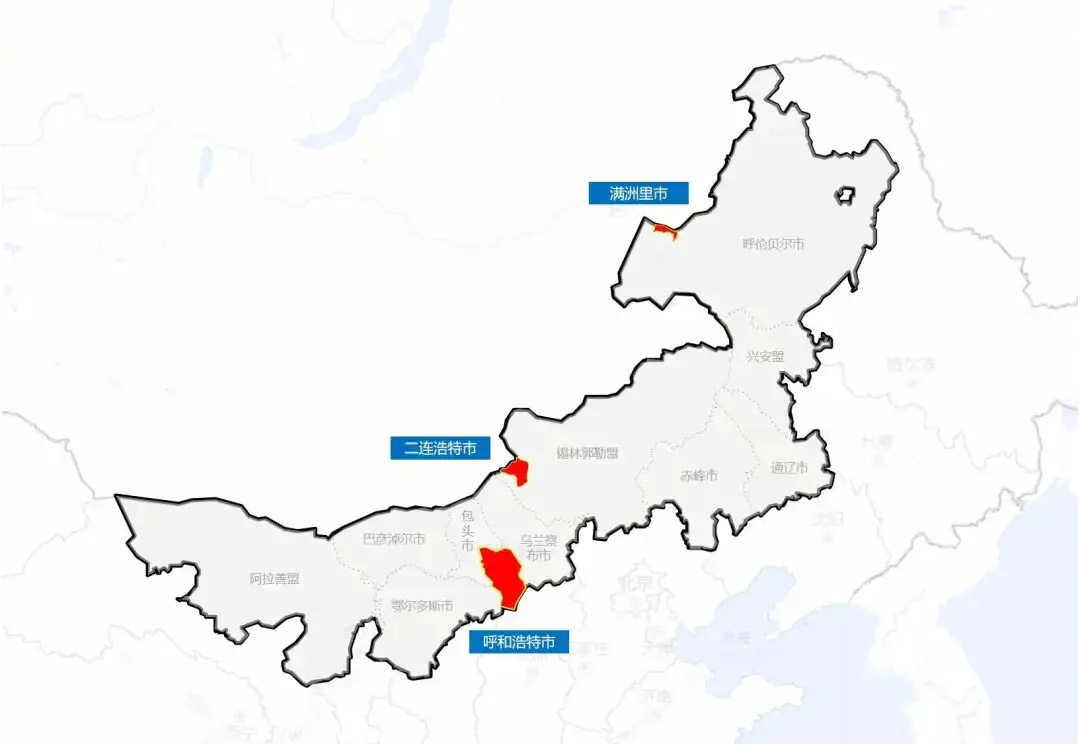
(Source: China Development Institute)
Hohhot
Hohhot will leverage its administrative status as the capital of Inner Mongolia and serve as a regional logistics and technology transfer hub. The city’s infrastructure has developed rapidly in recent years already. Just one freight train departed the city for Europe in 2021; by 2025, that number had risen to 150, likely due to the introduction in 2024 of rapid rail customs clearance (铁路快速通关) (Hohhot Municipal Commerce Bureau, August 5, 2024). Shengle International Airport (盛乐国际机场), the region’s main transport hub, was recently upgraded to “4F,” the highest level of classification (Inner Mongolia Daily, March 13). [1] This will support expanded international cargo routes as part of an “Eurasian air corridor” (欧亚空中走廊) and reinforce Hohhot’s connectivity with Russia, Mongolia, and Europe (The Paper, April 14). [2]
Planners also intend for Hohhot to expand as a cross-border data hub. This is partly based on its existing role in digital infrastructure—the Horinger data center cluster (和林格尔数据中心集群) is the country’s largest, powered largely by the region’s abundant and cheap renewable energy capacity (China Energy News, April 16). The cluster has developed as part of the “Eastern Data Western Computing” (东数西算) initiative and authorities aim to expand to nearly eight times current capacity by 2027 (China Brief, March 8, 2025; Xinhua, June 24, 2025). Planned initiatives to pioneer cross-border data connectivity with Russia, Mongolia, and Europe include applying to establish an international communications gateway, building cross-border data trading systems, and developing international cooperation in green electricity certification and data exchange. These initiatives suggest the zone is key to extending the PRC’s “Digital Silk Road” (数字丝绸之路) across Eurasia (Inner Mongolia Daily, April 15).
Manzhouli
Manzhouli currently handles a significant share of the PRC’s overland trade with Russia and is positioned to expand cross-border e-commerce and logistics services. It is one of three PRC endpoints for the eastern corridor of the China–Europe Railway Express. Construction has been approved for a second rail link between Manzhouli and the Russian city of Zabaykalsk immediately across the border, which will further boost freight and passenger volumes (Sputnik, March 7). The city has already reaped the benefits of increased trade with Russia. Its airport was recently upgraded to an international airport, and it has experienced a tourism boom following the PRC’s decision to allow visa-free travel to Russian citizens in September 2025, with 78,000 border crossings by Russians in the first six weeks of the year, a rise of over 74 percent over the same time period in 2025 (PRC Embassy in the Russian Federation, September 2, 2025; Xinhua, February 16, March 10).
Manzhouli will be a testing ground for cross-border digital trade systems, such as smart customs clearance, cross-border settlement innovation, and platform-based commodity trading. Cross-border e-commerce trade exceeded renminbi (RMB) 13 billion ($1.9 billion) in the first quarter of 2026, surpassing the total for all of 2025, supported by a large industrial park and nine overseas warehouses (Inner Mongolia Daily, April 4). Imported Russian commodities, particularly in non-ferrous metals, will now contribute toward local value-added manufacturing and logistics services as opposed to mere transit previously (Xinhua, April 10). Manzhouli has also been paired with the coastal ports of Dalian and Qinhuangdao to facilitate cross-border logistics and share resources (China Net, April 16). The PRC’s plans mirror those used by Russia to develop its Far East into “Territories of Advanced Development” (PRC Consulate in Vladivostok, July 26, 2021). [3]
Erenhot
The FTZ plan labels Erenhot as a “super connector” (超级联系人) in the PRC–Mongolia–Russia Economic Corridor. The port accounts for over 70 percent of PRC–Mongolia travel and over 80 percent of consumer goods exports to Mongolia. It is also the endpoint of the Middle Corridor (中通道) in the China-Europe Railway Express. The plan supports additional trains heading to Ulaanbaatar, Mongolia and expands loading capacity in Erenhot as part of the solution to the break-of-gauge (China Transportation News, April 10; Inner Mongolia Daily, April 15).
The plan also positions Erenhot for cross-border environmental governance with Mongolia. This is partly a result of Inner Mongolia’s responsibility for ecological security work. It also builds on the city’s role hosting the PRC–Mongolia Ecological Civilization Pilot Zone (中蒙生态文明共建试验区) with neighboring Zamyn-Uud, described as the PRC’s first cross-border ecological cooperation zone (Erenhot Municipal Administrative Approval and Government Service Bureau, December 18, 2023). The initiative focuses on joint sandstorm monitoring, desertification control, green energy development, and environmental training programs for Mongolian officials and firms. Chinese sources frame the project as both a component of the OBOR initiative and a tool for deepening the PRC–Mongolia partnership, showing the integration of ecological cooperation into Beijing’s broader northward opening strategy (China National Radio Inner Mongolia Channel, December 22, 2023; Economic Herald, March 3).
Conclusion
The Inner Mongolia FTZ reflects Beijing’s new approach to pursuing geopolitical and ethnic governance goals in its border regions. The success of this model will depend on whether land-based FTZ economic expansion successfully leads to economies of scale and industrial transformation in Inner Mongolia. Early success in industries the plan promotes, such as cross-border e-commerce, suggests this may be possible: one such company grew its e-commerce trade volume with Russia and Mongolia 40 times within two years; and is set to expand further as the FTZ unlocks new international postal routes (Xinhua, April 10).
Issues such as whether regulatory coordination with Mongolia and Russia can be implemented at scale, and whether constraints such as Inner Mongolia’s less developed economic base can be overcome place asterisks on the future of the project. It also remains unclear whether “hub economy” upgrading can produce local value-added growth or if cross-border trade will just continue to exhibit limited domestic spillover effects.
Diversification away from Western-oriented supply chains is an important strategy for the Party. The new FTZ thus represents a step toward further securitizing its northern frontier by deepening economic interdependence with its neighbors. The prospects for overland trade—largely with less-developed partners—are limited compared to the benefits the country reaps from maritime trade, however, and so the value of its inland FTZs have a clear ceiling. The new zone connects Inner Mongolia to an international economic corridor and positions it as a geopolitical hedge, but its most immediate benefits may be in supporting local development in one of the country’s middle-tier regions and attempting to rebalance the country’s overall economic development.
This article originally appeared in China Brief. Check it out here!
Dennis Yang is a Research Assistant at the Jamestown Foundation. He researches Cross-Strait relations, Taiwanese politics, CCP united front efforts, and China-Latin America relations.
Notes
[1] “4F” airports, the highest classification level for airports in the PRC, has a runway that exceeds 1800 meters and allows for the largest commercially available aircraft with a wingspan of 65–80 meters to operate, such as the Boeing 747 and Airbus 380. Major PRC airports such as Beijing Daxing, Guangzhou Baiyun, and Shenzhen Bao’an are all classified as 4F airports (Baidu, accessed May 1).
[2] These include so-called “fifth freedom flights,” which refer to the right of an airline to operate routes between two foreign countries on a service that either begins or ends in the home country of the airline. The term was defined by the International Civil Aviation Organization’s (ICAO) Chicago Convention in 1944, commonly known as “freedoms of the air,” which allows countries to have operating privileges in another country’s airspace (Flightradar24, August 7, 2023; ICAO, accessed May 1).
[3] In the original Russian, “territories of Advanced Social and Economic Development” is Территории опережающего социально-экономического развития (ТОСЭР) (Moscow Times, June 15, 2015).