

Kremlin Inadequately Responds to Increased Ukrainian Strikes
Kassie Corelli
Executive Summary:
Kyiv has intensified strikes on Russian military plants and other strategic targets such as oil depots, microelectronics facilities, and energy infrastructure, highlighting Ukraine’s rapid military advancements amid Russian stagnation.
Independent analysts point out that the Russian Ministry of Defense has systematically exaggerated its successes throughout the four years of the full-scale conflict against Ukraine, but has been unable to alter its wartime tactics or achieve serious results fundamentally.
Moscow is trying to compensate for its miscalculations by increasing the defense budget and attempting to attract young people to the front, primarily students, exacerbating an already dire demographic crisis.
Ukraine has significantly increased the number of strikes in Russian territory. In mid-March, Ukraine’s armed forces launched a hundred rocket and drone attacks on Russia over the course of one week. Oil depots, microelectronics facilities, and energy infrastructure sites were attacked. According to independent military experts, this intensification is linked to the increase in Ukraine’s production of long-range drones (Novaya Gazeta–Evropa, March 16). Russian Foreign Ministry Spokesperson Maria Zakharova drew attention to the escalation of attacks, stating that the Ukrainian attacks are “overseen by the same people who are behind the situation around Iran” (Komsomol’skaya Pravda, March 18).
Russian military analysts are taking a more realistic view of the situation. They note that Kyiv itself is significantly changing its goals and methods of war, specifically increasing the scale of drone use, as well as the tactical and operational depth of its operations. They note that the Ukrainians are also deploying additional air defense forces to protect logistics and critical routes, have begun constructing defensive fortifications, and have even started an audit of personnel losses (Topwar.ru, March 15). Following the strike on the Kremniy El plant in Bryansk on March 10, writers for Military Review—an outlet close to the Russian Ministry of Defense—admitted that Russian anti-aircraft systems were incapable of taking down not only Ukrainian rockets, but also intelligence gathering drones. They revealed that Moscow’s longtime practice of disabling mobile Internet access in Bryansk oblast does not affect drone attacks (Topwar.ru, March 14). Other writers at the site seriously warn that Ukraine is capable of hacking into and using to its own advantage the numerous surveillance cameras installed on Russian streets (Topwar.ru, March 17). The most widespread response in Russia has been to disable mobile internet for weeks at a time. These internet shutdowns are now occurring not only in border regions but also in Moscow (Meduza, March 12).
No meaningful changes in Russian war tactics are discernible. Independent journalists note that the Russian Ministry of Defense regularly issues fabricated reports about its supposed “successes.” Official Dense Ministry sources cite a figure of 1.3 million Ukrainian military personnel killed in action, while independent analysts put the real figure of Ukrainian fallen at 180–200 thousand. A similar situation prevails regarding the amount of Ukrainian military equipment allegedly destroyed by Russian forces, equipment which, if one were to believe Russian Defense Ministry data, has been destroyed in quantities exceeding the total Ukrainian inventory throughout the war. Russian military authorities have repeatedly claimed the capture of settlements that, in reality, remain outside their control (Verstka, February 24).
Russian military analysts are once again invoking the “nuclear shield” and expressing hope for an “expansion of the nuclear club to include states from the list of countries friendly to Russia” (Topwar.ru, March 10). Concurrently, Moscow is ramping up military spending, which currently accounts for fully half of the country’s budget (see EDM, March 16). Instead of refining combat tactics, however, the Kremlin is channeling financial resources into payments for contract soldiers—as usual, attempting to resolve the problem by deploying additional manpower to the front lines.
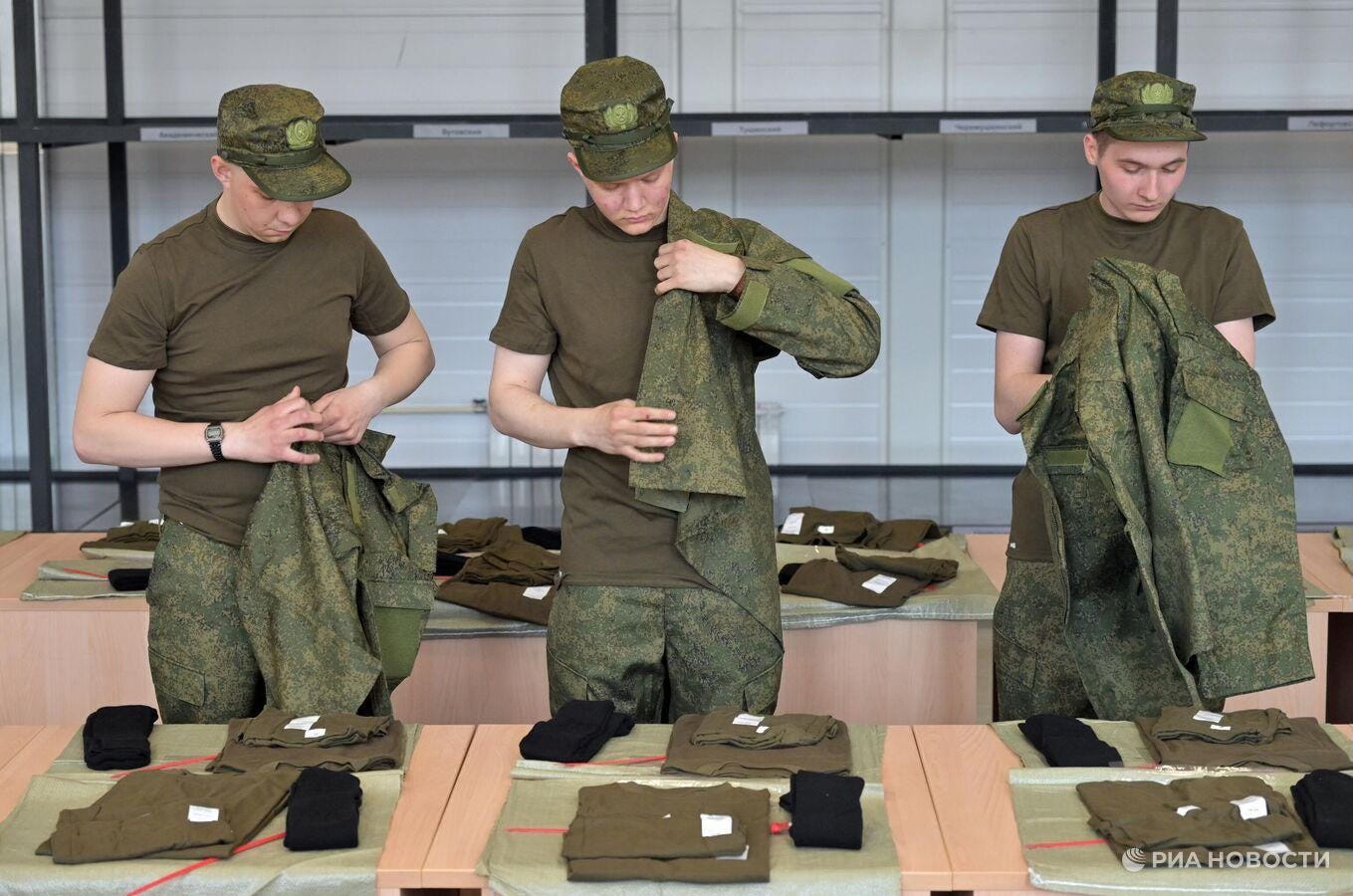
This time, students are the primary target. Over the last several months, independent journalists have documented at least 200 meetings at Russian higher education institutions and colleges promoting contract military service. The recruiters aggressively urge students to join the “drone ranks,” at times threatening them with expulsion and assuring them that new recruits will be assigned exclusively to drone operations and will not be deployed in assaults. An analysis of the proposed contract, however, revealed that if a candidate fails to pass the selection process for the drone units, they will be assigned as a regular infantryman and their contract will be open-ended. Independent journalists note that few students are willing to sign such contracts (Verstka, March 4).
Many young people join the army immediately after finishing school. Journalists note that 18-year-olds are predominant among volunteers, inspired by years of military propaganda and dreaming of assignment to the front (ВВС–Russian Service, June 23, 2025). Russian propaganda highlights cases where recent high school graduates sign military contracts behind their parents’ backs and head off to war, portraying their actions as heroic (Lenta.ru, February 9). Children’s writer and poet Masha Rupasova, who spent four years collecting material from women’s chat groups one way or another connected to the war, confirms this information. Masha is certain that this is the direct result of four years of active war propaganda in schools, including meetings with veterans and the creation of a heroic image of soldiers (Facebook/masha.rupasova, March 12).
Evaluating the long-term effect of propaganda on schoolchildren is impossible. Still, most young soldiers will serve as mere cannon fodder, incapable of turning the tide on the front lines. The only result of such a policy is the descent of Russia into a catastrophic demographic hole through the destruction of its own youth.