

ISPP’s Expanding Operational Geography in Pakistan
Rahim Nasar
Executive Summary:
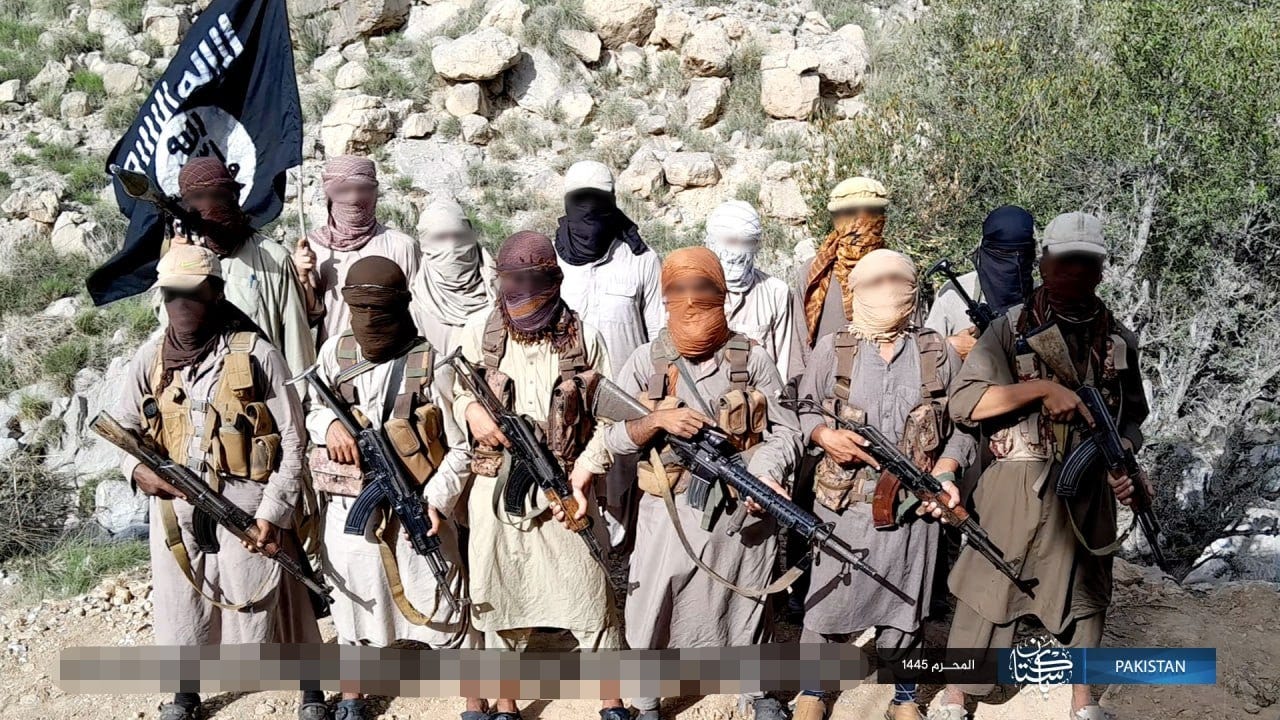
Islamic State Pakistan Province (ISPP)—a chapter of Islamic State in Khorasan Province (ISKP)—has significantly transformed its tactical capabilities and operational geography, evolving its low-organizational structure into a decentralized network capable of carrying out attacks across Khyber Pakhtunkhwa, Balochistan, and Islamabad.
ISPP’s attacks in Islamabad, Khyber Pakhtunkhwa, and Quetta demonstrate the group’s strategic shift from focusing on territorial control to high-impact militant activities, targeted killings of ideological rivals, and fueling sectarian attacks.
The group’s operational resilience is supported by cross-border sanctuaries, covert urban cells, modified insurgent architecture, an advanced digital propaganda front, and intelligence gaps, thereby transforming ISPP into one of the most serious militant threats emerging in Pakistan.
On May 5, prominent Deobandi cleric Sheikh Idrees Tarangzai was assassinated in the Charsada district of Khyber Pakhtunkhwa (X/@theoxuswatch, May 5). Islamic State in Pakistan Province (ISPP) immediately claimed responsibility for the assassination, asserting that he was loyal to the Pakistani government (X/@SaleemMehsud, May 5). The killing signaled ISPP’s expanded militant architecture across Pakistan. Tarangzai’s reported meeting with Mullah Hibatullah Akhundzada and his supportive statements of Pakistani Field Marshal General Asim Munir made him a high-value opponent within ISPP’s ideological narratives. The assassination of the prominent Sheikh, moreover, exposed the state’s inability to protect high-value figures, and the growing ability of the group to execute attacks and disappear in urban areas.
Background
The January 2015 emergence of Islamic State in Khorasan Province (ISKP) significantly altered the Afghanistan–Pakistan militant landscape. Its early foundations were in Nangarhar and Kunar, but it soon expanded to tribal regions under the leadership of Sheikh Abdul Rahim Muslim Dost, Mullah Abdul Rauf Khadim, Saeed Khan Orakzai, and Abubakar Bajauri. Originally, around 70 percent of ISKP fighters were defectors from the Tehreek-e-Taliban Pakistan (TTP, or Pakistani Taliban). Over time, however, militants from Lashkar-e-Jhangvi and other sectarian groups have also moved into ISKP camps.
By 2016, ISKP established a presence in Balochistan, Peshawar, Bajaur, Bannu, Waziristan, Orakzai, and other parts of the country. On August 8, 2016, the group bombed Quetta Civil Hospital, killing 70 people in the insurgent-riddled province (Dawn, August 8, 2016). ISKP and a splinter group of TTP—Jamaat-ul-Ahrar—mutually claimed the attack, underscoring ISKP’s ability to coordinate with other militant factions. The July 3, 2018, attack on Siraj Raisani’s rally in the Mustang district of Balochistan, in which more than 150 people were killed, further cemented the group’s capability to conduct violent attacks. In Khyber Pakhtunkhwa, ISKP focused on targeting Deobandi scholars of Jamiat Ulama-Islam Fazal Rahman (JUI-F) because of an ideological rivalry. In April 2023, ISKP issued a formal fatwa to justify attacks on the JUI-F leadership (Voicepk, August 1, 2023).
In May 2019, Islamic State (IS) announced a separate chapter via its Amaq News Agency—Islamic State in Pakistan Province (ISPP). Recently, on February 11, ISPP launched an English-language magazine named “Invade” targeting an international audience, followed by “Voice of Khorasan,” “Nashir Pakistan,” and “Yalghar” (Khorasan Diary, February 23). The emergence of ISPP is a significant threat to Pakistan’s domestic security landscape. The group has been escalating suicide bombings, sectarian assassinations, and targeted killings, which altogether weaken the government.
Resurgence and Urban Reach
Since 2025, ISPP has expanded its operational reach to key cities and locations. On February 28, 2025, ISPP targeted Akora Khattak in the Nowshera district, the most prominent religious seminary of Deobandis, and frequently known as the “Oxford of Jihad” (Gandhara, March 11, 2018). The attack resulted in the killing of several individuals, including the seminary’s head, Maulana Hamid-ul-Haq Haqqani. It also conveyed a message that anyone who is sympathetic to the Taliban-linked Deobandi institution will be targeted (DW, February 28, 2025).
The February 6 suicide attack at Tarlai Imambargah in Islamabad further demonstrated the geographical transition and reach of ISPP. Targeting a sectarian mosque in the high-security territory of Islamabad exposed the state’s weak counterterrorism measures. In addition, it revealed changes in ISPP’s attack tactics and kinetic activities (Media Line, February 8).
Mobility and Intelligence Gaps
ISPP’s organizational network now spans the strategically important provinces of Khyber Pakhtunkhwa and Balochistan. The group maintains a decentralized militant structure connected across Pakistan and Afghanistan. Its covert cells, highly encrypted communication strategy, cross-border connections, and coordination with defected factions of TTP have strengthened the group’s operational continuity.
State intelligence failures and gaps enable ISPP’s expansion and ability to sustain coordinated, high-impact attacks. Failures to follow surveillance mechanisms, draft intelligence reports, and analyze the nature of threat alerts are paving the way for the resurgence of militant groups. The May 10 attack, claimed by Ittehad Mujahideen-e- Pakistan (IMP), on Fateh Khail police station in which all on-duty personnel were killed, should also be viewed in the context of intelligence failure and the inability to avert threats (Dawn, May 10).
Prioritizing TTP’s threats and ignoring other militant groups, particularly ISPP, is myopic security thinking. IS is comparatively more lethal and brutal in its operational theatre. As Pakistan’s sectarian ecosystem is vibrantly fragile, the emergence of ISPP and its outreach will attract militants’ loyalties due to its sophisticated funding and transnational network.
Conclusion
ISPP’s emerging threat cannot be ignored. The group is successfully exploiting ideological radicalization, focusing on kinetic and digital fronts, and engaging cross-border militant sanctuaries. Pakistani security experts must upgrade their human intelligence (HUMINT) capabilities, integrate intelligence sharing, coordinate surveillance, and internet-based counter-propaganda mechanisms and campaigns. More broadly, Pakistani authorities must continue to investigate how to thwart the ISPP threat before it metastasizes.
This article was originally published in Terrorism Monitor.
Rahim Nasar is a PhD American Studies researcher at the Area Study Centre, Quaid-i-Azam University, Islamabad. Rahim focuses on regional political, security, & strategic affairs. He also appears on National and International media as a security & political analyst. He posts on X/ @RahimNasari, and can be reached at Rahim.nasar@yahoo.com