

Hanukkah Terror Attack Highlights Family Jihad Phenomenon
Jacob Zenn
Executive Summary:
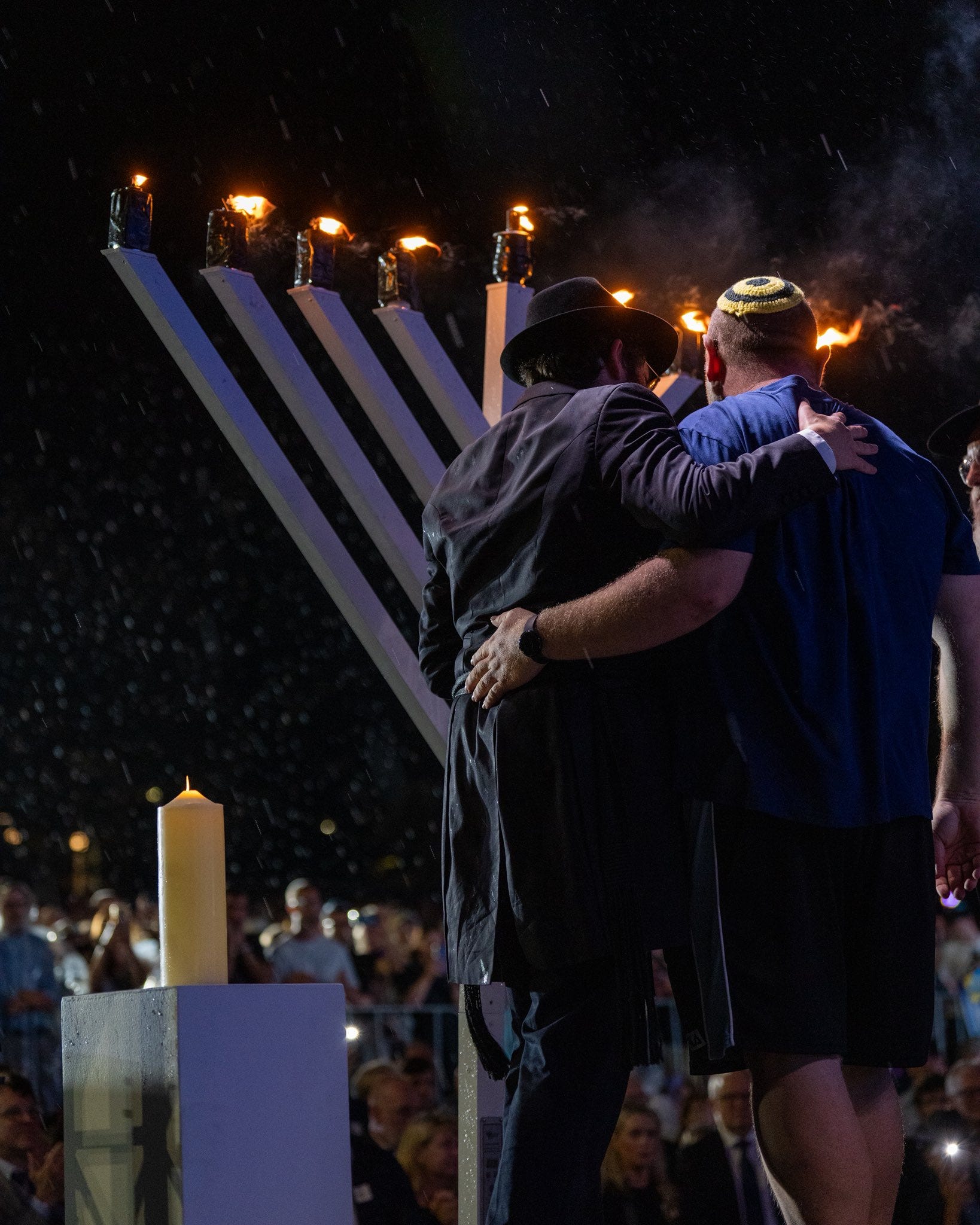
On December 14, 2025—the first night of Hanukkah—father and son Sajid and Naveed Akram killed 15 people in a mass shooting at Sydney’s Bondi Beach.
The Bondi Beach shooting and previous high-profile duo attacks—including the Boston Marathon bombings and the Charlie Hebdo shooting—mirror the “family jihad” phenomenon, which was often fueled by Islamic State (IS) propaganda encouraging collective family migration and action.
A potential IS resurgence in Syria may revitalize global movements and inspire more family-based attacks, a neglected research area that now warrants significant further study.
The term “family jihad” became commonplace during the Islamic State’s (IS) heyday in 2014 when families—including husbands, wives, and even children—together engaged in hijrah (Arabic: هجرة; migration) from their home countries to the IS “caliphate” in Syria (Al Jazeera, May 16; The Guardian, November 27, 2015). In particular, Central and Southeast Asians traveled to Syria to live in and fight for the caliphate (see EDM, September 8, 2014). A related phenomenon has involved family members conducting terrorist attacks together, such as the one perpetrated at Bondi Beach in Sydney, Australia, on the first night of Hanukkah on December 14, 2025.
In the Bondi Beach attack, Sajid and Naveed Akram—a father and son duo—killed 15 people in a mass shooting. The father was shot and killed by Australian security forces after the rampage, and the son was taken into custody (abc.net.au, December 15, 2025). Naveed had followed the Sydney-based pro-Hamas and pro-jihadist preacher Wisam Haddad and then preached similar ideas to younger schoolchildren, which appears to explain some of the ideological background to their attack (abc.net.au, August 21, 2025). Naveed was not arrested despite his early jihadist inclinations and pro-Palestinian militancy beliefs. Sajid and Naveed’s IS support—as evidenced by their possession of an IS flag—motivated them to target Jews at the Bondi Beach holiday party (smh.au.com, December 15, 2025).
Other high-profile attacks by family duos include:
The Boston Marathon bombings on April 15, 2013, when brothers of Chechen origin detonated two homemade bombs near the race’s finish line, killing three people and injuring hundreds (The Harvard Gazette, April 12, 2023).
The Charlie Hebdo shooting in Paris on January 7, 2015, when two al-Qaeda in the Arabian Peninsula (AQAP)-linked brothers of Algerian descent shot to death 12 people at the offices of the satirical newspaper Charlie Hebdo, which had mocked the Muslim Prophet Muhammad (BBC, January 14, 2015; CJR.org, January 7, 2025).
The San Bernardino, California, office shootings on December 2, 2015, when a husband and wife couple of Pakistani origin shot to death an employee at a holiday party and training event, killing 16 people in support of IS (U.S. Immigration and Customs Enforcement, February 9, 2017).
The Jolo, Philippines, suicide bombings at a cathedral on January 27, 2019, when an Indonesian husband and wife couple killed at least 20 people and injured more than 100 others (mindanews.com, January 29, 2019).
Other instances of husbands and wives in multi-person terrorist attacks include the 2019 Sri Lanka Easter bombings and motorcycle suicide bombings by several members of a family in Surabaya, Indonesia, that same year (Sri Lanka Campaign, April 17, 2025). Most instances of family members conducting attacks together occurred in the 2010s while IS was making global headlines and inspiring followers around the world to conduct attacks anywhere against “infidels” to support the Caliphate (humanglemedia.com, July 7, 2022). IS’s propaganda about the Caliphate being a place where entire families, not just young men, could migrate to may have contributed to the spike in attacks by family duos during this period.
The Bondi Beach investigation will likely remain underway for months and seek to determine the attackers’ more specific motives. The potential surge in IS attacks in Syria amid the new Syrian government’s challenges in uniting the country and engaging diplomatically with former “infidel” Western enemies, however, could breathe new life into other global IS movements and inspire attacks around the world (see Terrorism Monitor, July 15; Al Jazeera, November 10, 2025). More broadly, the revival of father-son or family duo attacks has been a neglected aspect of terrorism research that warrants further study.
This article was originally published in Terrorism Monitor.
Jacob Zenn is the Editor of Terrorism Monitor and Militant Leadership Monitor, Senior Fellow on African and Eurasian Affairs at The Jamestown Foundation, and an Adjunct Assistant Professor at Georgetown University’s Security Studies Program. He is the author of Unmasking Boko Haram: Exploring Global Jihad in Nigeria (Lynne Rienner, 2020) and has published widely on militant movements in leading academic journals. Zenn holds degrees from Georgetown Law and the Johns Hopkins SAIS Nanjing Center and has studied Uyghur and Persian in China and Uzbekistan.