

Executive summary:
Georgia’s Constitutional Court has begun hearing Georgian Dream’s lawsuit to ban five pro-Western opposition parties, whose electoral lists together won nearly 38 percent of the vote and 61 parliamentary seats in 2024.
Georgian Dream accuses the parties of unconstitutional activity dating to 2004–2012, while opposition leaders warn the case aims to install a pro-Russian dictatorship and could legitimize Russia’s 2008 occupation.
The European Parliament warns a ban would end Georgia’s accession prospects, though Georgian analysts expect the European Court of Human Rights to suspend any ruling, rendering the trial largely performative.
On October 21, the Constitutional Court of Georgia, in the Black Sea city of Batumi, began hearings on a lawsuit by the ruling Georgian Dream party seeking to ban five main pro-Western opposition parties. They include the United National Movement (UNM), founded by former Georgian President Mikheil Saakashvili in 2001; Akhali (part of the Coalition for Change); Lelo (the core of the Strong Georgia coalition); the Federalists; and For Georgia, led by former Georgian Prime Minister Giorgi Gakharia. Eighty-eight members of parliament from Georgian Dream filed the highly controversial lawsuit. Georgian Dream is the party of Georgian billionaire and Honorary Chairman Bidzina Ivanishvili (OC Media, October 22). Together, these opposition parties secured nearly 38 percent of the vote and 61 of the 150 seats in Parliament in the 2024 parliamentary elections (1TV, November 16, 2024).
Georgian Dream accuses these parties of repeated coup attempts and unconstitutional activities, while opposition leaders argue that the government seeks to establish a pro-Russian dictatorship in Georgia (Radio Free Europe/Radio Liberty, October 20). The proceedings are the latest and most critical act in the political confrontation that, since 2022, has pitted the ruling party against the opposition and official Tbilisi against Western partners (see EDM, November 11, December 14, 2025, January 12, March 23, June 2, October 10). Western partners warn that banning opposition parties under any pretext would cross a red line. The European Parliament stated that any attempt to outlaw them “precludes any progress along the path toward EU accession” (SOVA News, October 7).
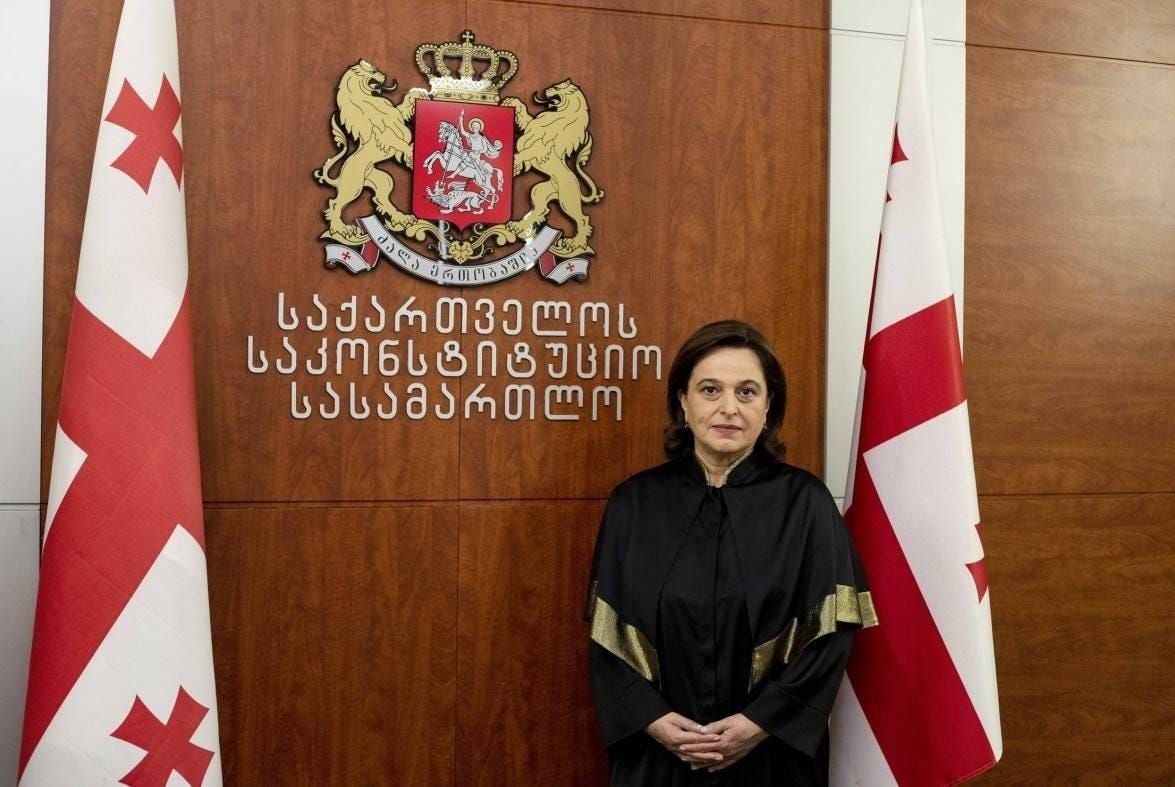
The hearings opened amid scandal following the resignation of Georgian Constitutional Court Judge Manana Kobakhidze, one of the court’s nine judges and a founding member and first chairperson of Georgian Dream, launched by Ivanishvili in 2012. Her departure signaled opposition to the attempt to outlaw political rivals. “I do not want my legal career to end with my judicial tenure,” Kobakhidze stated (SOVA News, October 13; Georgia Today, October 14; Radio Tavisupleba, October 19).
Georgian analyst Giorgi Lebanidze of the independent outlet Experti.ge argued that Manana Kobakhidze, “as both a highly qualified lawyer and an experienced politician, seeks thereby to evade accountability, including Western sanctions, for the decision to ban the opposition in an EU candidate country” (Author’s interview, October 24).
The claimants argue that all five parties violated Article 23 of the Georgian Constitution, which prohibits organizations aimed at forcibly overthrowing or altering the constitutional order. According to court records, the lawsuit cites alleged human rights abuses between 2004 and 2012, when the UNM was in power. It also highlights the parties’ refusal to recognize the current government’s legitimacy, a stance the claimants allege has persisted since 2016. Georgian Dream also accuses the UNM of undermining national independence and territorial integrity during the August 2008 war (OC Media; GEOpolitics, October 22).
The backstory to this case is critical. In August 2024, two months before the pivotal parliamentary elections, Ivanishvili declared that the vote “must become the Nuremberg Trials” for the UNM (Interfax, August 21, 2024; GEOpolitics, October 22). At the time, many observers dismissed this as campaign rhetoric, which proved to be a mistake. “The ruling party could not ignore the request of its supporters, who are uncompromising toward the opposition, especially Saakashvili’s party,” said Georgian politician Petre Mamradze, a Georgian Dream supporter and leader of the United Neutral Georgia party, which opposes North Atlantic Treaty Organization (NATO) and EU membership (Author’s interview, October 25).
His arguments mirror Georgian Dream’s discourse and illustrate how Ivanishvili’s supporters perceive the case. “When the Georgian Dream party came to power in 2012, many hoped for justice to be restored, but that still did not happen,” Mamradze remarked. He underlined that Ukraine has already banned 18 political parties and Moldova has banned several. He also argued, “I personally know the leaders of these Georgian parties very well, and they act not only with disloyalty to Georgia’s state interests, but directly against these interests. We and our supporters hope that they will finally be banned.” He concluded that the Constitutional Court “will make the right decision. We have created a new party, so new parties will emerge.” His comments align with rhetoric from Ivanishvili and Georgian Prime Minister Irakli Kobakhidze. In August 2024, Ivanishvili pledged that Georgian Dream would use a constitutional majority to ban the UNM and its “affiliated” parties, arguing that “healthy elections” would only be possible once the UNM was replaced (Europe-Georgia Institute, August 21, 2024). On the first day of the hearings, Kobakhidze argued that the political system needs “not such an opposition, but a healthy, upright opposition that talks with the people.” He described the targeted parties as “in reality foreign agents” and dismissed Western criticism of the case as “the heavy face of European bureaucracy” (Interpressnews; Timer.ge, October 21).
Opposition leaders named in the suit categorically deny the charges, arguing that the case is a calculated effort to institutionalize a pro-Russian dictatorship. Georgian opposition politician Petre Tsiskarishvili, a member of the interim eight-person governing council of the UNM, stated that the Georgian Dream government “has decided to outlaw five political parties from the opposition, foremost the UNM, a ruling party during the previous administration that has not been in power since 2012.” He added, “The main political calculation behind such a move, which is not publicly declared for obvious reasons, is to clear the field of any opposition in Georgian Dream’s future rapprochement with Russia,” which “could include major concessions with regard to the Russian-controlled breakaway regions of Abkhazia and the Tskhinvali region [South Ossetia]” (Author’s interview, October 25).
Georgian opposition politician Nika Gvaramia, co-founder and co-chairman of the Akhali party and a leader of the Coalition for Change, is confident that the attempt to ban political parties is the first step toward dictatorship. In his view, the ruling party seeks not only to outlaw opposition parties but also to impose an indefinite ban on political participation for any individual associated with them. He recalled that in the 2024 elections, more than 40 percent of the electorate voted for the opposition.
Gvaramia highlighted that the second issue in the legal filing concerns Russia’s aggression in 2008, as the filing accuses Georgia of having provoked Russia in August 2008. According to Gvaramia, should the Constitutional Court accept this premise, it would effectively legitimize the occupation of 20 percent of Georgian territory. Russia failed to prove this in The Hague or Strasbourg, but it may now unexpectedly secure such an outcome from Tbilisi. “Nobody should be under any illusion. This court will ban the entire opposition, but they cannot ban more than 60 percent of the Georgian population,” Gvaramia said, adding that the Georgian opposition will ask the European Court of Human Rights (ECHR) to halt the ban’s execution.
Gvaramia also noted the fierce international reaction to attempts to ban the opposition. The Venice Commission stated that the legislation risks deeply undermining Georgia’s constitutional order, while 24 member states of the Organization for Security and Co-operation in Europe and the European Parliament have called for the lawsuit against the opposition to be withdrawn. The European Commission described the case as a worrying instrumentalization of the judiciary, and Council of Europe Secretary General Alain Berset urged the ruling majority to preserve space for political opposition (SOVA News, October 7; Georgia Today, October 19; Author’s interview, October 24).
Georgian opposition politician Pikria Chikhradze, one of the leaders of the Lelo party, noted that the authorities are seeking to ban Lelo over allegations dating back to the 2004–2012 UNM administration, a period that predates Lelo’s existence, as the party was not founded until 2019 (Author’s interview, October 25). “The claims are manifestly absurd. Stripped of serious legal arguments, the proceedings thus far nonetheless point to a court willing to entertain a politically driven outcome,” Chikhradze said. She suggested that the proceedings would not drag on, raising the prospect that “Georgia could ring in 2027 under the grip of a full-fledged dictatorship” (Author’s interview, October 24).
Georgian Member of Parliament Anna Bachukuri, who represents the For Georgia party founded by Gakharia, who remains in political exile due to fears of arrest on politically motivated sabotage charges, said that her party, unlike three other opposition groups, has not forfeited its parliamentary mandates and continues its legislative work. Despite this active engagement, Georgian Dream is still moving to ban it. “The inclusion of our party on the ban list completely contradicts the government’s rhetoric claiming they are only targeting parties boycotting Parliament,” Bachukuri stated. “We participate in all elections. The decision to outlaw opposition parties has already been made. The court hearings are a mere formality.”
Georgian Members of Parliament Archil Gorduladze and Giorgi Kakhiani, who represent the ruling party’s interests in the Batumi court proceedings, did not respond to this author’s requests for comment.
The prevailing consensus among Georgian analysts, including Georgian analyst David Avalishvili of the independent media outlet Nation.ge, is that the ECHR will likely suspend any ruling banning the opposition. Since Georgian Dream has historically complied with Strasbourg decisions, many view the constitutional trial as a performative gesture designed primarily to appease Georgian Dream’s core constituency and fulfill its 2024 campaign promises (Author’s interview, October 27).
This article was originally published in Eurasia Daily Monitor.