

Georgian State Security Faces Rising Challenges
Giorgi Menabde
Executive Summary:
The Georgian State Security Service’s (SSSG) annual report names the Russian occupation of Abkhazia and the Tskhinvali region (South Ossetia) as Georgia’s main challenge and risk.
The SSSG noted rising terrorist activities, including potential attacks by supporters of international terrorist organizations and persons affiliated with ISIS and Al-Qaeda operating in Syria and Iraq.
The report may strain relations between Georgia and its western partners, as it refers to the negative effect of Western countries during their political confrontation in Georgia, where the mass democratic movement in the country continues to demand reforms and new, fair elections.
On April 21, the State Security Service of Georgia (SSSG) released its annual report on the main risks and challenges to Georgia’s state security and stability (SSSG, April 21). The annual state security report was published at the same time that Georgian Prime Minister Irakli Kobakhidze announced the appointment of Mamuka Mdinaradze, the former head of SSSG, to a new position of state minister for Coordination of Law Enforcement institutions. Kobakhidze also announced that Mdinaradze will simultaneously serve as the vice prime minister of Georgia. Kobakhidze expressed gratitude to Mdinaradze for his work as head of the SSSG. He stated, “Following his appointment as head of the State Security Service, Mamuka Mdinaradze was required to step away from political activities. In his new role, he will return to politics, which will further strengthen our political team” (1tv.ge, April 23).
Davit Avalishvili from the independent outlet Nation.ge said in his April 28 interview with this author that the ruling Georgian Dream party is deliberately raising the SSSG’s status. Mdinaradze is one of the most influential Georgian Dream leaders, and his appointment as vice prime minister of Georgia during a time when the Georgian parliament and the Georgian expert community are discussing the SSSG annual report underlines “the government’s priority to strengthen this institution in very complicated circumstances” (Author’s interview, April 28).
In its annual report, the SSSG stated that the greatest threat to Georgia remains Russia’s occupation of Abkhazia and the Tskhinvali region (South Ossetia) and Moscow’s attempts to annex them (SSSG, April 21). The SSSG has regularly responded to illegal arrests of citizens and attempts to “borderize” the occupied territories. “Borderization” refers to the process of installing physical barriers—such as barbed wire, metal fencing, surveillance equipment, and markers—along the Administrative Boundary Line (ABL) separating the occupied territories from the rest of the country. Russian-controlled troops have heavily utilized this method in Georgia’s occupied regions of the Tskhinvali region (South Ossetia) and Abkhazia to create a formal “border” where one does not officially exist (see EDM, June 3, 2013).
The SSSG document states that Russia is continuing its policy of militarizing separatist regimes in the occupied territories, conducting military maneuvers with Russian army units, and using unmanned aerial vehicles. The report also states that Moscow is using military training programs to prepare for the total annexation of Georgian regions where ethnic cleansing of the Georgian population has been carried out, and those Georgians still living in Abkhazia and the Tskhinvali region (South Ossetia) are subject to discrimination.
Russia has deployed two military bases in the occupied regions—No. 4 and No. 7—as well as units of the Russian Federal Security Service (FSB) (see EDM, September 16, 2009, March 28, 2022; Rondeli Foundation Roadmap to Kremlin’s Policy in Abkhazia and the Tskhinvali Region, accessed May 6 [1], [2]). The SSSG reported that at the end of 2025, a drone training center opened in the Tskhinvali region (South Ossetia) and a drone production plant is being built in occupied Abkhazia. The SSSG stated, “Russia is using financial, energy, and political leverage to maintain control over the occupied regions.”
In 2025, Moscow implemented several changes to strengthen its policy of annexing the occupied territories. Deputy Chief of Staff of Russian President Vladimir Putin and former Russian Prime Minister Sergei Kiriyenko, who was born and raised in Abkhazia, was appointed as curator of Abkhazia and the Tskhinvali region (South Ossetia) (see EDM, December 4, 2025). According to the SSSG, Kiriyenko’s appointment signifies increased pressure from Moscow on the separatist regime to implement Russian projects that will ensure Abkhazia’s transformation into a regular region of Russia. These projects include the adoption of a law on apartments for Russian settlers, the free sale of Georgian refugees’ apartments, and the approval of investment projects that will allow Russian oligarchs to purchase Abkhazia’s most valuable assets (see EDM, July 31, 2024, December 4, 2025).
The SSSG notes that these Russian projects are facing growing resistance from Abkhaz society. As a result, Kiriyenko visited Abkhazia seven times and held negotiations with the Abkhaz leadership. The SSSG report contends, “The feeling has grown among the Abkhazian population that the decision-makers in Abkhazia are not the local government, but the Russian president and the deputy head of his administration” (SSSG, April 21).
At the same time, Russia has opened criminal cases against opposition Abkhaz journalists and civil activists, stripped them of Russian citizenship, and declared them “foreign agents” (The Moscow Times, March 25, 2025). Moscow has restored the Sukhumi airport in Abkhazia as a tool of influence, intensifying Abkhazia’s ties with Russian regions, issuing Russian documents (including driver’s licenses) in Abkhazia, building a new base for Russian Black Sea Fleet warships in Ochamchire, and continuing its policy of Russification of the population through soft power methods (see EDM, May 1, November 20, 2023, July 1, 2025, January 20; Russian Embassy in Abkhazia, February 6).
In the Tskhinvali region (South Ossetia), the “harmonization of legislation” and the creation of a “single economic space” continue, as well as the financing of the separatist regimes. In 2025, South Ossetia’s budget reached $118.6 million, 80 percent of which ($94.7 million) was financed by Russia. Abkhazia’s budget for last year was $252 million, with Russia contributing almost 38 percent ($97 million) (SSSG, April 21).
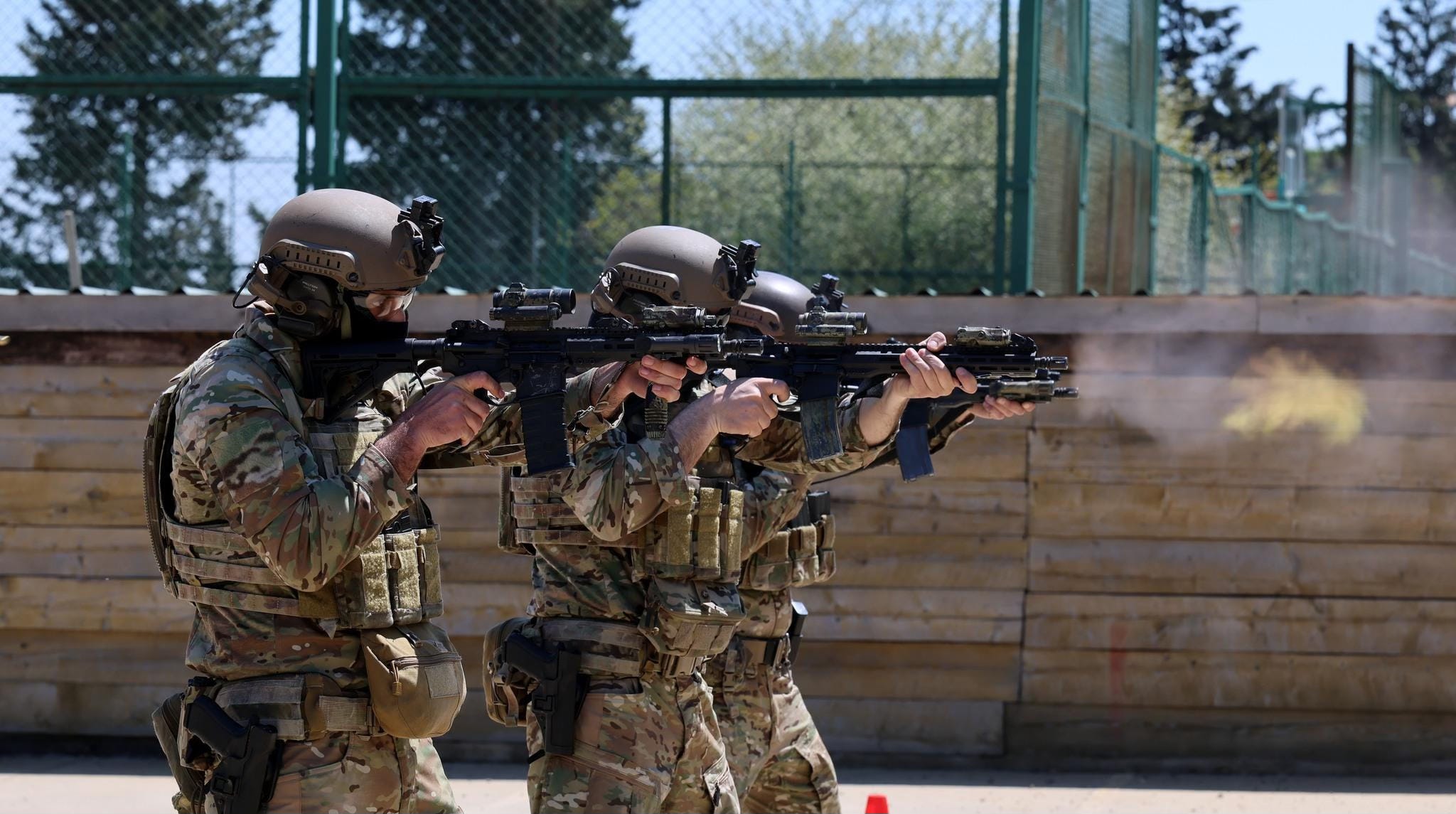
The report also highlighted several terrorism-related risks and challenges, including potential attacks by supporters of international terrorist organizations, ISIS and Al-Qaeda, as well as possible use of Georgia’s territory as a “transit route” by terrorist groups or persons. It also reports that “attempts to finance or otherwise support terrorist organizations” and “possible recruitment of foreign or Georgian citizens by members/supporters of terrorist organizations” remain real problems (SSSG, April 21). According to the SSSG report, several Georgian citizens and their family members remained in prisons and detention camps in Syria, underlining that “in case of attempts to return them to Georgia, the SSSG Counterterrorism Center will provide an appropriate legal response within the framework of an investigation.”
The SSSG conducted preventive measures to reduce terrorism threats. “Officers of the Counter-Terrorism Center, in coordination with the Ministry of Internal Affairs, detained two foreign nationals. One of the detained individuals, through several countries, imported 2.4 kilograms of explosive Hexogen hidden in the car,” the document reads (SSSG, April 21). The SSSG claims that “14 terrorism-related criminal investigations were conducted in 2025, including six initiated directly on terrorism charges” and “criminal prosecution was launched against 11 individuals, three of whom were charged under terrorism-related provisions.”
The most controversial part of the document is the chapter that echoes current political clashes between opposition and police forces, which have continued for more than 550 days. According to the SSSG, special services of foreign countries attempted to actively utilize the capabilities of Georgian non-governmental organizations (NGOs), political and scientific organizations, religious organizations, diaspora, private or commercial circles, universities, and financial institutions. The report stated, “Through these organizations, interested states attempted to establish tight contacts with loyal citizens, students, civil activists, experts, political analysts, and representatives of the cultural sphere and the business sector.” The SSSG notes attempts to involve young people in various projects and activities to “engage them in their ideological propaganda and use youngsters in foreign interests” (SSSG, April 21).
In 2025, Georgian authorities initiated criminal “sabotage” proceedings against eight prominent opposition leaders, including former Georgian President Mikheil Saakashvili, accusing them of plotting to overthrow the government following the October 2024 elections. These figures, including Giorgi Vashadze, Nika Gvaramia, and others, face charges of inciting violence and aiding foreign hostile activities, with potential sentences of up to 15 years. The charges involve leading figures from several parties, including the United National Movement (UNM), Ahali, Girchi—More Freedom, Droa, and Lelo for Georgia, who are accused of sabotaging state stability (Civil Georgia, November 6, 2025).
Teona Akubardia, deputy secretary of Georgia’s National Security Council from 2014–2018 and deputy chair of the Defense and Security Parliamentary Committee from 2021–2024, said in her April 30 interview with this author that the SSSG report reflects the agency’s deep politicization. It increasingly conflates criticism of the ruling Georgian Dream party with threats against the state itself. It advances anti-Western narratives by portraying not Russia, but Western states, institutions, and media as sources of disinformation allegedly fueling destabilization and anti-Western sentiment in Georgia. She stated, “In contrast, Russia is framed less as an immediate threat and more as a strategic actor.” She further argued, “Russia has already laid the groundwork for deeper control, while waiting for a favorable political moment to further expand its influence through the annexation of the occupied regions” (Author’s Interview, April 30). The opposition and Georgia’s Western partners support the Georgian authorities’ efforts against terrorism and the Russian occupation, but oppose the instrumentalization of the SSSG against the opposition to maintain the ruling party’s power.
This article was originally published in Eurasia Daily Monitor.