

Extensive Diplomatic Work is Bringing the World to Beijing
Arran Hope
Executive Summary:
Since December 2025, Chinese president Xi Jinping and foreign minister Wang Yi have hosted the political leaders of all the permanent members of the United Nations (UN) Security Council and met with all of the candidates for the UN’s next secretary-general, among what Xinhua describes as an “endless stream” of foreign leaders “looking eastward.”
Across roughly 500 diplomatic engagements in the first half of 26 conducted by more than 20 senior officials, Beijing has seized the opportunity to make its pitch to the world. Recent survey results suggest that this work is paying off.
Overlooked in coverage of Beijing’s efforts to court Global South countries is its unwavering prioritization of handling relations with the most powerful countries in the world: in the first half of 2026, top-level diplomatic engagement was highest with the United States and Russia at the country level, and with Europe at the regional level.
Although Xi travels far less today than during his first decade in charge, he has turned this to his advantage. Beijing’s growing convening power has allowed it to stage-manage diplomatic engagements on its own terms, often tailoring its approach to maximize its desired effect on specific individuals.
Chapter 35 of the Warring States-era text the Dao De Jing (道德經) begins: “The whole world travels to the one who holds the Great Image [of the Dao]” (執大象,天下往) (Chinese Text Project, accessed July 24). [1] In early July 2026, Chinese state media selected this phrase for the headline of an article summarizing the country’s diplomatic activity during the first half of the year (Xinhua, July 11). The symbolism is revealing. Transposed onto the contemporary moment, the allusion is intended to illustrate Beijing’s emerging prominence as an “important hub for global diplomacy” (全球外交的重要枢纽): the “great image” in this reading is the portrait that Beijing paints of itself and displays to the world. It is a shining edifice of modernity, a beacon of moral rectitude, and a center of civilizational grandeur. The People’s Republic of China (PRC), according to Xinhua, is expanding its influence, leadership, and “moral appeal” (道义感召力) on the global stage.
Two facets of Beijing’s strategy emerge from an analysis of its diplomatic activity in the first half of 2026. First is the intensity and impressive breadth of its engagements. Second is the skill involved in managing—and manipulating—actors from countries of varying wealth, power, and geographic and geopolitical proximity. The ultimate goal of Beijing’s strategy is perhaps also hinted at in the Dao De Jing. As Chapter 32 of the ancient text states, “If ... the king could guard and hold [the Dao], all would submit themselves to him” (王若能守之,萬物將自賓) (Chinese Text Project, accessed July 24).
Xi Uses Visiting World Leaders to Advertise Openness, Centrality
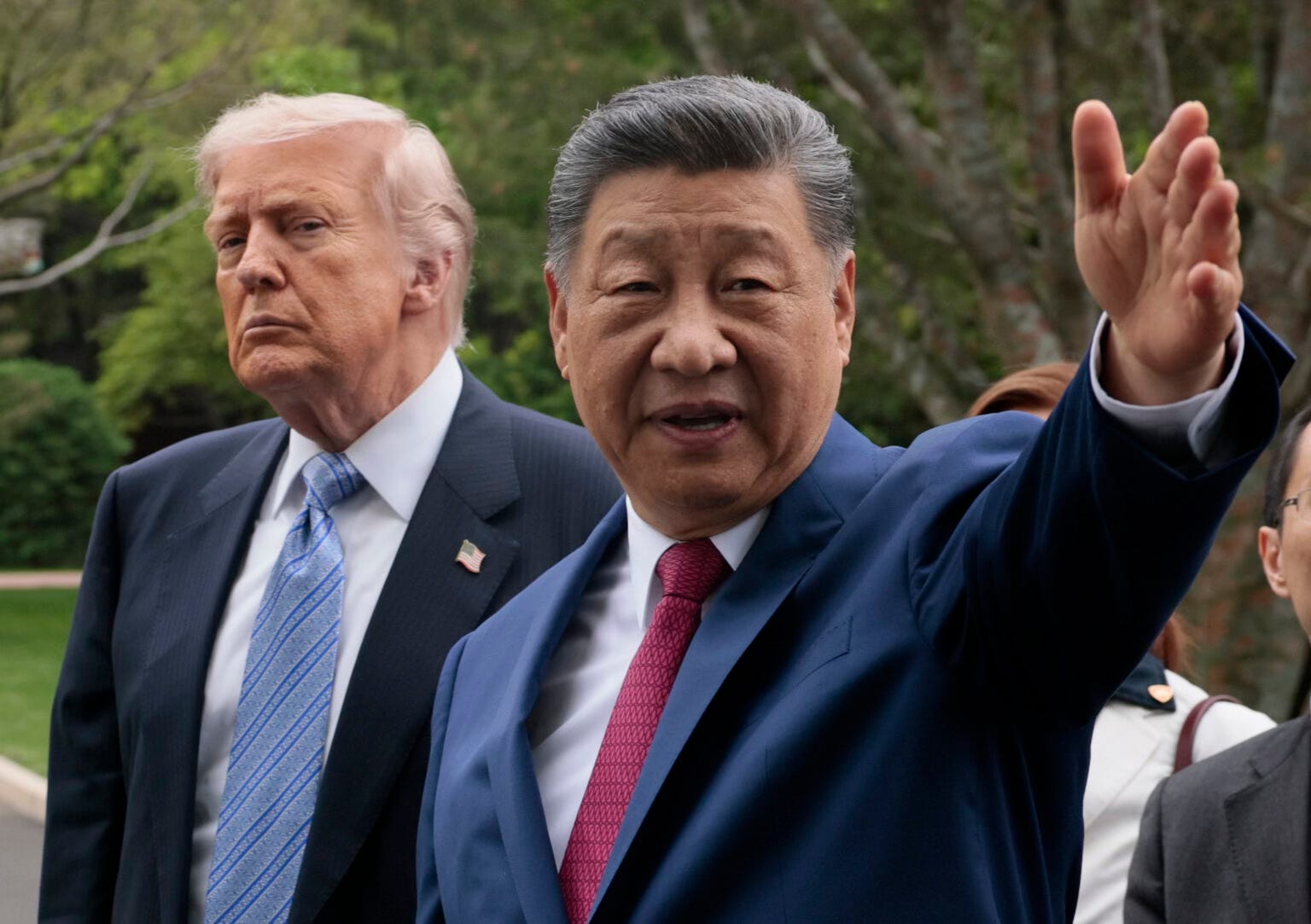
Measured by what the PRC refers to as “head-of-state diplomacy” (元首外交), Beijing in the first half of 2026 appears as the center of global engagement. The city hosted U.S. president Donald Trump in May, followed soon after by Russian president Vladimir Putin. Since December 2025, General Secretary Xi Jinping has received the heads of all the permanent members of the United Nations Security Council.
Analysts often focus on Beijing’s mobilization of support for Global South countries in its diplomatic outreach. There is good reason for this. The Party signaled courting developing countries as an important part its foreign policy approach at the Central Foreign Affairs Work Conference in December 2023 (China Brief, April 12, 2024). At the same time, its prominence is in many ways embellished in the Party’s rhetoric. [2] As official white papers, plans, speeches, and articles consistently indicate, Beijing’s primary focus is and has always been the most powerful countries of the world. The Xinhua piece reflects this concentration too (Xinhua, July 11).
Relations with the United States remain the PRC’s highest priority. On this front, the propaganda machine has been effective at packaging its engagement as evidence of superiority. Trump is quoted for praise he bestowed on Xi (“Xi is a great leader, China is a great country” (习近平主席是伟大的领导人,中国是伟大的国家)), and visiting executives from Apple, Nvidia, Tesla, and Boeing are paraded as advertisements for “the attraction of ‘open China’” (开放中国的魅力). The Xinhua article notes that the CEOs “each expressed their high regard for the Chinese market, their desire to deepen their business in China, and their commitment to strengthening cooperation with China” (纷纷表示,高度重视中国市场,希望深耕中国业务,加强对华合作) (Xinhua, July 11).
The Xinhua article makes a point of highlighting Europe’s importance to Beijing’s strategy. It observes that the first foreign guests Xi met with after both New Year’s Day and Spring Festival were from Europe, and reiterates the continent’s role as an important pole in a multipolar world—in other words, a region that can be maneuvered away from the United States (China Brief, February 28, 2025). A further significant area of focus is the PRC’s own neighborhood, which Xinhua describes as a “priority direction” (优先方向) for the country’s diplomacy (Xinhua, July 11). Xi has been a keen promoter of “Asian values” in the region in recent times, which for the Party is a byword for anti-Western, pro-authoritarian, and CCP-aligned governance, and is linked to gaining advantage in strategic competition with the United States (Xinhua, March 5; China Brief, March 6).
Data on Foreign Engagements Backs up Rhetoric
Data on engagements over the first six months of 2026, taken from the websites of both the Ministry of Foreign Affairs and the Party’s International Liaison Department (ILD) generally supports the claims made in the Xinhua article. Overall, we counted roughly 500 engagements over the course of the first six months of the year. The large volume of engagements is in part a result of delegation: a whole set of individuals at the top of the Party—at least 23 by our count—have been involved in the work of diplomacy so far this year.
Foreign Minister Wang Yi (王毅) has been involved in roughly one third of all high-level engagements. Xi Jinping and ILD head Liu Haixing (刘海星) account for another third. Han Zheng (韩正), a former politburo standing committee member and vice president, who now holds a ceremonial role focused on foreign affairs, has also been active, with trips across Africa and to Russia and Belarus. He has been the most active among the 20 or so who make up the final third, which includes the remaining politburo standing committee members, several politburo members, a number of special envoys, and Xi’s wife, Peng Liyuan (彭丽媛).
In terms of the division of labor, Wang handles the majority of bilateral meetings, calls, and crisis diplomacy. Notably, he has met with each candidate for the role of United Nations Secretary-General (the successor to António Guterres will begin their term in 2027). Wang has been heavily engaged in the Middle East during the U.S.–Iran conflict, though from a distance: he has managed this particular diplomatic track over the phone. Xi’s high volume of engagements has similarly been made possible by how much he is able to do from Beijing. He has traveled less and less over the last decade, but remains deeply involved in diplomatic work through sending messages or letters, and occasionally making calls: almost half of his engagements in 2026 have taken place via these routes (IISS, April 17, 2025; Asia Society, May 6). Liu Haixing, by contrast, has conducted almost all his diplomatic activity in person, indicating a growing parallel track of Party-led diplomacy (China Brief, February 17). [3]
The countries with which senior Chinese officials had the most engagements in the first six months of the year—including in-person meetings, calls, and correspondence—were the United States, Russia, Vietnam, Pakistan, and North Korea. This makes sense. These countries are the ones Beijing views as the most important to manage and maintain relations with, and are also among the countries whose leaders have met in person this year (all in Beijing, with the exception of North Korea: Xi Jinping’s first—and only—overseas travel was to Pyongyang to meet with Kim Jong Un in June).
At the regional level, Europe’s importance is reflected in its high volume of diplomatic engagements: no other region received as much attention between January and June, with the United Kingdom and Belarus receiving the most. ASEAN countries saw the next highest degree of engagement, which is in line with trends laid out above (China Brief, March 6).
At the other end of the spectrum, countries with which the PRC has barely engaged at all in 2026 include those the United States has effectively sought to bring within a sphere of influence (U.S. Department of Defense, January 23). These include Panama, where Wang Yi had a single meeting with his counterpart, and Venezuela, where Xi Jinping sent condolences following an earthquake. Mexico, meanwhile, received no diplomatic attention at all. This could be in part a form of overt signaling under the mutually established agreement to abide by a “constructive China–U.S. relationship of strategic stability” (中美建设性战略稳定关系) (Xinhua; The White House, May 14).
Conclusion
The PRC has made the most of what Xinhua describes as an “endless stream” (络绎不绝) of foreign leaders “looking eastward” (向东看). Its growing convening power has enabled the leadership to stage-manage engagements on its own terms and to showcase the country’s strengths in carefully tailored ways to each visiting dignitary. As a result, Serbia’s president Aleksandar Vučić has been brought to the verge of tears after receiving a friendship medal from Xi Jinping; Beijing’s imperial architecture has provoked Spanish prime minister Pedro Sánchez to muse that the PRC is “destined to play a key role in the world’s future” (注定要在世界的未来扮演关键角色); and Xi has taken Trump to look across Tiananmen Square and show him that “the Great Way is clear” (大道昭然)—another Daoist allusion wielded to paint Xi [in sagely trappings] as one who understands the inevitable laws of the universe (Xinhua, July 11).
A lot of this work, as Xinhua plainly puts it, is effective political theater—a hollow imitation of the Dao De Jing’s imagined “grand image” (大象). Hosting visitors, and in particular taking them to high-tech sites, is done so that “the international community understands an image of an innovative China that shares the results of its innovation” (国际社会读懂创新中国、共享创新成果的时代图景) (Xinhua, July 11).
If the recent results of a survey conducted by the Pew Research Center are to be believed, this work may be paying off. Respondents in most of the 36 countries surveyed now see both the PRC and Xi more positively than the United States and Trump (Pew, July 15). On the basis of this evidence, Xi could be forgiven for believing that he is driving a series of changes in the international system. Absent more concerted efforts from the West, these trends may well continue through the end of this year and beyond.
This article originally appeared in China Brief. Check it out here!
Arran Hope is the editor of China Brief at The Jamestown Foundation, where he also has responsibility for additional China-related publications and programming.
Notes
[1] The Dao De Jing is frequently cited in Party literature. In recent years, Qiushi articles have often quoted passages alongside quotes from Xi Jinping (Qiushi, May 26, 2021, May 26)
[2] When the Global South is mentioned in the Xinhua piece, it is to remark that those countries’ “unity and self-reliance are unstoppable” (联合自强不可阻挡). It is not entirely clear what this means, but this framing could suggest that Beijing views “self-reliance” in this context as synonymous with “independent of the West”: if anything, many global south countries are more reliant on the PRC today than ever before.
[3] Beyond the parties one would expect the ILD head to engage with (ambassadors, envoys, and party delegations), Liu Haixing has also met with non-governmental U.S. citizens (including Graham Allison, Eurasia Group chairperson Cliff Kupchan, Asia Society board co-chair John L. Thornton, and the head of Singapore’s sovereign wealth fund, Temasek. He also met with cadres from the Palestinian party Fatah, the only publicly acknowledged engagement with Palestine in the first half of 2026.