

Experts Indicate Evolving Safeguards for Early Warning Counterstrike Posture
Alex Lewis Richter & Makena Tom
Executive Summary:
The People’s Republic of China’s (PRC) early warning counterstrike posture likely lacks dual phenomenology safeguards, which increases the risk of false alarms and unintended nuclear escalation.
The PRC likely seeks to mitigate false alarm risk through technological solutions rather than implementing political or regulatory safeguards that could hinder the reaction speed of an early warning counterstrike posture. The PRC is unlikely to maintain automated retaliation systems under an early warning counterstrike system.
PRC interest in fusing data from different sensor modalities and optimism in the ability of artificial intelligence to distinguish between real and false alarms undermine potential dual phenomenology practices.
The People’s Liberation Army (PLA) is likely interested in cruise missile and stealth aircraft detection to enable air and missile defense rather than supporting an early warning counterstrike before nuclear detonation.
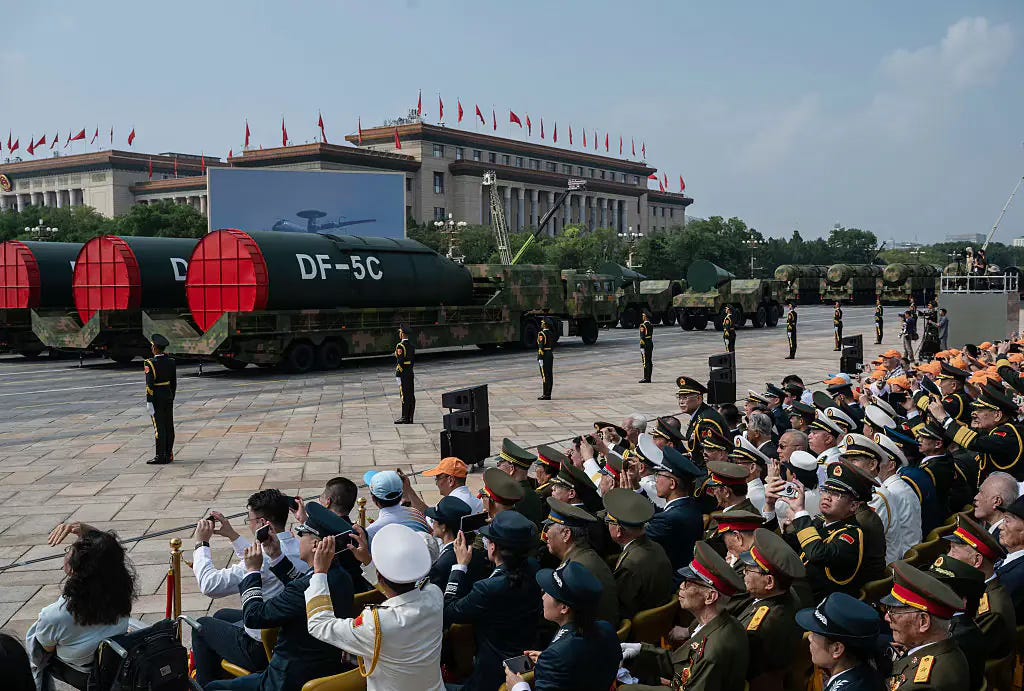
The 2025 China Military Power Report, published by the U.S. Department of Defense, assessed that the People’s Republic of China (PRC) employs several large phased array radar stations and space-based infrared satellites to detect incoming intercontinental ballistic missiles and enable a counterstrike before an adversary’s nuclear first strike can detonate (Department of Defense [DoD], December 23, 2025). As with U.S.–Soviet experiences with false alarms during the Cold War, the PRC’s developing early warning counterstrike posture increases the opportunity for nuclear escalation through false signals, technical malfunctions, and misinterpretation of data under time-sensitive conditions.
To mitigate false alarms, the United States military employs “dual phenomenology” requirements in which two different information sources must confirm an incoming ballistic missile before launching a retaliatory strike. The United States depends primarily on space-based infrared satellites and radar installations for these purposes. Through the construction of large phased array radar systems and space-based infrared satellites, the PRC has also built the capacity to maintain dual phenomenology requirements before launching a retaliatory nuclear strike (Ta Kung Pao, January 27, 2025; DoD, December 23). However, the People’s Liberation Army’s (PLA) emphasis on increasing reaction speed and attempts at fusing data from multiple sensor sources compromise dual phenomenology requirements for nuclear use, increasing opportunities for unintended escalation and false positives during peacetime and wartime.
Balancing False Alarm Risks and Rapid Response
For much of the PRC’s history, threats from major powers and an emphasis on a small nuclear force have driven efforts to qualitatively improve second-strike survivability. One way of improving the ability of the country’s nuclear arsenal to survive a second strike is to enhance the speed at which the PLA can react to a nuclear strike. The 2015 white paper “China’s Military Strategy” (中国的军事战略) prioritized enhancing strategic early warning, command and control, and rapid response capabilities to enhance survivability and deter other countries from using or threatening to use nuclear weapons against the PRC (State Council Information Office, May 26, 2015; China Brief, June 19, 2015, July 2, 2015). The 2020 edition of The Science of Military Strategy (战略学) further lays out that a rapid response capability and maintaining land-based missiles on high alert are prerequisites for the late development of nuclear weapons, with very little mention of the potential for false alarms (China Brief, June 25, 2021). [1]
This premium on rapid response may come at the expense of security measures intended to mitigate the likelihood of false positives or unauthorized nuclear use. A 2018 analysis of 904 technical Chinese-language writings on artificial intelligence (AI) found that authors were primarily concerned with finding solutions for false negatives, in contrast with U.S. military analysts (Bulletin of the Atomic Scientists, April 24, 2018). More recently, the director of the Second Office of the Rocket Force Equipment Research Academy was praised for eliminating security measures that slowed down command and control processes (National Defense University, November 21, 2025).
PRC researchers are still aware of false alarm risks in early warning systems and recognize the need for safeguards to authorize nuclear use. One expert, writing in the PLA Daily in 2021, pointed to two nuclear false alarm incidents in 1980 and 1983 to caution against the development of automated nuclear retaliation systems (PLA Daily, July 20, 2021). In 2024, Center for International Security and Strategy (CISS) Senior Fellow Zhou Bo (周波), who is also a retired PLA senior colonel, criticized President Joe Biden’s nuclear posture and appeared to indirectly criticize the PRC’s early warning counterstrike posture, arguing that raising the readiness of nuclear forces among all major powers will increase the likelihood of false alarms (CISS, September 30, 2024). Affirmations from both CCP General Secretary Xi Jinping and President Biden to maintain a “human-in-the-loop” in nuclear decision-making further suggests that leaders recognize the necessity of safeguarding against unauthorized nuclear use (PRC Ministry of Foreign Affairs, November 17, 2024).
Besides restricting automated nuclear retaliation, specific proposals and safeguards to mitigate false alarm risks appear primarily on a technical level. In one example, three PRC experts proposed a detection method that combines several scans within a prediction gate to reduce false alarm rates in early warning and surveillance systems (Liu et al., August 13, 2021). [2] Several authors affiliated with the PLA and the Air Force Early Warning Academy (空军预警学院) conducted a study on the causes of false alarms in infrared satellites and proposed several technological solutions for false alarm suppression (Li et al., 2020). [3] Another study conducted by PLA-affiliated individuals at the Air Force Early Warning Academy examined the radiological causes of false alarms in early-warning infrared satellites to provide a basis for developing technologies that can identify the sources of false alarms (Li et al., 2019). [4]
The focus of PRC research and discourse on false alarms in technical studies and the lack of specific proposals mitigating the political risks they produce could indicate that the PLA is primarily interested in developing technological solutions to mitigate false alarm risks in early warning systems rather than mitigating them through political or regulatory safeguards that could come at the expense of reaction speed and operational readiness.
PRC Ambitions in Data Fusion Undermines Dual Phenomenology
Once data from different sensor architectures are transferred to a command center, the ability to identify the source of the data is a prerequisite for dual phenomenology and for avoiding false alarms from the failure of a single sensor modality. However, PRC experts have prioritized increasing the speed and accuracy of ballistic missile detection through multi-sensor fusion-based recognition systems. This often involves using machine learning to combine and classify different measurable characteristics of a target from many different sensors. Although the fusion of data does not necessarily mean the PRC does not have dual phenomenology requirements, the creation of fused verdicts can erode the ability to trace detections back to distinct sensor modalities. One study conducted by individuals associated with the PLA’s Korla Missile Test Complex in Xinjiang attempted to enhance the speed and automation of ballistic missile detection through multi-sensor data fusion (Xue et al., 2022). [5] Other studies conducted by authors affiliated with the PLA attempt to use AI-assisted models and the characteristics of a missile from several sensors to create a fused output for ballistic missile detection (Li et al., 2017; Lin et al., 2018). [6]
Some PRC experts are optimistic about data fusion and the integration of AI for ballistic missile detection as a viable alternative to reduce false-alarm risk without slowing the PRC’s early warning counterstrike posture. In terms of allowing AI to generate assessments, several PRC analysts believe that integrating AI into nuclear early warning sensors can improve data quality, help distinguish real from false alarms, and increase decision-making time (China Brief, June 7, 2025). [7] Rather than relying on dual phenomenology, technological advancements in AI and data fusion could be the PRC’s preferred method of reducing false alarm risk.
Fusing data from multiple sensors can reduce the impact of noise or errors in any one sensor, maintain performance if one sensor fails, and increase detection and response times. Dual phenomenology exists to trade away some of the advantages of fusion for a second distinct way of identifying an incoming ballistic missile before crossing the nuclear threshold. Especially under the time constraints of an incoming nuclear strike and launch-on-warning pressures, operators may choose to rely on a high-confidence fused verdict rather than the concurrence of two physically distinct systems with independent assessment chains.
Dual Phenomenology Complicated by Non-Ballistic Trajectories
Dual phenomenology is traditionally understood as a requirement to specifically confirm incoming ballistic missiles before authorizing nuclear retaliation, but the PRC may face dual-capable bombers and nuclear-tipped cruise missiles that do not fly on predictable ballistic trajectories. One PRC analysis of the 2022 U.S. Nuclear Posture Review assessed that the United States seeks to enhance strategic deterrence by combining nuclear and conventional platforms (International Cooperation Center, January 4, 2023). Since many non-ballistic delivery vehicles can carry both conventional and nuclear payloads, one PRC expert has previously argued in the Global Times that once a Tomahawk cruise missile is launched, it becomes virtually impossible to distinguish between conventional and nuclear warheads and may force countries to consider preemptive nuclear use (Global Times, April 7, 2022). As a result, the PLA’s interest in early warning for cruise missiles and stealth bombers is likely motivated by air and missile defense missions rather than as a basis for early warning counterstrike.
The technical complexity of gathering satellite-based infrared signatures or satellite imagery of incoming nuclear-capable cruise missiles and bombers undermines the ability to maintain dual phenomenology requirements for nuclear-capable delivery vehicles with non-ballistic trajectories. Compared to the heavy rocket plumes of ballistic missiles, cruise missiles and bombers emit weak infrared signatures. Additionally, even using optical imaging satellites, one PRC analyst writing for an account called “Aviation Knowledge” (航空知识) at media outlet The Paper acknowledged that human analysts are currently unable to keep up with the increasing number of satellite images to track stealth aircraft (The Paper, August 2, 2024).
The 2020 edition of the Science of Military Strategy conceptualizes “strategic early warning” (战略预警) as encompassing ballistic missile, cruise missile, and stealth aircraft detection. [8] The textbook further elaborates that the ability to react rapidly is critical to reducing losses and seizing the initiative during a counterattack. [9] Some PLA researchers frame improvements in cruise missile detection as part of an early warning system to enhance missile defenses (Zheng et al., September 2, 2022). [10] Other PRC researchers similarly view improvements in anti-stealth radar systems as supporting air defense missions (Shi et al., 2015; Hu et al., 2016). [11] Rather than enabling a nuclear counterattack prior to detonation as part of an early warning counterstrike, PLA writings describe cruise missile and stealth aircraft detection as enabling defensive operations and interception.
Conclusion
Given the sensitive nature of the PRC’s early warning system and thresholds for nuclear use, it is difficult to assess with high confidence whether the PRC maintains dual phenomenology requirements for nuclear use. Certain indicators could suggest the existence of dual phenomenology. First, evidence that the outputs from fused data play an advisory or a supporting role rather than forming the basis for nuclear use would indicate that operators are likely checking the assessments of other sensor architectures before delivering assessments to leadership. Second, the existence of AI-enabled “dual algorithms” or separate, per-modality assessments receiving information from a particular type of sensor to assess incoming ballistic missiles would increase the likelihood of a dual phenomenology mechanism. Third, increased leader-level or political discussion about false alarm risks associated with strategic early warning would increase the likelihood of political or regulatory safeguards to prevent accidental nuclear launch.
Few of these indicators, however, are currently present in PRC and PLA journals or discussions. For now, optimism in using AI for ballistic missile detection, prioritization of reaction speed in nuclear forces, and research on multi-sensor data fusion suggest that the PRC is not currently pursuing robust dual phenomenology requirements as a strategic priority.
This article originally appeared in China Brief. Check it out here!
Alex Lewis Richter is a student at UC Berkeley.
Makena Tom is a student at U.C. Berkeley and a researcher with the Nuclear Policy Working Group.
Notes
[1] Science of Military Strategy [战略学] (Beijing: National Defense University Press, 2020), p. 383.
[2] Liu Hongliang [刘红亮], Chen Chao [陈超], Yue Kai [岳凯]. “Multi-frame joint detection method based on tracking information” [基于跟踪信息的多帧联合检测方法]. Systems Engineering and Electronics [系统工程与电子技术] 43, no. 8 (2021): 2124–2128.
[3] Li Wenjie [李文杰], Yan Shiqiang [闫世强], Hu Lei [胡磊], Wu Yahong [吴亚宏], Wang Chengliang [王成良], Ouyang Yan [欧阳琰]. “A Review of False Alarm Suppression Technology for Infrared Early Warning Satellite System” [红外预警卫星系统虚警抑制技术综述]. Infrared Technology [红外技术] 42, no. 2 (2020): 115–120.
[4] Li Wenjie [李文杰], Song Zezhong [宋泽正], Li Guangbo [李广波], Yan Shiqiang [闫世强], Ouyang Yan [欧阳琰], Wang Chengliang [王成良]. “Radiation characteristics analysis of space false alarm sources for infrared early warning satellite” [红外预警卫星空间虚警源辐射特性分析]. Infrared and Laser Engineering [红外与激光工程] 48, no. 3 (2019).
[5] Xue Guibin [薛贵宾], Feng Shuxing [冯书兴], Ni Xu [倪旭], Zhang Jingdong [张景东]. “System Design of Ballistic Missile Target Recognition Systems” [弹道导弹目标识别系统设计]. Digital Technology and Applications [数字科技与应用] 12 (2021): 183–185.
The authors are associated with PLA units 63618 and 63615. As identified by Kristin Burke in the China Aerospace Studies Institute (CASI), PLA units 63610 to 63618 are affiliated with the Korla Missile Test Complex (CASI, December 11, 2023).
[6] Li Changxi [李昌玺], Zhou Yan [周焰], Lin Han [林菡], Li Lingzhi [李灵芝], Guo Ge [郭戈]. “Temporal Spatial Sequential Fusion Recognition Method of Ballistic Missile Target Based on MIMO FNN Model” [基于MIMO FNN模型的弹道导弹目标时空序贯融合识别方法]. Journal of Shanghai Jiaotong University [上海交通大学学报] 51, no. 9 (2017).
Lin Han [林菡], Li Changxi [李昌玺], Chen Lijuan [陈丽娟]. Ballistic Missile Target Recognition Method Based on MIMO-FNN Model [MIMO-FNN模型的弹道导弹目标识别方法]. Modern Defense Technology [现代防御技术] 46, no. 6 (2018): 36–43.
[7] Zhang Huang and Du Yanyun. “The Trend of Militarizing Artificial Intelligence and its Impact on Security” [人工智能军事化发展态势及其安全影响]. Foreign Affairs Review [外交学院学报], no. 3 (2022): 99-130. DOI: 10.13569/j.cnki.far.2022.03.099.
[8] Science of Military Strategy (2020), p. 376.
[9] Science of Military Strategy (2020), p. 383.
[10] Zheng Jiancheng [郑建成], Tan Xiansi [谭贤四], Qu Zhiguo [曲智国], He Wenlin [何文琳], Li Zhihuai [李志淮]. “Comparison of Early Warning Detection Characteristics Between Hypersonic Cruise Missile and Cruise Missile” [高超声速/常规巡航导弹预警探测特征比较]. Modern Defense Technology [现代防御技术] 50, no. 4 (2022): 116–123.
[11] Shi Junpeng [师俊朋], Hu Guoping [胡国平], Wang Xin [王馨]. “Evaluation Method for Radar Anti-Stealth Performance Based on Evidence Fusion” [基于证据融合的雷达反隐身性能评估方法]. Journal of Beijing University of Aeronautics and Astronautics [北京航空航天大学学报] 41, no. 6 (2015): 1095–1101.
Hu Cheng [胡程], Liu Changjiang [刘长江], Zeng Tao [曾涛]. “Bistatic Forward Scattering Radar Detection and Imaging” [双基地前向散射雷达探测与成像]. Journal of Radars [雷达学报] 5, no. 3 (2016): 229–243.