

Executive Summary:
Ukraine’s expanding drone strikes deep inside Russia, including the June 18 attack on Moscow, are prompting Kremlin-aligned media and military bloggers to demand treason charges against civilians who photograph or share footage of attacks online.
Russia’s new “confirming the delivery date of goods” (SPOT) import system is likely intended to prevent drone-component smuggling but is also disrupting parallel import networks that have helped Moscow circumvent sanctions and acquire critical military technologies.
Expanded domestic repression, tighter import controls, and ongoing anti-corruption purges in the defense sector are straining Russia’s military supply chains and are likely to undermine its long-term defense capabilities.
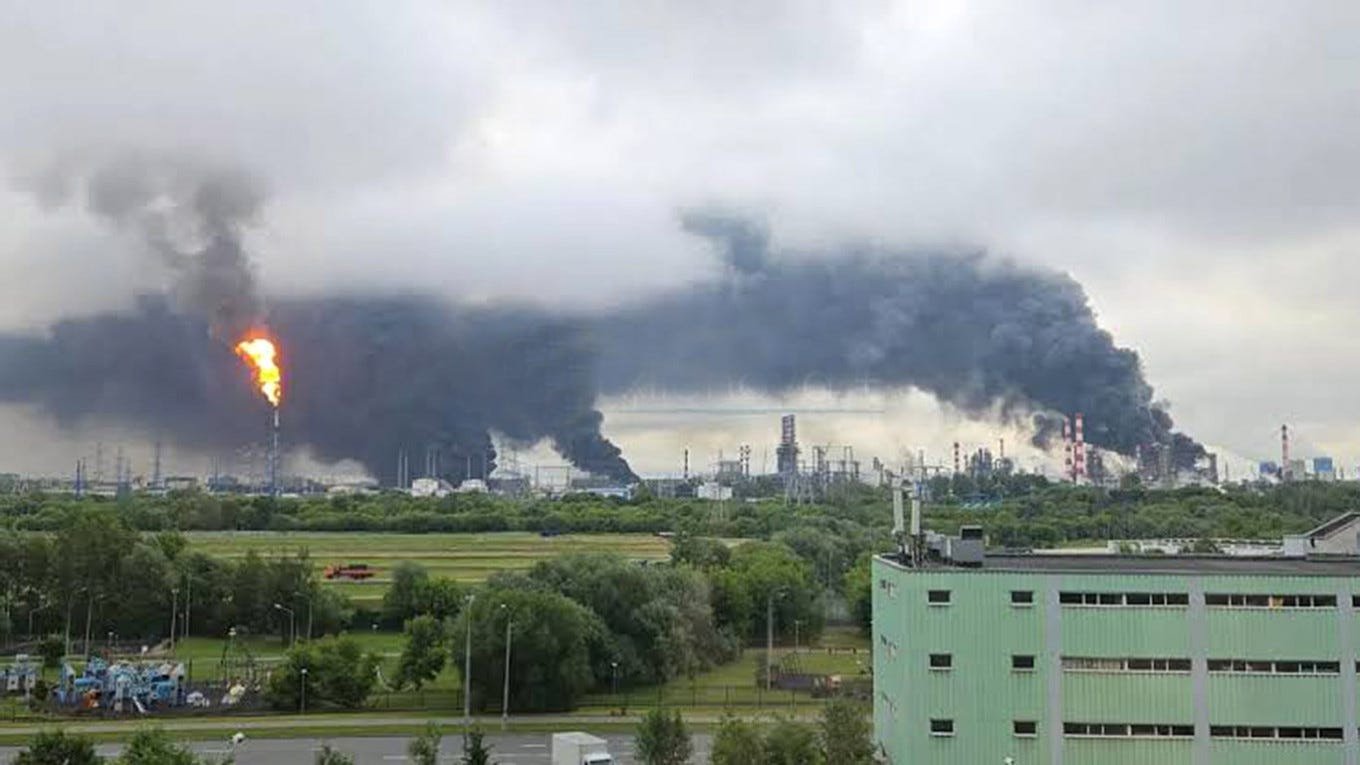
Inhabitants of several Moscow neighborhoods and suburbs experienced the largest Ukrainian drone attack since the beginning of Russia’s full-scale invasion of Ukraine on the night of June 18. The drones struck south of Moscow and in its immediate suburbs, hitting the Moscow Oil Refinery, the Mega Belaya Dacha shopping and entertainment center, and the Sadovod shopping complex. There was a massive public outcry against clouds of black smoke, the smell of burning, and “oil rain” (Meduza, June 18).
Kyiv has attacked strategic and logistical targets inside Russia over recent months, causing significant damage to Russia’s economy (see EDM, June 9). Pro-Kremlin media have responded to Ukrainian attacks by calling for repression of ordinary citizens, regardless of their views. The head of “Solovyev Live,” Armen Gaspariyn, called for criminal charges of treason against Moscow residents making videos of the drone attacks, whom he characterized with expletives. One of the most prominent pro-Kremlin television personalities, Vladimir Solovyev, agreed with him (The Moscow Times, June 18).
Russian military analysts have said that people who publicize video from the sites of drone strikes “automatically become agents of enemy intelligence and carry out the work of real spies in checking the results of the attacks” (Topwar.ru, June 22). Andrey Medvedev, vice-speaker of the Moscow City Duma and a media figure who makes no secret of his close ties to the security services, has expressed the same view (Novaya Gazeta, January 23, 2023). Medvedev complains that posting photos of Ukrainian attacks does not lead to criminal charges of treason (Vzglyad, June 18).
It is unknown if the Kremlin will make arrests in response to these calls. The Ukrainian security services have learned, however, to effectively play upon the paranoia that reigns in the Russian information space. One Ukrainian Armed Forces unit made a post thanking the pro-war “Fighterbomber” Z-channel for a post about fuel shipments to Crimea. Following this, prominent Z-bloggers accused the “Fighterbomber” creator of “working for the enemy” (Telegram/@ve4niyvoy, June 22).
Arrests of Russians for posting pictures of damage from Ukrainian strikes could harm the Kremlin’s military infrastructure. Excessive arrests and repression overload the security services, diminishing their ability to identify real saboteurs and Ukrainian agents. Z-bloggers play a critical role in raising funds and procuring equipment for Russian troops, and punishing them for posts about Ukrainian strikes would decrease their ability to do so.
The Kremlin’s tightening of import restrictions via its new system for confirming the delivery date of goods (SPOT) has created difficulties for Russian troops. Following the June 2025 Ukrainian Operation Spiderweb drone attack, which destroyed Russian strategic aviation planes, it became evident that components for the drones were smuggled into Russia from neighboring countries (New Voice of Ukraine, December 10, 2025). Operation Spiderweb may have been the main impetus for tightening import procedures.
SPOT has been fully operational since June 1. It is designed to make the entire flow of imports arriving by road from the Eurasia Economic Union (EAEU) countries transparent. Now all importers bringing goods in on trucks from Belarus, Kazakhstan, and Kyrgyzstan must fill out a document on the pending delivery and specify all participants in the transaction, description of the goods, certificates and labeling, transport, and the planned date of import no later than two days before import. Experts estimate that SPOT will cause the price of imported goods to rise by 30–50 percent by the end of the year and complicate the transportation of mixed cargo (The Moscow Times, May 27). According to Director of the Association for Parallel Imports Anatoliy Semyenov, the new fiscal parameters for deals jeopardize “the very mechanisms that ensured the stability of imports under the sanctions regime” since “the more complicated the supply chain, the higher the risk that it will be unable to meet needs” (Telegram/@Hacker_in_Law, April 7).
SPOT will have the biggest impact on “parallel importation,” the import of a branded product that is then sold without the trademark owner’s consent. Parallel imports routed through EAEU intermediaries in countries have allowed Moscow to obtain components for its military industry from the European Union, bypassing sanctions. The Kremlin exploited the fact that intermediaries retained the legal right to ship goods in transit across Russian territory. In practice, however, once the components arrived in Russia, they remained there rather than being forwarded to the official buyer (The Bell, March 5). Russia actively repurchased tank and missile components that had previously been sold to markets in Asia (Nastoyashee Vremya, June 5, 2023).
Parallel imports will be significantly more difficult under SPOT. The inefficiency of Russia’s system for manufacturing and operating drones and the ongoing arrests for corruption in the arms sector that lead to operational disruptions in arms production are also making defense manufacturing harder (see EDM, June 11, 23). Of course, one should not discount Moscow’s military capabilities. Russia retains the potential to inflict significant damage on Ukrainian infrastructure, as occurred this winter (Re: Russia, June 16). New security measures, though capable of partially reducing the harm from Ukrainian attacks, also significantly affect Moscow’s military capabilities.'
This article was originally published in Eurasia Daily Monitor.