

Blaming ‘Foreign Forces’ Backfires for Beijing
Shijie Wang

Executive Summary:
A recent article from the Ministry of State Security (MSS) blamed “foreign forces” for the rise in youths “lying flat,” leading to outcry across Chinese social media.
Chinese netizens have responded with a mix of irony, derision, and expressing outright disappointment. “Lying flat” is not reflected in data on working hours or in people’s lived experiences, but is an expression of disillusionment with a system that many feel treats them as resources rather than people.
Authorities have successfully used the specter of “foreign forces” to suppress protests in the past, but the latest attempt, in which the government effectively accused its own citizens of laziness, has not succeeded. Instead, it has inadvertently exposed simmering dissatisfaction across the country.
On the morning of April 28, the Ministry of State Security (MSS) published an article on its social media account titled, “Those Inciting ‘Lying Flat’ Are Themselves Busy Running Around” (煽动“躺平”的他们,正忙得脚不沾地) (Xinhua, April 28). The article, which signals a continuation of last year’s “clean and bright campaign” (清朗行动) to eradicate social conflicts, was subsequently republished by official media outlets and quickly went viral (China Brief Notes, October 31, 2025). Its patronizing messaging has had the opposite effect, however, intensifying existing social contradictions and providing a window into popular resentment.
The article argued that the “lying flat” mentality now spreading among the country’s youth (which similar to the U.S. phenomenon of “quiet quitting”), was allegedly the result of “foreign forces” (境外势力) funding a small number of online influencers. It urged the public not to be “blinded” (蒙蔽双眼) and to continue “defining youth through struggle” (用奋斗定义青春) (Xinhua, April 28). The article’s condescending tone failed to convince its intended audience. The online response has instead delivered Beijing one of its largest recent waves of pushback.
Official Narrative Does Not Reflect Reality
In the People’s Republic of China (PRC), “lying flat” is primarily an expression of emotion, not a genuine lifestyle choice. National Bureau of Statistics data shows that workers in the PRC, whom Beijing accuses of “lying flat,” work an average of 48.8 hours per week, far above the level in developed countries, and as high as other East Asian states that are traditionally associated with intense work cultures. PRC workers average as many as 2,450 annual working hours, nearly 250 hours more than Mexico, the second-highest country, according to the OECD. In the country’s tech sector—which invented the “996” work culture, alternating long and short work weeks (“大小周”), and even “007”—the average annual working time reportedly reaches a staggering 3,600 hours (36Kr, July 31, 2024). [1]
Students are under even greater pressure. According to a 2022 Peking University study, high school students preparing for Gaokao, the feared college entrance examination, spend nearly 60 hours per week studying. Only primary school students have lighter schedule than those of working adults, averaging 46 hours per week on study (Tencent News, April 30, 2025).
Newly coined words reflect Chinese workers’ continued industriousness. Young Chinese have successively invented terms such as “involution” (内卷), “cattle and horses” (牛马), “human mines” (人矿), and “manual laborers” (力工) to mock and critique grueling working hours. [2] Their rapid incorporation into everyday language reflects the extent to which they ring true for so many. Beijing may believe that people have simply become lazier, but this belief is supported by neither the data nor popular sentiment.
Public Pushback: From Trolling to Exposing Hypocrisy
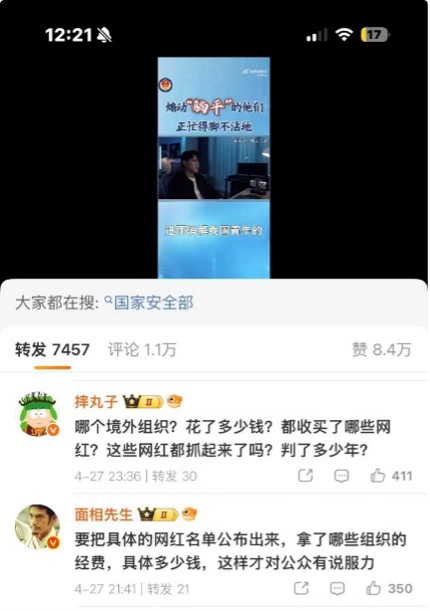
Citizens’ responses to the article took four main approaches. First, many demanded the MSS provide evidence to support its claims, especially since the article had referred only to “a certain foreign organization” (某境外组织) (see Figure 1). Some influential government-aligned commentators, responding with sarcasm or even contempt, dismissed such demands, arguing that the MSS need not disclose what was likely classified information. [3]
Figure 1: Netizens Ask for More Details from the MSS
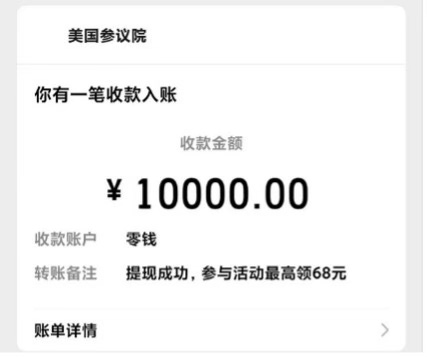
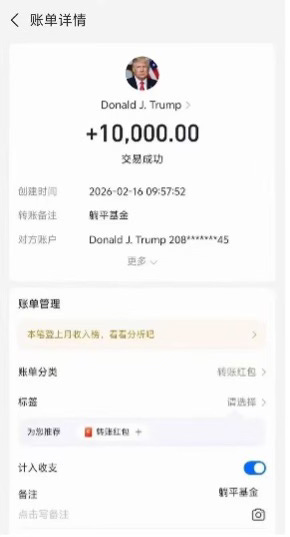
Other respondents engaged in direct trolling. In the comments section of the MSS account and major official media outlets, they sought information on how they could receive funding from “foreign forces,” given that they had been “lying flat” for so long (Rednote/@China News Agency, April 28). Screenshots generated by artificial intelligence (AI) circulated purporting to show WeChat payment transfers from U.S. president Donald Trump and Congress, while posters jokingly claimed they had finally received overdue payments from the Americans (see Figure 2).
Figure 2: Faked Screenshots Humorously Claim Payment from ‘Foreign Forces’
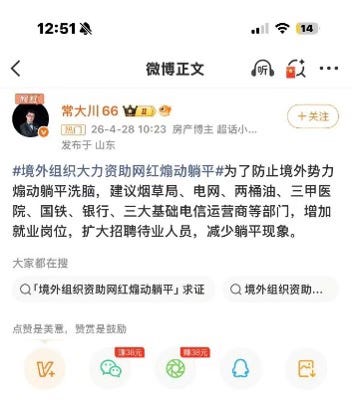
A third form of pushback saw netizens declare willingness to “struggle” (奋斗), but only as long as they could work at state-owned enterprises such as China National Petroleum Corporation (中石油), State Grid (国家电网), or China Tobacco (中国烟草集团)—institutions known for high pay and for positions often monopolized by the children or networks of party-state elites (see Figure 3). These commenters often argued that the problem was not that they were unwilling to “struggle,” but that the state had never afforded them with the same level of care in comparison to Party insiders. The implication was that “lying flat” is a form of passive resistance to governmental neglect.
Figure 3: Netizens Ask for Jobs at Major State-Owned Enterprises
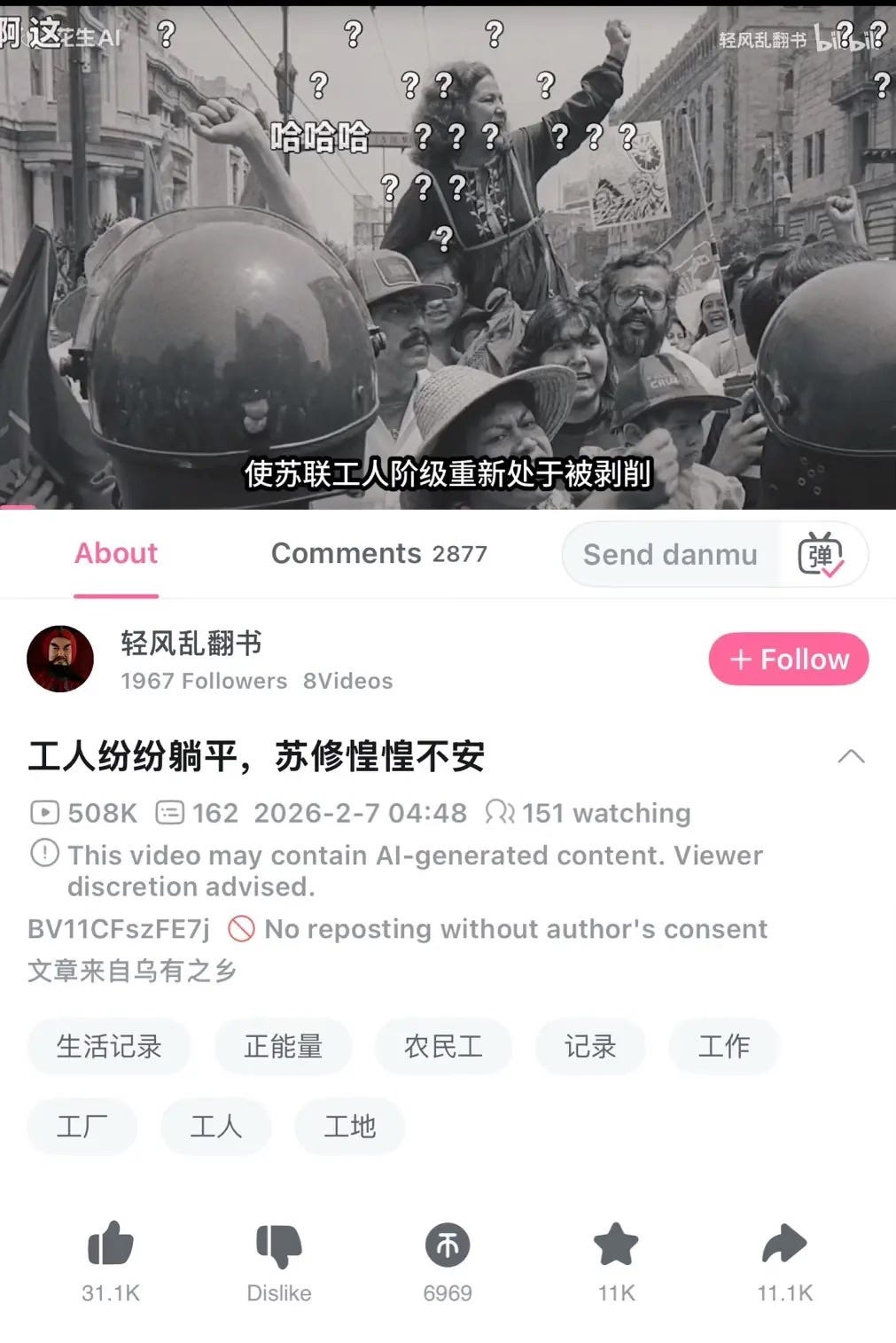
The sharpest pushback came from a group of young people often described as the “net leftists” (网左). [4] Digging through historical archives, they found a People’s Daily article from 1974, which criticized the “Soviet revisionists” (苏修) for forcing workers to labor (see Figure 4). Praising Soviet workers for resisting the “Soviet revisionist” dictatorship through strikes and slowdowns, the article concluded by criticizing Moscow for “attempting to use empty talk about labor to cover up the increasingly sharp class contradictions in the Soviet Union” (妄图用劳动的空谈来掩盖苏联日益尖锐的阶级矛盾) (People’s Daily, November 2, 1974).
Figure 4: A 1974 People’s Daily Article Went Viral on Social Media
A Common Tactic Backfires
The government has previously had success invoking “foreign forces” to suppress civil discontent. Under Xi Jinping, officials have generated a “rally around the flag effect,” with government-backed influencers using what appear to outsiders to be absurd pieces of evidence to identify the involvement of “foreign forces.” In doing so, they have at times been able to reverse the government’s disadvantage in the information space. For example, when a middle school student fell to his death in Chengdu in 2021, Sichuan police implied that the resulting public outcry might have been part of a Western-led “color revolution” (颜色革命). Pro-establishment influencers cited protesters holding flowers and speaking Mandarin (instead of the local dialect) as unusual behavior, suggesting that “foreign forces” must have been present among the crowd (Weibo/@Sichuan Cyber Police; China Digital Times, May 12, 2021; Chinaworker, May 23, 2021). [5]
These earlier successes have created a path dependence in Beijing’s approach. Since the enactment in 2023 of the Anti-Espionage Law (反间谍法), the MSS has frequently published reports about the capture of “foreign forces” (WeChat/MSS, April 15; April 16). Like its recent article, these reports are all vague, but have rarely faced public scrutiny. The MSS evidently believed the same tactic could help resolve a form of social pessimism that has become a headache for Beijing. It overlooked, however, the fact that this campaign directly touched the interests of all kinds of PRC citizens, as well as effectively insulting them. [6]
Conclusion
The backlash to the MSS article shows the limits of Beijing’s “foreign forces” narrative. “Lying flat” is not an imported ideology, but an organic domestic expression of frustration and exhaustion. Beijing will not stop fabricating foreign foes, but in the future, will need to be more mindful of the risks of this approach. In this case, the MSS inadvertently exposed a source of simmering pressure within the system. Unless authorities are flexible enough to accept political responsibility, the next episode could spill over beyond the digital realm.
This article originally appeared in China Brief Notes. Check it out here!
Shijie Wang is a Deputy Editor for China Brief.
Notes
[1] “996,” pioneered by Alibaba, refers to a work schedule from 9 a.m. to 9 p.m., six days a week. The “alternating long and short week” system, first adopted by ByteDance and Pinduoduo, refers to a rotating schedule in which employees receive one day off one week and two days off the next. (Pinduoduo even introduced a “super alternating long and short week” system (超级大小周), with one day off every two weeks.) An escalation of “996” culture, “007” refers to a 10 a.m.—10 p.m., seven days a week work schedule that is often used during periods when companies need to boost financial performance.
[2] “Involution” (内卷), originally derived from the work of anthropologist Clifford Geertz, refers to a form of rat race in which people are forced to invest ever more time and energy but with diminishing overall returns and widespread exhaustion.
“Cattle and horses” (牛马), meanwhile, comes from the idiom “to work like an ox or a horse” (当牛做马) and is a form of self-mockery among worn-out office workers who fell like they are treated as working animals. The term was influenced by the Japanese word shachiku (社畜), literally “corporate livestock.”
“Human mines” (人矿) is a literal metaphor: people are nothing more than mineral resources to be extracted and used. Along with an earlier, similar term, “human dry-cell batteries” (人肉干电池), it is a stronger version of “cattle and horses.”
“Manual laborer” (力工) first emerged from Chinese-language “MGTOW” (Men Go Their Own Way) communities. It originally referred to men who subject themselves to years of hard work only to exchange money for marriage in a single final transaction. Today, it is also used more broadly by men to mock their exhausting lives and the fact that, despite their labor, they still cannot afford the high costs of marriage and childbearing.
[3] The well-known young Maoist commentator “Zhang Beihai Official” (章北海official) quickly released a video on Bilibili commenting on the MSS article. In the video, he argued that the MSS has an obligation to provide the public with concrete details, and implied that failing to do so would amount to lying. The video was censored within hours of being posted, but it has since been reuploaded to YouTube by others (Youtube/@yuzhouwang-w8n, April 29).
[4] For more on the “Net Leftist” community, see the author’s ChinaTalk article, “Longing for the Cultural Revolution in China Today” (ChinaTalk, January 22).
[5] The episode, known as the “Chengdu No. 49 Middle School student death incident” (成都四十九中学生坠亡事件), unfolded between May 9–12, 2021. After a 16-year-old student was found to have fallen to his death at school, the school reportedly first contacted a funeral home to transfer the body, then called the police, and only later notified the student’s mother. The following day, the student’s mother posted on Weibo questioning why the school had notified the family last, why it had refused to allow the family to view surveillance footage from the time of the incident, and why it had sought to process the body so quickly. Her posts implied the possibility of homicide or bullying. Her claims quickly gained support from many Chengdu residents, who spontaneously held a vigil at the school and demanded explanations from the school and police. On May 11, local authorities announced they had concluded their investigation, finding no evidence of homicide or bullying, and determining that the student’s death was a suicide. The parents and Chengdu residents gathered outside the school did not accept this explanation. Beginning on May 12, claims began circulating online that “foreign forces” had incited and participated in the incident, and that Tzu-i Chuang Mullinax (庄祖宜), the wife of then-U.S. Consul General in Chengdu Jim Mullinax (林杰伟), was allegedly behind it. Sichuan Cyber Police endorsed this claim. The original posts accusing Chuang have since been deleted from Weibo, but the allegation resurfaced during the 2022 Chengdu anti-Zero-Covid “white paper” protests (see Weibo/@Zhiyaojun, December 16, 2022). On May 13, the crowd and the family members left the school, and the incident gradually subsided.
[6] Ironically, some of the very commentators who had previously “discovered” the presence of “foreign forces” during the Chengdu No. 49 Middle School incident and other public opinion crises took a very different position this time. They openly rejected the MSS article and called on the state to acknowledge the people’s legitimate grievances (see Weibo/@Mayanming, April 29).