

Beijing’s Regional Studies Push Risks Campaign-Style Overreach
Yaqi Li
Executive Summary:
Chinese universities only began teaching area studies as a distinct discipline in 2022, as a latent response to a perceived lack of personnel equipped to capably represent the state’s interests across One Belt One Road partner countries. The discipline’s overhaul is part of a wider push to reduce the hold of Western theory within academia and put forth an “autonomous knowledge system” under the guidance of the Chinese Communist Party.
The buildout of area studies programs has followed a campaign-style logic that runs ahead of genuine demand. Programs have opened at institutions with no relevant expertise, classes are filled by reassigning students out of weak foreign-language majors, and the small policy apparatus that hires graduates still recruits from only a few elite programs.
The likely result is an oversupply of low-quality policy outputs rather than the country-specific expertise the leadership seeks. An emerging diplomatic knowledge base that is more Sino-centric and less legible to outside observers may also end up being less useful for the country’s long-term international engagement.
On March 10, the People’s Daily ran an article by Jing Ge (靳戈) of Peking University’s Institute for Area Studies on how the “regional and country studies” (区域国别学) discipline should serve the People’s Republic of China’s (PRC) international communication strategy (People’s Daily, March 10). The same day, the China Scholarship Council (CSC; 国家留学基金管理委员会) opened its 2026 application window for a program sending roughly 500 researchers annually to One Belt One Road (OBOR) member countries (CSC, July 17, 2025). These were routine steps in an expansion that, since 2022, has embedded 453 research centers across 186 universities approved by the Ministry of Education (MOE) and built new doctoral and master’s programs at dozens of institutions—all for a discipline that did not exist in PRC universities four years ago (China Social Sciences Network [CSSN], February 23, 2024). Beijing has since identified a need for country-specific expertise to support its rise and its international relations.
Theory Traditionally Prized Over Service
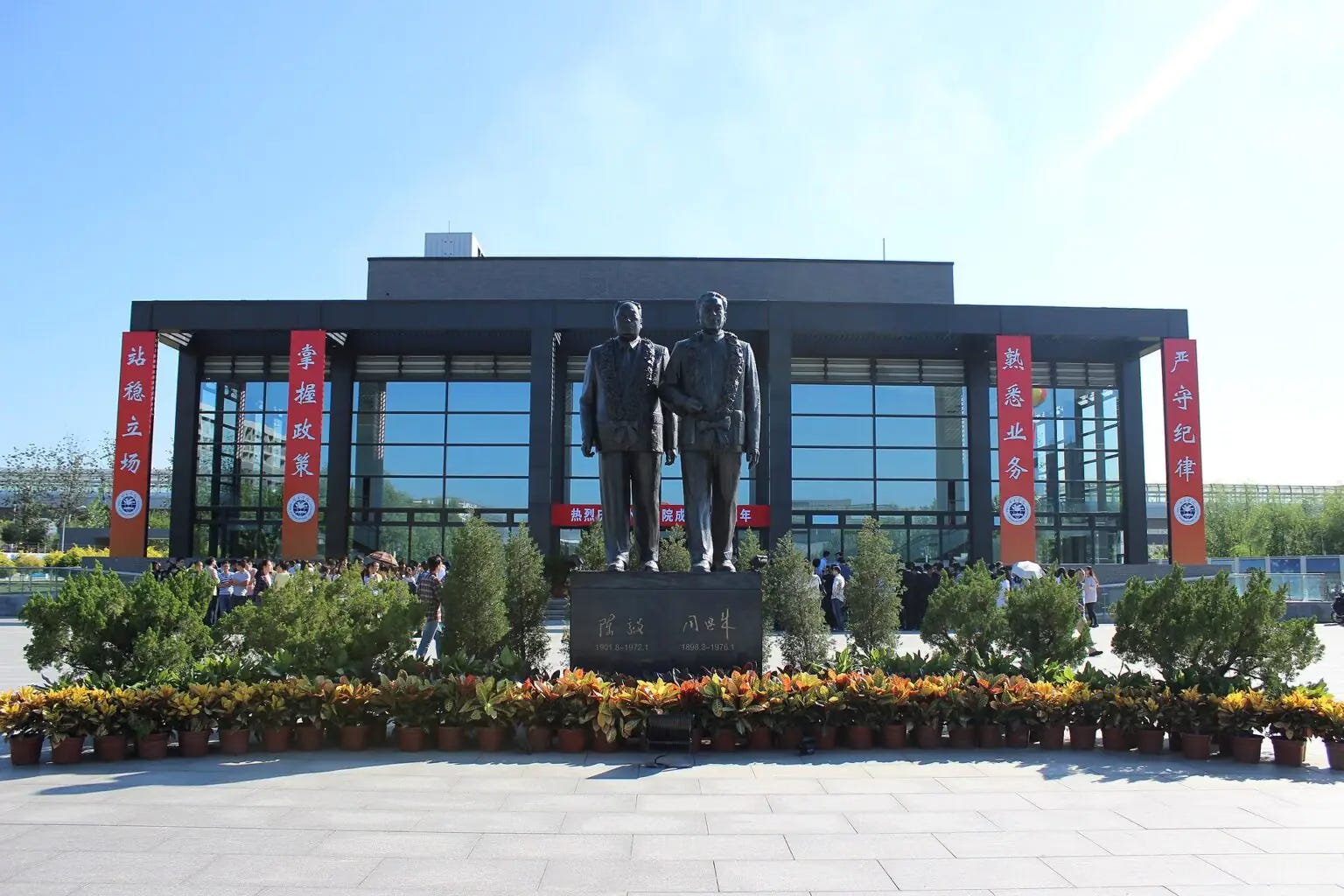
After 1949, the Chinese Communist Party (CCP) established three schools to train diplomats: Beijing Foreign Studies University (BFSU), the University of International Relations (UIR), and China Foreign Affairs University (CFAU). All three channeled graduates into the foreign ministry, security bureaus, and diplomatic corps. [1] Provinces have followed suit, replicating the model for training translators and trade staff.
This pipeline served Beijing’s purpose for much of the PRC’s history, as integration into the U.S.-led post-war order required learning its rules. When this academic track expanded through the 2000s and the PRC’s understanding of its position in the international system shifted, tensions emerged. Traditional training taught scholars to theorize practice in terms of universal propositions, but diplomats now needed detailed country-specific knowledge and, for political reasons, and an indigenous theoretical vocabulary. [2] Many chaffed at the dominance of Western paradigms in the study of international relations within the PRC. As BFSU scholar Zhang Zhizhou (张志洲) put it in 2009, the field had become a “racetrack and colony” (跑马场和殖民地) of Western theoretical discourse. [3]
Academia responded by trying to define a “Chinese school of international relations” (国际关系中国学派), which gained momentum by the late 2000s. The field’s trajectory did not change, however, and remained highly “Americanized” into the 2010s. [4] Liberal internationalism dominated discussions, and many scholars were deeply connected to Western academic networks, even as Beijing grew more assertive abroad.
Area Studies Rises Under Xi
CCP General Secretary Xi Jinping has spearheaded a reinvigoration of area studies that better serves national—and Party—interests. In a 2016 speech at the Philosophy and Social Sciences Work Forum (哲学社会科学工作座谈会), he diagnosed the problem in Chinese social science as a loss of “subjectivity” (主体性) to Western frameworks (Xinhua, May 18, 2016). In 2022, he called for a response: the construction of a “autonomous knowledge system” (自主知识体系) under the CCP’s guidance (Xinhua, April 25, 2022).
The Ministry of Education (MOE) answered his call. Later that year, it overhauled its catalog of disciplines for postgraduate education. International relations remained a second-level discipline (二级学科) under political science, but area studies (区域国别学) was elevated to first-level discipline (一级学科) status under Interdisciplinary Studies (交叉学科) alongside national security studies (国家安全学) (MOE, September 14, 2022). Under the ministry’s discipline evaluation system, only first-level disciplines receive funding and have the authority to award degrees (MOE, November 2, 2020). [5]
Mixed Results From Campaign-Style Mobilization
The PRC’s lack of dedicated area studies programs is reflected in a distinct lack of granular knowledge about the rest of the world beyond Europe, Japan, and the United States. As the country began to focus much more attention and resources toward “Global South” countries, this gap became clear to authorities. In 2013, Chinese universities offered courses in the languages spoken in only 20 of 53 OBOR partner countries (China Social Sciences Today, June 28, 2023). Even in February 2025, faculty and courses focused on “obscure countries, small island countries, and states with no diplomatic relations [with the PRC]” (冷门国家、小岛国、未建交国) were virtually nonexistent (CSSN, February 27, 2025).
The response to address this gap has followed the familiar logic of campaign-style mobilization, with new area studies programs established at petroleum engineering schools, water resources universities, finance institutes, ethnic affairs schools, and small normal universities across the country (CSSN, February 23, 2024). To stimulate demand and boost the discipline, many students who end up in these programs are reassigned (调剂) from underperforming foreign language majors. In 2025, BFSU and several other institutions issued formal reassignment notices, while the national minimum admission score for the area studies graduate programs fell from 275 to 266 in a single year (University Student Essentials, February 25, 2025; China Kaoyan, April 1, 2025).
This dynamic has led to—similarly familiar—mismatches between supply and demand. The policy apparatus, which thrives only in Beijing and Shanghai where the think tanks, government agencies, and diplomatic community reside, cannot easily absorb the volume of graduates the system is now creating. Reassignment fills the pipeline with students drawn by lower entry barriers, while the Ministry of Foreign Affairs, governmental research institutes, and established university policy centers recruit at conventional numbers from a small set of programs. The result is a cohort trained to produce policy reports, country studies, and OBOR assessments, but often without the field exposure or local access this work requires. The expansion may fill enrollment quotas, but it fails to produce the high-level outputs that the PRC’s diplomatic apparatus needs.
Overcapacity also degrades the policy advisory service, a key priority. Under the previous pipeline, policy-relevant intelligence flowed through a small elite cluster of governmental-affiliated think tanks and select university-based research centers. [5] Now, however, the 453 institutes that launched area studies programs must compete for a finite pool of ministerial attention, patronage, and funding. As Yang Cheng (杨成) of Shanghai International Studies University has warned, the field risks “superficial prosperity born of overheated development” (过热发展而徒有表面繁荣), with most institutes lacking the staff, language training resources, and archives that cultivating serious expertise requires (CSSN, February 1, 2024).
Conclusion
As the PRC attempts to build the higher-quality diplomatic corps that its international role requires, it is repeating common patterns seen in other aspects of PRC state-building. Once a strategic need is identified at the top, an ideological framework is imposed to redirect academic energy; this leads to an institutional gold rush and a campaign-style overextension that generates new imbalances. It is true that the original pipeline shaped a field that was too theoretical and too Western for Beijing’s current purposes, but the replacement risks producing little more than low-quality policy reports.
One result of the PRC’s new approach to area studies will be that its products will be less legible to external audiences. Its policy outputs will reflect new, Sino-centric inputs, and analysis reaching Western readers will feature less liberal internationalism, fewer English-language citations, and limited dialogue with Western academia.
This article originally appeared in China Brief Notes. Check it out here!
Yaqi Li is a researcher at the S. Rajaratnam School of International Studies (RSIS), Nanyang Technological University, Singapore. He runs “New China Literacy,” a Substack and podcast on the upstream experiences and intellectual inputs shaping the next generation of Chinese strategic thinkers and has published in The Diplomat, the IDSS Paper series, the RSIS Commentary series, and The Fletcher Forum of World Affairs.
Notes
[1] CFAU’s campus bears an inscription of a quote from former premier Wen Jiabao (温家宝): “cradle of diplomats” (中国外交官的摇篮) (CFAU, accessed April 23).
[2] Qin Yaqing [秦亚青], “The Core Problem of IR Theory and the Formation of the Chinese School [国际关系理论的核心问题与中国学派的生成]”, Social Sciences in China [中国社会科学], No. 3, 2005, pp. 165–176;
Qin Yaqing, “Why is there no Chinese international relations theory?” International Relations of the Asia-Pacific 7:3 (2007), 313–340.
[3] Zhang Zhizhou [张志洲], “The Path Forward for the Chinese School of IR: On the Policy-Orientation and Academic-Orientation of International Affairs Research [国际关系中国学派的进路——兼论国际问题研究的政策性与学术性]”, International Politics Studies [国际政治研究], No. 3, 2009, pp. 74–79.
[4] Wang Yizhou [王逸舟] and Yuan Zhengqing [袁正清], eds., Chinese International Relations Research, 1995–2005[中国国际关系研究 1995–2005] (Beijing: Peking University Press, 2006); for the post-2005 extension through the cosmopolitan peak, see also Qin Yaqing, “Development of International Relations Theory in China: Progress through Debates,” International Relations of the Asia-Pacific 11:2 (2011), 231–257.
[5] This change was foreshadowed by regulations for area studies centers released in 2015, which decreed that their primary purpose was to be “policy advisory services” (咨政服务) and that they would be evaluated principally based on the “quality of policy advisory outputs” (咨政成果质量) (MOE, January 26, 2015).
[6] The latter is also known as the “MFA Policy Research Topic Key Cooperating Unit” (外交部政策研究课题重点合作单位).