

Arakan Army Becomes Most Effective Insurgent Force in Myanmar
Khandakar Tahmid Rejwan
Executive Summary:
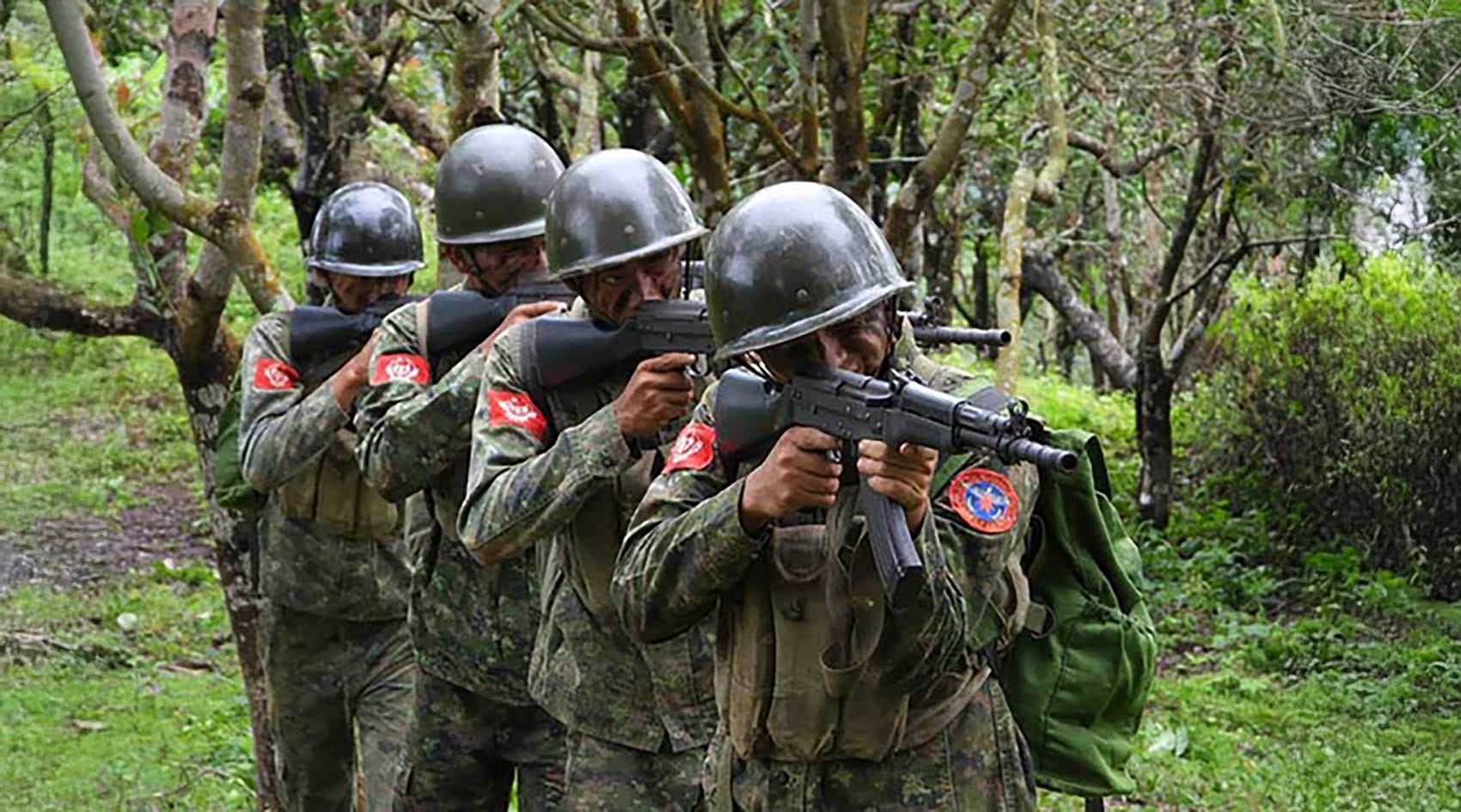
The Arakan Army (AA) has become Myanmar’s most powerful rebel group, controlling most Rakhine State townships and actively expanding into neighboring regions to establish a territorial buffer zone.
The group has successfully promoted pragmatic governance through functioning legal and social institutions, while using strategic alliances to train and supply a nationwide network of armed resistance groups.
Controlling key foreign infrastructure projects gives the insurgents a certain level of geopolitical leverage over the People’s Republic of China (PRC) and India, allowing the group to operate with greater autonomy than other rebel armies.
On October 27, 2023, the Buddhist ethno-nationalist insurgent group, Arakan Army (AA)—in connection with its two key allies, the Myanmar National Democratic Alliance Army (MNDAA) and Ta’ang National Liberation Army (TNLA)—launched Operation 1027. The joint military operation was initiated in northern Shan State near the border with the People’s Republic of China (PRC) and fundamentally altered the balance of power in Myanmar’s post-coup civil war. The offensive successfully captured vast amounts of territory and critical trade routes. Since then, the AA has emerged as the most powerful and influential rebel group in Myanmar’s decades-long civil war (Center for Arakan Studies, July 2, 2024). Formed on April 10, 2009, these Rakhine insurgents, who were re-designated as terrorists by the then Myanmar junta in September 2024, have de facto carved out their own proto-state by driving out government forces from Western Myanmar (Arakan Army, April 17, 2024; The Irrawaddy, September 4, 2024; DVB, October 12, 2025). [1] AA has established full control over 14 of Rakhine State’s 17 townships, as well as another township in Chin State (Asia Times, February 20, 2025). The AA has also effectively taken full control over the 271 kilometers (about 168 miles) of Myanmar’s international border with Bangladesh, as well as most of the Chinese and Indian infrastructure connectivity projects within Rakhine (see Terrorism Monitor, July 15, 2025).
AA is currently the largest active non-state armed group in South Asia and Southeast Asia, comprising 40,000 regular troops. Envisioning the ‘Arakan Dream’ through the ‘Way of Rakhita,’ it has effectively become the largest threat to Myanmar’s newly ‘elected’ President, Ming Aung Hlaing, [2] and his military proxy regime (GAN, June 18, August 22, 2025; Al Jazeera, August 23, 2025). [3] AA’s success has become a model for other rebel groups and anti-junta activists (ISP-Myanmar, July 18, 2025).
Factors Behind AA’s Effectiveness
Certain political, military, and strategic factors set AA apart from other non-state armed groups active during Myanmar’s decades-long insurgency.
Successful Military Campaigns
AA is on the verge of becoming the first rebel group to establish full territorial control of an ethnic state in Myanmar. The group aims to expel Myanmar’s military from Rakhine State altogether, possibly by the end of 2027 (Frontline Magazine, September 11, 2025; bdnews24, April 11). AA is also expanding its territorial ambitions beyond Rakhine State. For example, in January 2024, it conquered the strategic township of Paletwa in Chin State bordering India (The Irrawaddy, January 15, 2024). Since January 2025, it has continued to launch large-scale insurgent operations into Ayeyarwady, Bago, and Magway regions, all of which are adjacent to Rakhine State and are considered part of the Bamar heartland (The Irrawaddy, January 28, 2025; The Irrawaddy, January 19). [4] Moreover, in February, the group expanded into the Sagaing Region by taking control of at least four military camps in the Kanbalu District (DMG, February 13). Through these offensives, AA aims to create a territorial buffer zone between Rakhine and the non-Rakhine regions, as well as gain access to military ordnance factories, locally known as ‘KaPaSa’ (LSE South Asia Blog, March 10, 2025; ISP Myanmar, December 2, 2025). [5]
Pragmatic Rebel Governance
AA infiltrated Rakhine state by first establishing a base in the remote Paletwa township in 2010, then gradually moving south. From 2015 to 2020, the group focused its anti-junta insurgency in the rural areas of Northern Rakhine, where it successfully established rebel governance by installing its own legal, political, and social institutions (Center for Arakan Studies, July 2, 2024; ACLED, October 31, 2025; The Financial Express, April 11). [6] Since Operation 1027, AA has emphasized and successfully begun taking over the urban centers of major Rakhine townships, including Mrauk-U, Maungdaw, Ann, and Gwa. The group has also focused on increasing court efficiency, making education and healthcare accessible, and strengthening the effectiveness of law enforcement. These efforts have bolstered its popular support and contributed to its territorial consolidation (Center for Arakan Studies, July 2, 2024). AA also promoted communal harmony among minorities through initiatives such as reopening the Jameh mosque in Maungdaw, hosting the “Maharamaya Harinama Rama” for Hindus, and implementing community outreach with Muslims (The Irrawaddy, September 25, 2025; DVB, September 2025; BNI, February 5).
Effective Web of Alliances
AA has additionally bolstered its capabilities by forging strategic alliances with diverse rebel groups within Myanmar. By collaborating with well-established ethnic militias—such as the Kachin Independence Army (KIA), United Wa State Army (UWSA), Myanmar National Democratic Alliance Army (MNDAA), and Ta’ang National Liberation Army (TNLA)—AA has gained valuable battlefield experience, a steady flow of armaments, and operational insights to become an effective insurgent force (Center for Arakan Studies, July 2, 2024). [7] Alliances with prominent, large, and decades-old rebel groups also helped safeguard AA from defeat in its infancy. Since the 2021 coup, AA has emerged as a major patron of Myanmar’s armed resistance by establishing a nationwide rebel network. From training to logistics, it has provided full or partial support to at least 23 rebel groups who are active in Chin, Shan, Kayah, Kayin, Magway, Bago, and Ayeyarwady across 61 townships (ISP-Myanmar, July 18, 2025). AA has also supported the pro-democracy People’s Defense Forces (PDFs) in varying capacities. [8]
Successful Media Campaigns
AA has additionally demonstrated an ability to wage a propaganda war. It has successfully disseminated positive images through popular television and news outlets such as Narinjara and Development Media Group (DMG) (Rohingya Khobor, October 3, 2025). Through overseas and diaspora support, it has also opened a propaganda media front—the Global Arakan Network (GAN) (The Daily Star, October 29, 2025; GAN, Accessed on April 15). These media also have a very strong presence on Facebook, which is widely used throughout Myanmar. AA’s local-language Facebook pages (Burmese and Rakhine) have millions of followers, with English-language pages also having substantial followings (DMG Burmese; Narinjara Burmese; DMG English; Narinjara English, April 15). This large audience spreads AA’s key political and military successes online, helping AA manufacture credibility and improve its public image.
Young Charismatic Leadership
AA’s commander-in-chief, Tun Mrat Naing, is charismatic and a very pragmatic strategist (see Militant Leadership Monitor, January 24, 2025). He has capitalized on the grievances of the young Rakhine generation against Bamar-led ethnic discrimination and developed a unique ethno-nationalist ideology that invokes the history and rationale for establishing an ‘Arakan State’ (Bonik Barta, April 19, 2025). This contributes to the mobilization of a large number of youths into AA rank and file. Tun has also been open about women’s participation in the ongoing insurgency (The New Humanitarian, November 18, 2020). Currently, a significant portion of AA membership comprises women who serve in the Department of Law Enforcement and Police (DLEPS), the Arakan Army Auxiliary (AAA), and Field Medical Units (FMU). [9]
Curbing Chinese Influence
Territories controlled by powerful and influential rebel armies, such as the KIA, MNDAA, and UWSA, border the PRC directly. They are dependent on Chinese support for essential goods, trade facilitation, weapons procurement, infrastructure development, and investment. This gives Beijing bargaining power and influence over these rebel armies (Geopolitical Monitor, April 22, 2025; The Diplomat, April 26, 2025). The PRC has exploited this dependency and vulnerability to successfully halt anti-junta offensives and the logistical support they receive by directly threatening these rebel armies (The Irrawaddy, March 19). In contrast, AA’s primary area of operations and territorial control around Rakhine State make it immune to excessive reliance on or strategic subservience to the PRC. This insulation from Chinese influence helps AA operate against the military with greater autonomy than other rebel groups in Myanmar. [10]
Capitalizing Geopolitical Leverages
The position of Rakhine gives the AA a degree of strategic leverage over Myanmar’s neighbors. The PRC has at least 11 One Belt One Road (OBOR) projects that are based in Rakhine State (ISP-Myanmar, December 24, 2024). [11] They are part of Beijing’s ambitious plan to create a holistic infrastructure network connecting Yunnan in the mainland PRC to Rakhine, thereby securing an alternative gateway to the Indian Ocean via the Bay of Bengal. Similarly, India has launched the Kaladan Multi-Modal Transit Transport Project, a strategic initiative to enhance connectivity between Northeast India and Myanmar. The project is set to be fully operational by 2027 (The Irrawaddy, June 15, 2022; The Daily Star, July 7, 2025).
AA fully or partially controls at least 10 out of 11 Chinese OBOR projects in Rakhine (ISP-Myanmar, December 24, 2024). The group also controls Paletwa Township, one of the critical nodes connecting India’s Kaladan Project. The security, development, and operationalization of these projects depend completely on AA’s goodwill (CAS, June 15, 2023). The group has vowed to protect all foreign infrastructure projects and to welcome further foreign investment in Rakhine (GAN, 2024; Arakan Army, December 29, 2024).
Additionally, Bangladesh hosts more than 1.3 million Rohingya refugees and now shares an international border with the AA. For Bangladesh, therefore, AA has become a key factor in negotiating the solution of the ‘Rohingya Refugee Crisis’ as well as cross-border security, movement, and trade (The Irrawaddy, March 5).
Conclusion
17 years after its founding, AA has achieved feats that decades-old ethnic militias have struggled to accomplish (DMG, November 13, 2025). It has built an image of armed resistance that focuses not only on fighting but also on long-term sustainability (GAN, December 31, 2025). The somewhat flattering coverage of Tun Mrat Naing in an exclusive four-part interview by The Irrawaddy [12], along with congratulatory messages from nearly 30 rebel groups received this year by AA on its anniversary, points to a growing awareness of the effectiveness of the Rakhine insurgents in Myanmar (The Irrawaddy, November 4, 2025; Narinjara, April 11).
This article was originally published in Terrorism Monitor
Notes:
[1] Arakan Army is locally known as “Arakha Army, and its political wing is the United League of Arakan (ULA).
[2] Ming Aung Hlaing was the former Commander-in-Chief of Defense Services (CINCDS) and the primary plotter of the February 2021 coup. He is an internationally recognized war criminal who was elected as President through a rigged election that ensured the victory of a pro-military proxy party called the Union Solidarity and Development Party (USDP).
[3] ‘Arakan Dream’ envisions a self-governing, independent Rakhine State, historically known as Arakan. The ‘Way of Rakhita’ is an ethno-nationalist doctrine that aims to achieve the Arakan Dream through armed conflict and to promote Rakhine supremacy.
[4] The Bamar “heartland” centers on Upper Myanmar (Mandalay, Sagaing, Magway) but extends to Lower Myanmar (Bago, Yangon, Ayeyarwady), often referred to as the ‘Central Dry Zone’. It is the cultural, historical, and demographic center of the Bamar, Myanmar’s most populous and powerful ethnic group.
[5] KaPaSa is the Directorate of Defense Industries’ (DDI) arms factories. There are 25 KaPaSa in Myanmar: 15 in Magway Region and 7 in Bago Region.
[6] These included the Arakan People’s Revolutionary Government, the Arakan People’s Authority (APA), the Department of Law Enforcement and Public Security, the Arakan Army Judiciary, the Arakan People’s Public Health Department, and the Arakan Public Policy and Administration School.
[7] The major ethnic alliances of AA are the Northern Alliance-Myanmar (NA-M), the Federal Political Negotiation and Consultative Committee (FPNCC), and the Three Brotherhood Alliance (3BHA).
[8] People’s Defense Forces (PDFs) are loosely controlled militia units under the command of the Defense Ministry of the National Unity Government (NUG) in exile, formed after the 2021 military coup.
[9] Confidential interview with a local Arakan Army officer based in Northern Rakhine.
[10] Operation 1027, led by 3BHA in the Shan State, caught Myanmar’s then-junta leader by complete surprise, followed by ethnic and pro-democracy rebel groups in other regions gradually replicating their own version of the offensive. The PRC was frustrated with Myanmar’s junta’s ineffectiveness in curbing scam center operations based in the borderlands of Shan State that primarily targeted Chinese Citizens. Beijing cut a deal with the 3BHA to allow the joint offensive to proceed in exchange for disbanding all Shan-based scam centers. But as the offensive moved beyond Shan State, it severely threatened the pro-PRC junta and opened the possibility that the pro-West NUG could take power. Beijing’s support for the junta thus went from subtle to direct.
[11] These include the China-Myanmar Natural Gas Pipeline, Kyaukphyu-Ann Railway, Mandalay-Kyaukphyu Railway, Ann Wind Power Project, Mandalay-Kyaukphyu Road, China-Myanmar Oil Pipeline, Kyaukphyu Deep Sea Port and Special Economic Zone, Kyaukphyu Power Plant, Kyaukphyu-Naypyitaw Road, and Thandwe Wind Power Project.
[12] The Irrawaddy is Myanmar’s most popular pro-democracy outlet in exile, and is based in Thailand.
Khandakar Tahmid Rejwan is a Lecturer in Global Studies and Governance (GSG) under the School of Liberal Arts and Social Sciences (SLASS) at the Independent University, Bangladesh (IUB). He was formerly a Research Data Analyst (RDA) at the Centre for Alternatives (CA). He holds a BSS in International Relations and an MSS in International Relations (Security Studies Group) from the University of Dhaka, where he became the Class Valedictorian (Highest CGPA Holder) in both programs. He is also an alumnus and ex-cadet of the elite Faujdarhat Cadet College. He is the recipient of the DUIR Chair’s Award, Syed Imtiaz Ahmed Scholarship, Tun Dr. Mahathir bin Mohammad Scholarship, and University of Dhaka Post-Graduation Merit Scholarship.